
The story of Gary Anandansagaree, Canada’s Minister of Public Safety, is impressive. He came to the country as a child just weeks after the Black July pogrom of 1983, where Sri Lankan state-backed mobs murdered thousands of Tamils just like him. He was a refugee fleeing a genocide and, like countless others, made Canada his home. From those beginnings, his rise to lawyer, community activist, parliamentarian, and ultimately the first ever Eelam Tamil-Canadian cabinet minister has been phenomenal. It is a journey that all Canadians, regardless of political affiliation, should take pride in.
The recent attacks on Minister Anandasangaree by sections of the right-wing press however, have shown that not all Canadians are proud of this home-grown success story. No public politician should be immune from criticism and some critiques of the Liberal Party’s policies may indeed have validity. But that is not the case of this recent wave of attacks on Anandasangaree. Many of them have had little substance. Instead, they have been politically charged and come across highly vindictive. They are all the more shameful because of what they attempt to do: discredit a Tamil Canadian politician by invoking xenophobic tropes and stoke fear around the community as a whole.
The prime complaint seems to centre on Anandasangaree’s association with the Tamil community, and in particular, two letters he wrote for an asylum seeker who had links to the LTTE. Let us be clear. Being affiliated with an organisation that Canada has banned does not disqualify someone from seeking asylum. Under international law, it is the conditions that compel someone to flee - persecution, violence, or the threat of torture - that warrant protection. There is nothing illegal or untoward in seeking refuge, nor in helping those who do. Thousands of Tamils across Europe and North America have been granted asylum on similar grounds for years, regardless of affiliation.
At no point did Anandasangaree’s actions break Canadian law or become ethically dubious. They were grounded in the principles of human rights and empathy for a people that have suffered deeply. Indeed, given Anandasangaree’s decades-long advocacy and his deep involvement in the Tamil-Canadian community, it would have been expected, indeed, his duty, that he offers support where he could. That is what leaders do.
The critiques of Anandasangaree on this matter are not born out of concern for Canada’s national security or immigration processes. They are not grounded in legal principle or democratic norms. Instead, they are motivated by the desire to silence an individual who advocated for Tamil asylum seekers, and in turn vilify an entire community. They must be called out for what they are – thinly veiled racism.
Why is it, for instance, that Anandasangaree’s Tamil identity is being treated as a conflict of interest, but no such questions are raised when Cabinet ministers deal with Europe, the Middle East, or other diasporic communities? No one asked Chrystia Freeland to recuse herself from matters concerning Ukraine, despite her family’s history in the region. Why then is it only Tamil Canadians who are placed under such scrutiny?
More disturbingly, these attacks come from individuals and outlets that have long sought to discredit the Tamil struggle. A brief glance at their work over the years show a tired and transparent tactic - linking advocacy to “terrorism” to shut down debate, shield war criminals, and cover up for mass atrocities. Ultimately, these voices have been nothing but apologists for the Sri Lankan state, seeking to silence Tamil demands. Anandasangaree, with his stance on accountability for the genocide, is an inconvenient reminder that Tamil Canadians will not allow that to happen.
It is refreshing to see the vast majority of the Conservative Party, particularly Brampton Mayor Patrick Brown, has not openly indulged in this smear campaign. It shows that there are still corners of political leadership in Canada willing to reject the dog-whistle tactics that have become all too common south of the border.
But this is also a moment of reckoning. Is this the political culture that Canada wants to build? Is it content to allow xenophobic scapegoating to take root in its institutions and public discourse? Or will it draw a line and reaffirm the values that the country was supposedly built on - multiculturalism, justice, and inclusion.
The country must choose. The toxic playbook of right-wing populism is seeping in. It needs a firm, unapologetic rejection. Elbows up, Canada.
_____
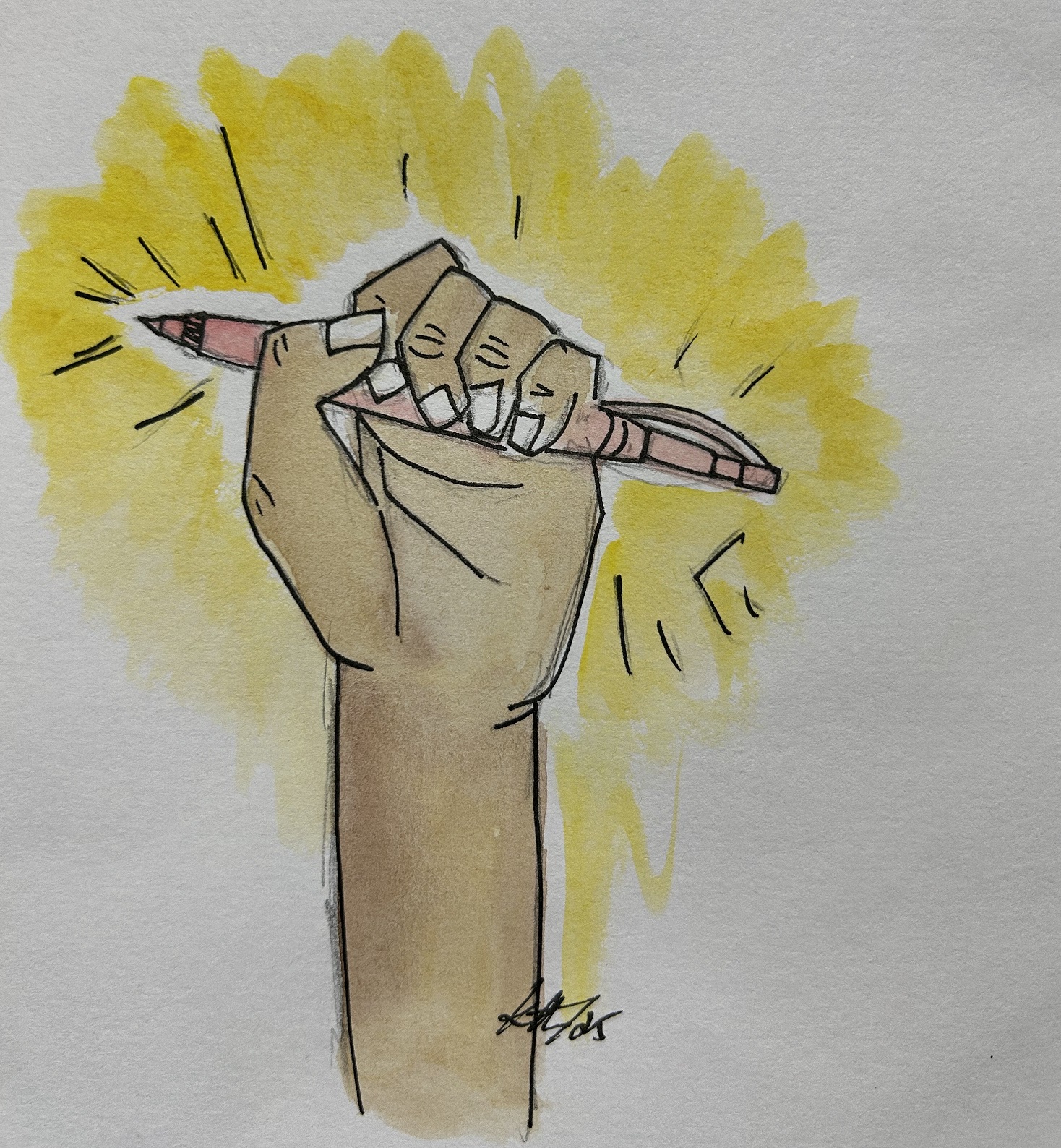
Illustration by Keera Ratnam.