
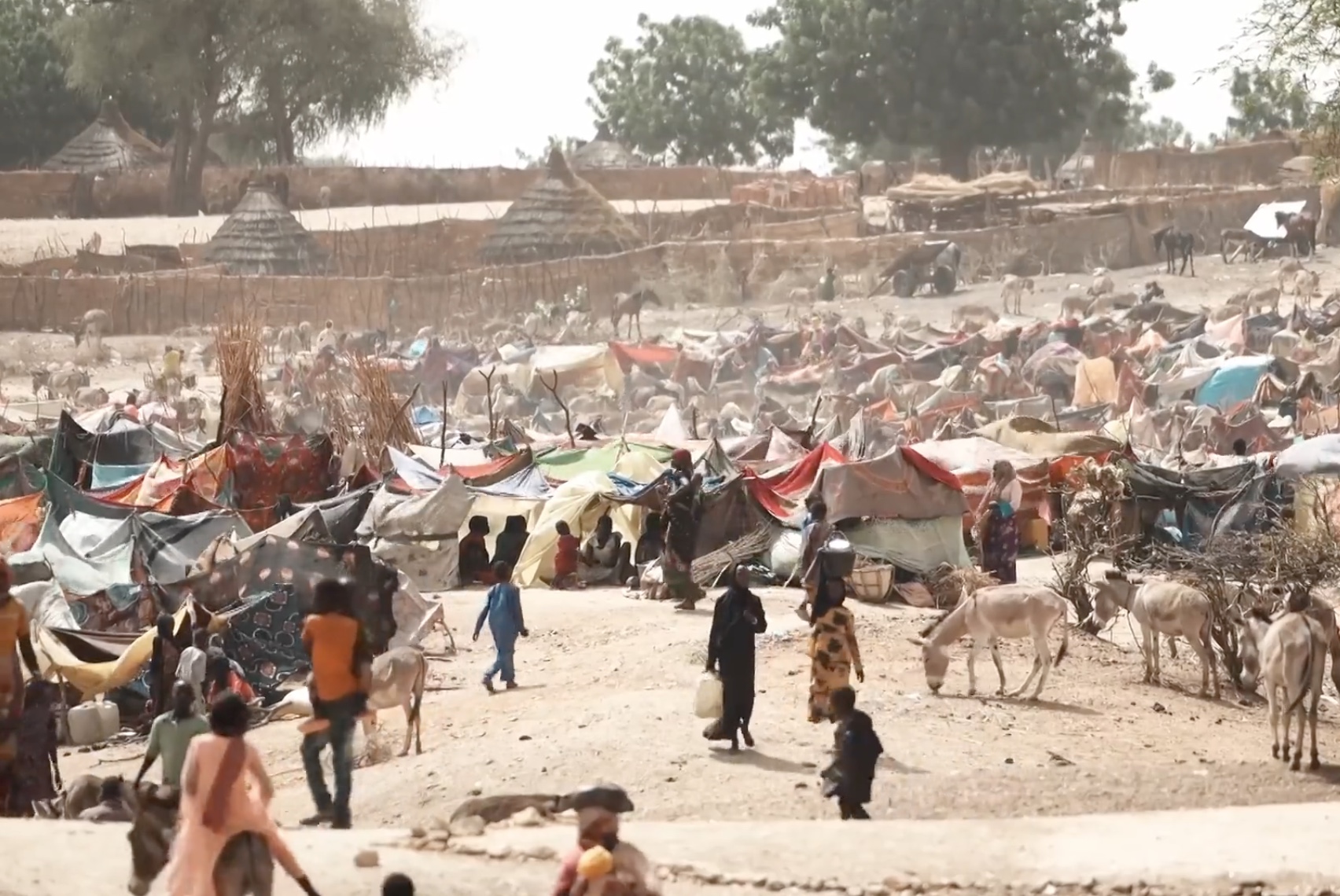
File photograph: Sudanese refugees in Chad.
As the conflict between Sudan’s military factions rages on, the country faces a deepening humanitarian disaster, with famine conditions emerging and a new power struggle threatening further instability.
In North Darfur, nearly 60 per cent of newly displaced families still lack adequate shelter, according to the United Nations. At Abu Shouk camp in El Fasher, families are grappling with acute shortages of food and medicine, with at least four hunger-related deaths reported last week alone. Local harvest failures, a prolonged food deficit, and limited cereal supply have left millions at risk across the country.
Sudan’s food security and nutrition situation is set to further deteriorate over the lean season from July to October, the Integrated Food Security Phase Classification (IPC) warned, highlighting that areas experiencing active conflict and high levels of displacement are most at risk.
The average cost of a local food basket in El Fasher has risen to more than six times the national average, making it the most expensive locality for essential goods. Humanitarian agencies are urgently calling for international assistance, as the crisis worsens amidst ongoing hostilities.
The conflict, which erupted in April 2023, has displaced millions and left half the country’s population facing hunger. A cholera outbreak in Tawila, North Darfur, has added to the crisis, with over 1,500 suspected or confirmed cases and more than 500 people currently receiving treatment. Health authorities have closed markets and banned public gatherings, while the UN Office for the Coordination of Humanitarian Affairs (OCHA) has appealed for $120 million to scale up emergency response efforts in the region.
Meanwhile, in Port Sudan, a sharp increase in heatstroke cases due to extreme temperatures and prolonged power outages has raised further concerns. One death was recorded over the past two days as climate-related health risks escalate.
RSF announces rival government
Amid this dire humanitarian backdrop, the Rapid Support Forces (RSF), a powerful paramilitary group, announced the formation of a parallel government from Nyala, the largest city in Darfur, which remains under their control.
RSF leader General Mohamed Hamdan Dagalo, also known as Hemedti, was named head of a 15-member presidential council. Abdel Aziz al-Hilu, the head of the Sudan People’s Liberation Movement-North (SPLM-N), was named deputy, while civilian politician Mohamed Hassan al-Taishi was appointed as prime minister. The RSF also named regional governors, including for areas still controlled by the Sudanese army.
The announcement comes months after the RSF and allied rebel groups declared their intention to form a secular “New Sudan” to rival the military-led administration in Khartoum. The move has been condemned by the Sudanese army, which remains under the command of General Abdel Fattah al-Burhan. The army has vowed to continue fighting until it regains control over all of Sudan.
Both Burhan and Hemedti were sanctioned by the United States earlier this year. The US accused Dagalo of committing genocide and Burhan of choosing war over peace. The two previously shared power following the ousting of longtime dictator Omar al-Bashir in 2019, but a 2021 coup ended civilian governance, plunging the country into chaos.
The RSF’s unilateral move comes amid a devastating humanitarian emergency, with the UN describing Sudan as one of the world’s worst crises. Over 25 million people, more than half the population, now require urgent assistance, and the situation continues to deteriorate.
Read more from Reuters here.