
It has been over a year since the Labour Party returned to power in the United Kingdom with a sweeping majority and a bold promise to reshape foreign policy through the lens of justice, human rights, and upholding international law. For British Tamils, this victory brought cautious hope. After 14 years of Conservative stagnation on accountability for the genocide committed by Sri Lanka, Labour offered not just vocal support, but made explicit commitments to pursue justice for the mass atrocities.
Today, that optimism has curdled into frustration, as those pledges remain unfulfilled.
Labour’s campaign and statements in opposition were unequivocal. Speaking at the first-ever British Tamil hustings in 2024, now parliamentary Under-Secretary of State at the Foreign, Commonwealth and Development Office Catherine West stood before Tamil voters and vowed to put “international law at the heart of our foreign policy”. She criticised the previous Conservative government's inaction and pledged to impose Magnitsky sanctions on alleged war criminals and committed to work with international partners to refer Sri Lanka to the International Criminal Court (ICC).
“Keir Starmer, as you are aware, has previously called on the British government to take a leading role in referring Sri Lanka to the International Criminal Court,” she told the audience, stating there was “a lack of political will” from the Conservative Party to put such mechanism into motion. “That is a clear line between ourselves and the current government,” she claimed.
These were not vague aspirations. They were carefully framed, specific pledges that acknowledged both the urgency of Tamil demands and the years of impunity enjoyed by perpetrators of mass atrocities. As she noted, British Prime Minister Starmer himself committed to following UN recommendations and taking meaningful action. For a people that have long seen justice denied, these promises were profoundly significant.
Yet one year later, a meagre total of four Sri Lankan war criminals have been sanctioned by the UK. The ICC referral has not materialised. When questioned this month, Foreign Secretary David Lammy deflected on why that was the case, claiming there was “difficulty.” He did not speak about movement towards an international accountability mechanism. Instead, last year he referenced Sri Lanka’s “new government” and claimed “the signs are positive.”
This assertion is starkly at odds with the facts on the ground. Sri Lankan president Anura Kumara Dissanayake’s administration has rejected UN Human Rights Council resolutions and done nothing to hold accountable figures responsible for the massacre of Tamils. The hundreds of political and military officials involved in war crimes continue to roam free - even those earmarked as opponents of the current regime. This includes the notorious Rajapaksa brothers who oversaw the genocide. That the UK still allows such individuals to enter its borders, unencumbered by travel bans or asset freezes, stands in stark contrast to Labour’s pre-election promises.
This lack of action is not due to legal constraints. The UK already possesses the necessary legal mechanisms for targeted sanctions, international cooperation, and universal jurisdiction. West herself recognised this in opposition. And as was the case with the Conservative Party, the failure to act now is a question of political will.
This dissonance was particularly evident this month when the UK government announced liberalised trade access for Sri Lankan exports under the Developing Countries Trading Scheme (DCTS). The reforms simplify rules of origin, allowing Sri Lankan-made garments, regardless of where raw materials are sourced, to enter the UK tariff-free. British officials celebrated the move as a “win” for both economies. Absent from this arrangement was any mention of human rights.
Contrast this with the approach that human rights organisations have been urging the European Union to take with regards to its own GSP+ trade preferences, by concretely linking them to progress on rights reforms. Rather than be guided by such calls, the UK has chosen to reward a government that refuses to prosecute war criminals, continues land seizures in the North-East, and represses Tamil demands for justice. This is not a principled foreign policy. It is a quiet abandonment of the very standards Labour once pledged to uphold.
This silence on Sri Lanka also reflects a broader drift in the Labour Party, where it has strong language in opposition, followed by equivocation in government. A foreign policy rooted in human rights cannot be selectively applied. It must be principled, consistent, and courageous, particularly when it comes to historic crimes like genocide.
For British Tamils, the stakes are personal. Many have waited decades, through war, exile, and occupation, for justice. They will also be acutely aware that the Labour government was in power as the Mullivaikkal massacres took place. The British Tamil community is not politically marginal. It is organised, informed, and growing in influence. Many Tamil voters supported Labour not just out of hope, but because they were directly assured that this time would be different and that their voices would not be ignored. If Labour fails to uphold its promises, it will not only damage the UK’s credibility abroad. It will risk losing the trust of an engaged constituency at home.
It is not too late for the British government to correct course. But it must act now, by expanding Magnitsky sanctions, taking concrete steps toward referring Sri Lanka to the International Criminal Court, conditioning trade preferences on tangible human rights benchmarks, and publicly affirming that the massacres of Tamils constitute a genocide. The government can still choose to act before the gap between words and action becomes too wide to bridge.
_____
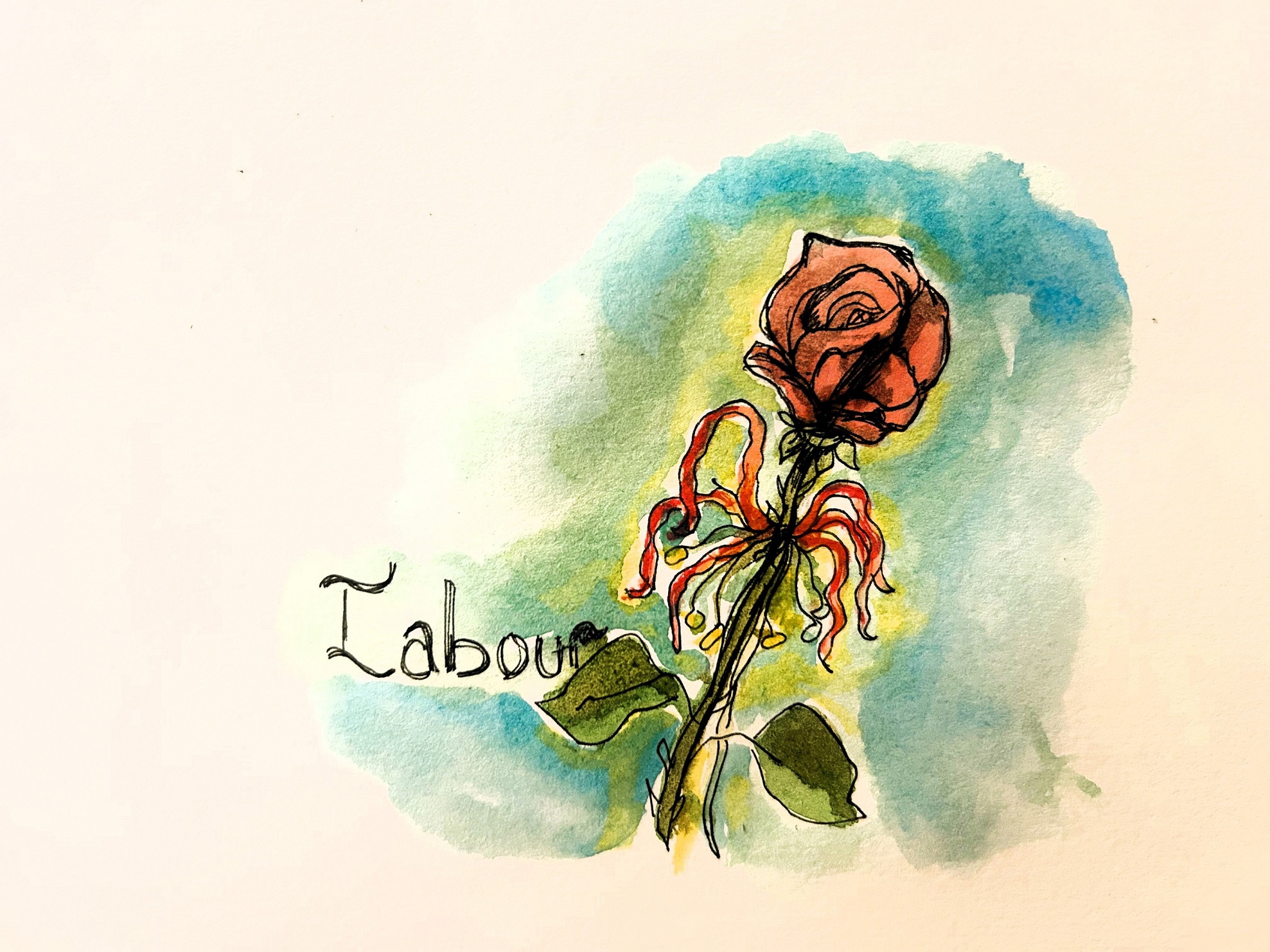
Illustration by Keera Ratnam.