
The imposition of a 30% tariff on Sri Lankan exports by US President Donald Trump should be a stark wake-up call for Colombo. It’s ailing economy has just been dealt another severe blow. But instead of confronting the systemic issues at the heart of the island’s financial frailty, officials have chosen to spin the decision as an isolated diplomatic setback and temporary negotiating hurdle. The truth is far more damning. This tariff has exposed the deep and long-standing fragility of Sri Lanka’s economic model, weighed down not just by corruption, but by impunity, militarisation and occupation.
The tariff, reduced from an initially threatened 44%, remains a tough pill to swallow. The United States accounts for about 40% of Sri Lanka's apparel exports and last year they were worth about $1.9 billion. The garment industry, a vital foreign exchange earner, is unlikely to remain competitive if it is suddenly priced out of its largest market – particularly when rivals such as Vietnam and Bangladesh have been served lower tariffs.
But this new hit to the already crisis-struck island is not occurring in a vacuum. Sri Lanka’s post-independence economic model has always been in a precarious position.
The primary driver behind this instability has been the appetite from successive regimes to shy away from investing in inclusive development, and instead spend heavily on constructing a Sinhala-Buddhist hegemony. Decades of violent rule and repression of the Tamil people cost the island deeply, both in terms of lives lost and its economic impact. In the years leading up to the Mullivaikkal genocide in particular, this desire to cement Sinhala nationalism at all costs meant rapidly increasing the size of its armed forces, massive military spending on hardware, as well as doubling down on surveillance and occupation. More than 16 years after the guns fell silent, little has changed. The Sri Lankan military never left the Tamil homeland. To this day, in the North-East, land seizures, surveillance, and harassment of civilians continue unabated.
This continued militarised chauvinism does not simply violate rights. It is a financial disaster, consuming vast amounts of expenditure. Occupations demand constant funding. To maintain its sprawling army, one of the largest in the world per capita, the state continues to channel billions of rupees into defence. It is huge cost to burden for an island that claims to be at peace.
In the Tamil homeland, militarisation smothers civilian life and displaces local economies. Young people face limited opportunities under the shadow of tens of thousands of armed troops. Military-run businesses continue to undercut and stifle community-led growth. Fishermen face harassment by the navy and farmers find their land fenced off. Thousands of acres remain under occupation, while schools, temples, and churches are routinely visited by uniformed soldiers. This is not an environment that invites investment or innovation. It is one that has been drives flight and collapse.
Maintaining this climate in the North-East imposes more than just a financial burden on Colombo. It has cultivated, and is dependent on, a culture of impunity and repressive governance that has penetrated all of the island’s institutions - from the ongoing refusal to hold those who committed mass atrocities to account to the continued use of the Prevention of Terrorism Act (PTA). Alongside Sri Lanka’s long history of corruption, this will continue to deter any meaningful long term investment and trade partners. No business will want to be associated with a regime that imprisons students without charge for Instagram posts or allows infants to be buried in mass graves.
Continuing on this path is not sustainable. Trump’s tariff hike was clearly not motivated by human rights or hopes of reformed governance for Sri Lanka. But it exposes just how shaky the foundations of the state truly are. Any sustainable future will be impossible without a reckoning.
The price of ignoring this truth will only cause deeper poverty, further instability, and yet another generation condemned to pay for the crimes of a militarised state.
_____
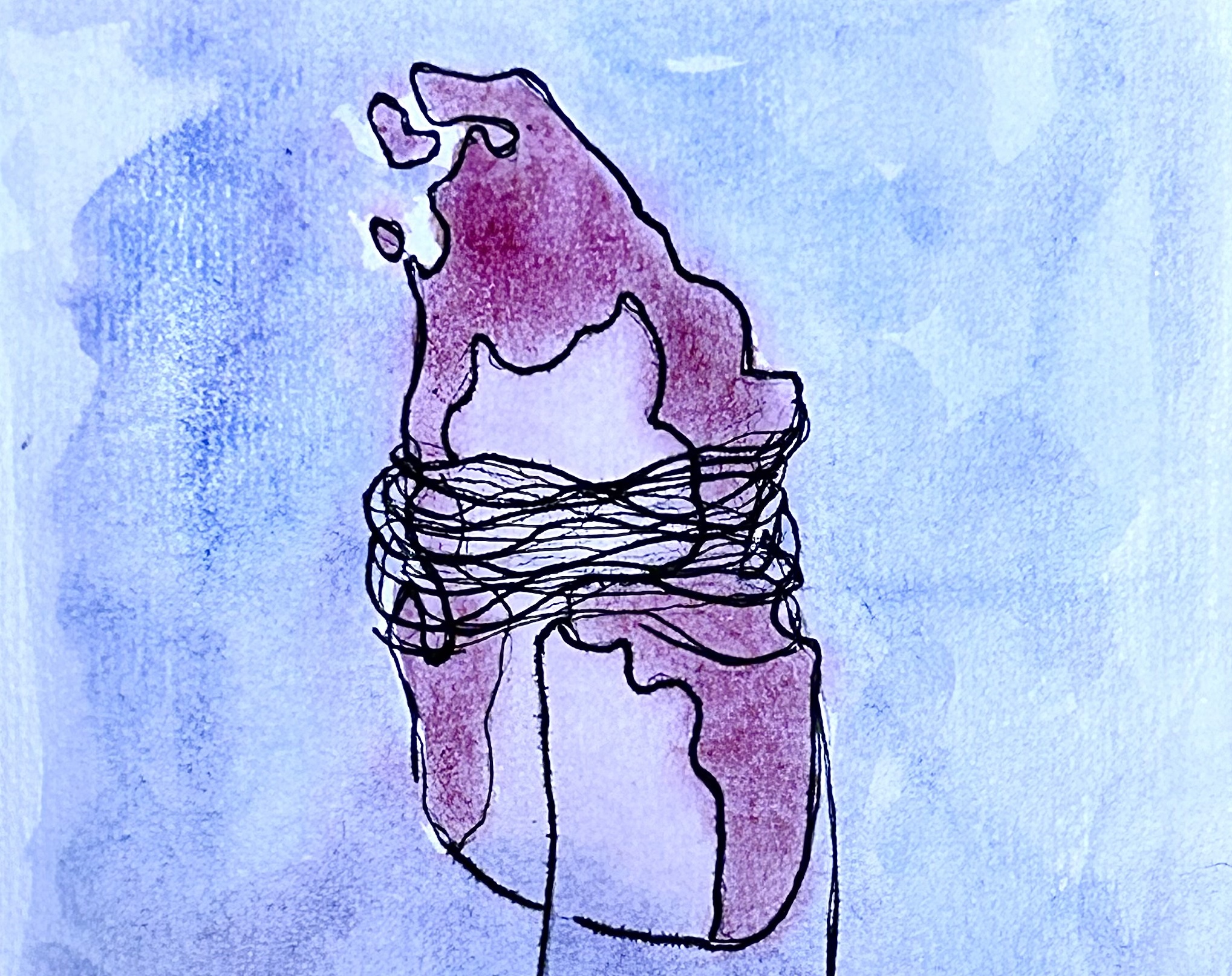
Illustration by Keera Ratnam.