
.jpg)
A protest in Batticaloa earlier this year.
Sri Lanka risks losing access to the European Union’s GSP+ trade concession because of slow progress on reforming the Prevention of Terrorism Act, Joint Opposition Convener Prof. G. L. Peiris has warned.
Speaking at a press conference, Peiris said the tariff benefit remained crucial for Sri Lankan exporters seeking access to EU markets, particularly as the country continues to face pressure over foreign exchange flows and the end of the current International Monetary Fund programme next year.
He said Sri Lanka would need to make a fresh application for GSP+ tariff benefits next year and warned that continued use of the PTA could undermine that process.
GSP+ grants eligible developing countries preferential access to the EU market, but continued access depends on the effective implementation of 27 international conventions covering human rights, labour rights, environmental protection and good governance.
The International Covenant on Civil and Political Rights remains one of the key conventions under that framework. Peiris said EU diplomats had consistently insisted on reform of the PTA, arguing that continued violations linked to the law would affect Sri Lanka’s compliance with its international obligations.
“If the government continues to invoke the provisions of the PTA, the EU will not be ready to consider the extension of GSP+ for Sri Lanka,” he said.
He also criticised the lack of clarity over the government’s proposed replacement law.
“When I was the External Affairs Minister, I gave a written assurance to the United Nations Human Rights Council (UNHRC) in Geneva that a new law would be introduced in place of the PTA in six months. The PTA is a piece of legislation criticised by lawyers, civil society members and professionals. The Justice Minister promised in Kilinochchi recently that a new law would be in place in two months’ time. Yet, we are completely in the dark about the content of the proposed law. Unless the new law is evolved with broad consultation with all stakeholders to meet international standards, the GSP+ benefit will be in jeopardy.”
The warning also exposes the long history of failed repeal pledges, including by governments in which Peiris himself served.
The PTA was introduced in 1979 as a temporary measure but has remained in force for more than four decades. It has been used overwhelmingly against Tamils, both during and after the armed conflict, and continues to be used to police Tamil political expression, remembrance and dissent.
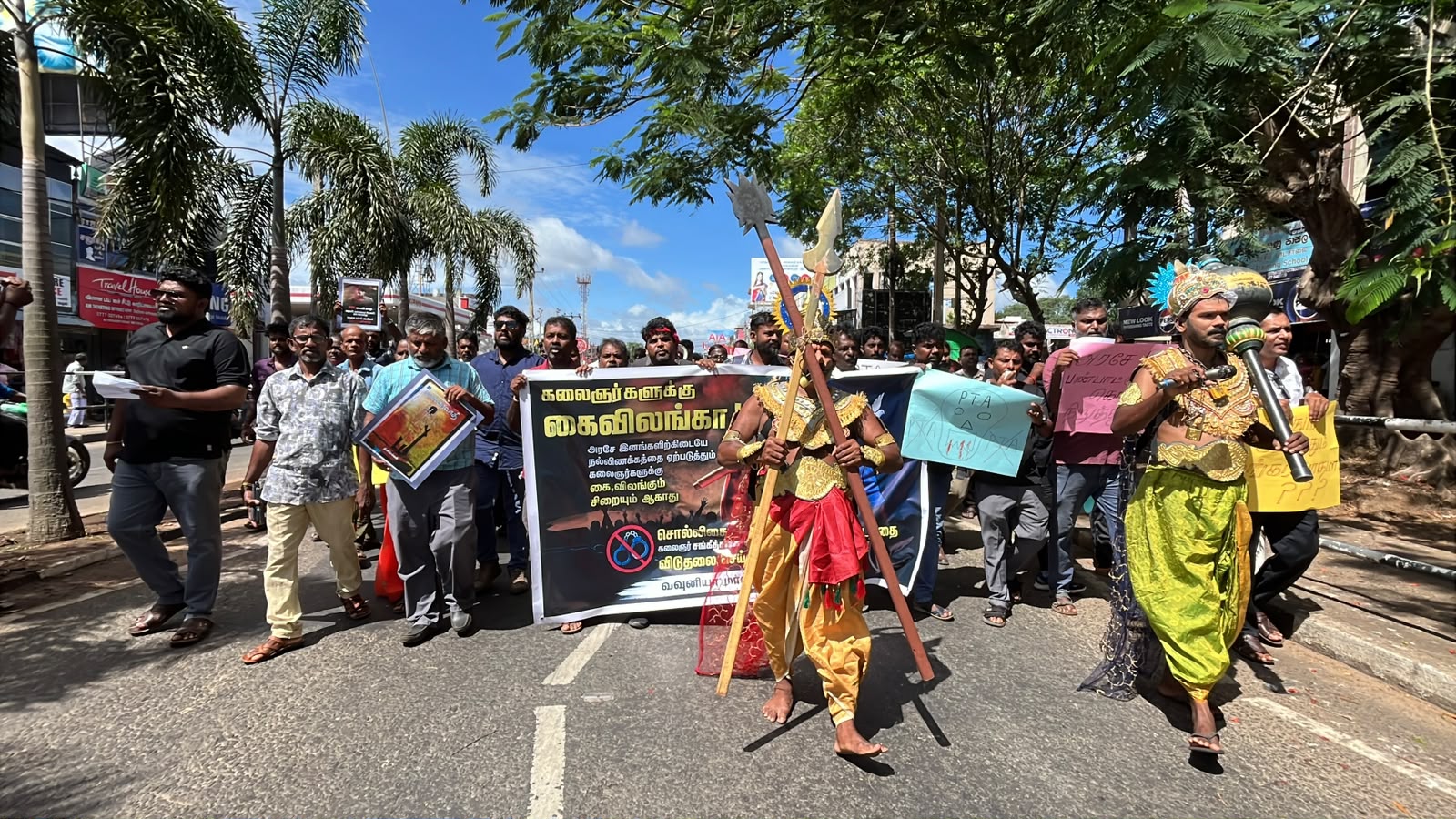
The latest warning follows renewed outrage over the arrest of Tamil rapper Sangeethsan Ganeshkumar, known as HipHop Sangee, under the PTA after Sri Lankan authorities alleged that videos he uploaded to social media promoted the Liberation Tigers of Tamil Eelam (LTTE).
Protests across the Tamil homeland condemned the use of anti-terror legislation against an artist, with demonstrators in Vavuniya carrying placards reading “Handcuffs for artists?” and “Is singing and dancing terrorism?”. Amnesty International cited Sangeethsan’s case in renewed calls for repeal, warning that the PTA has “long been criticized for its overly broad provisions and incompatibility with international human rights law and standards.”
The rights group also said the PTA’s “broad and vaguely defined offences do not align with international law standards.”
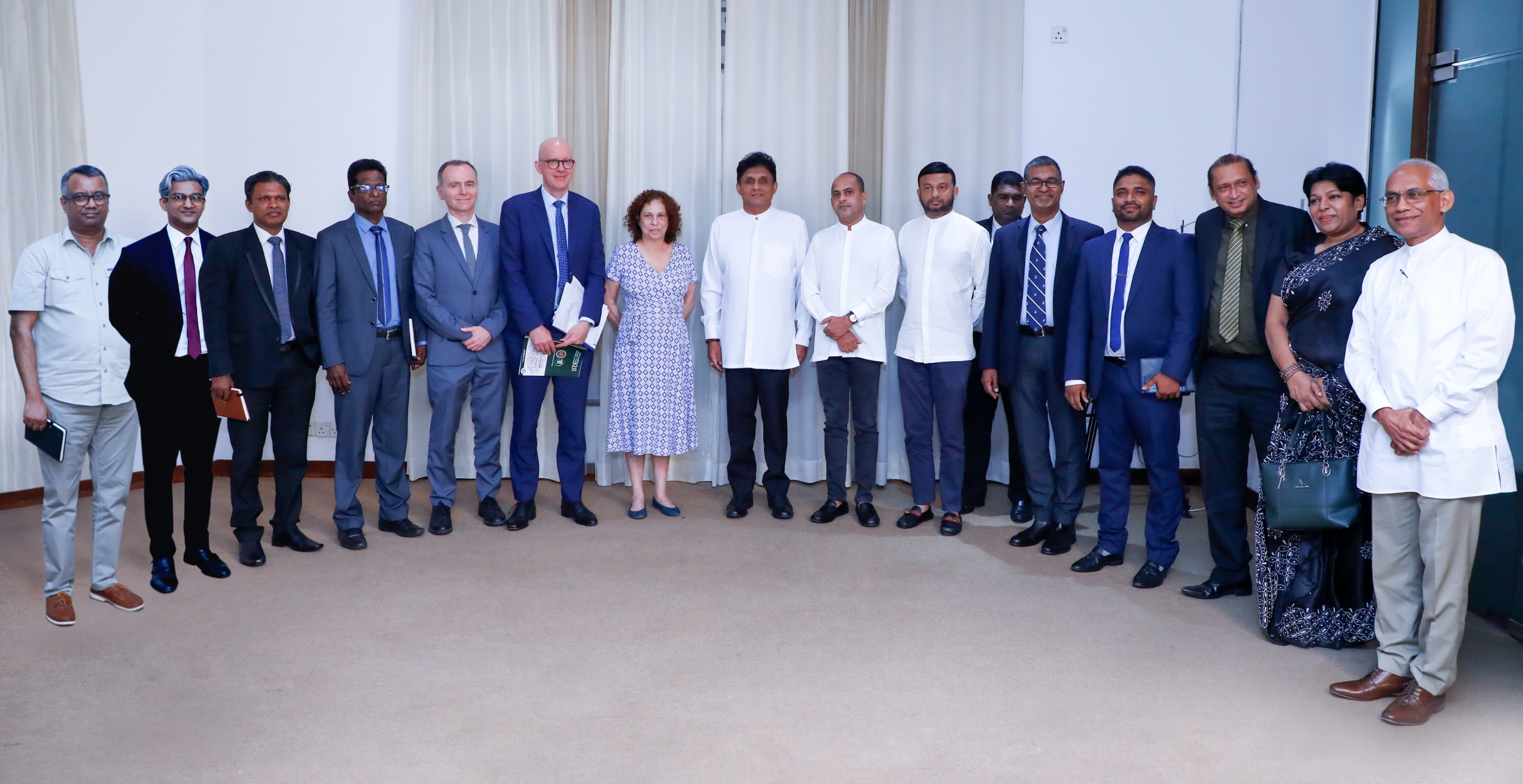
An EU monitoring mission visited Sri Lanka last year to assess the country’s compliance with GSP+ obligations, including its implementation of the 27 conventions that form the basis of the scheme. The visit came amid persistent concern over systemic rights abuses, lack of accountability, attacks on civil society and the failure to repeal the PTA. EU officials have repeatedly stressed that Sri Lanka’s access to GSP+ depends on tangible progress, including reform of anti-terror legislation in line with international standards.
Earlier this year, Sri Lanka reaffirmed its commitment to implementing the 27 conventions, while the EU stressed the need for “time-bound delivery” on commitments under the current GSP+ arrangement, particularly anti-terror legislation.
Despite that pressure, Sri Lankan president Anura Kumara Dissanayake’s government has continued to send mixed signals on the PTA.
The National People’s Power government initially said it would retain the PTA, despite campaign pledges to abolish repressive laws. Dissanayake later announced that the law would be repealed and replaced, raising concern that the same repressive powers could simply be repackaged under new legislation.
He has also personally signed PTA detention orders in his capacity as defence minister, including a 90-day detention order against 22-year-old Mohamad Liyauudeen Mohamad Rusdi. The Human Rights Commission of Sri Lanka later concluded that Rusdi’s fundamental rights had been violated and urged the Justice Minister to repeal the law.
The proposed replacement framework has also drawn criticism.
United Nations experts raised concerns that Sri Lanka’s proposed Protection of the State from Terrorism Bill risked preserving many of the same abusive features as the PTA.
Peiris’ warning comes as Colombo attempts to balance economic dependency on international support with its refusal to dismantle the security architecture that has long enabled repression in the Tamil homeland.
A recent study warned that Sri Lanka could face a major economic blow if GSP+ is withdrawn, with the apparel sector and other export industries particularly exposed. GSP+ has been a crucial trade lifeline for Sri Lanka’s export economy, but it has also been one of the few forms of international leverage tied to human rights commitments.