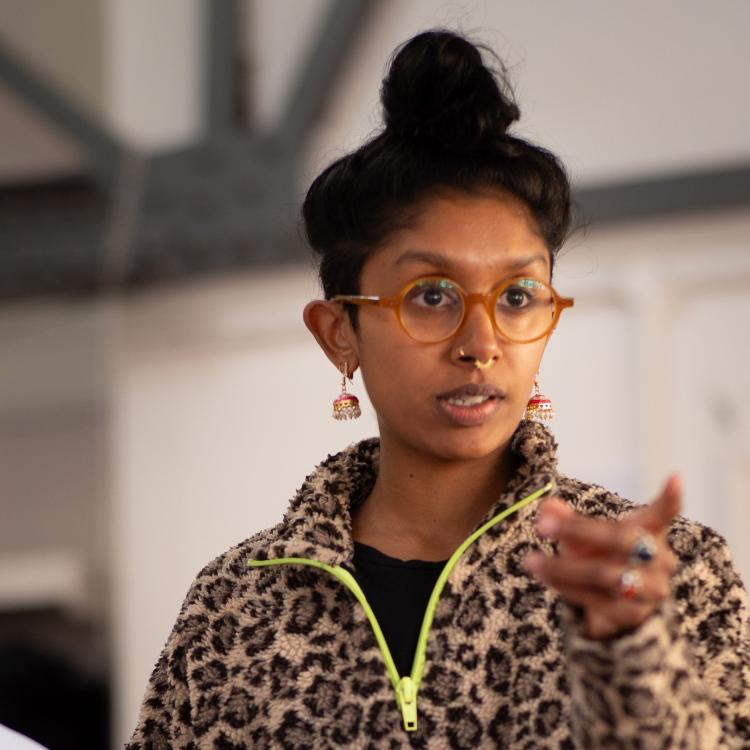
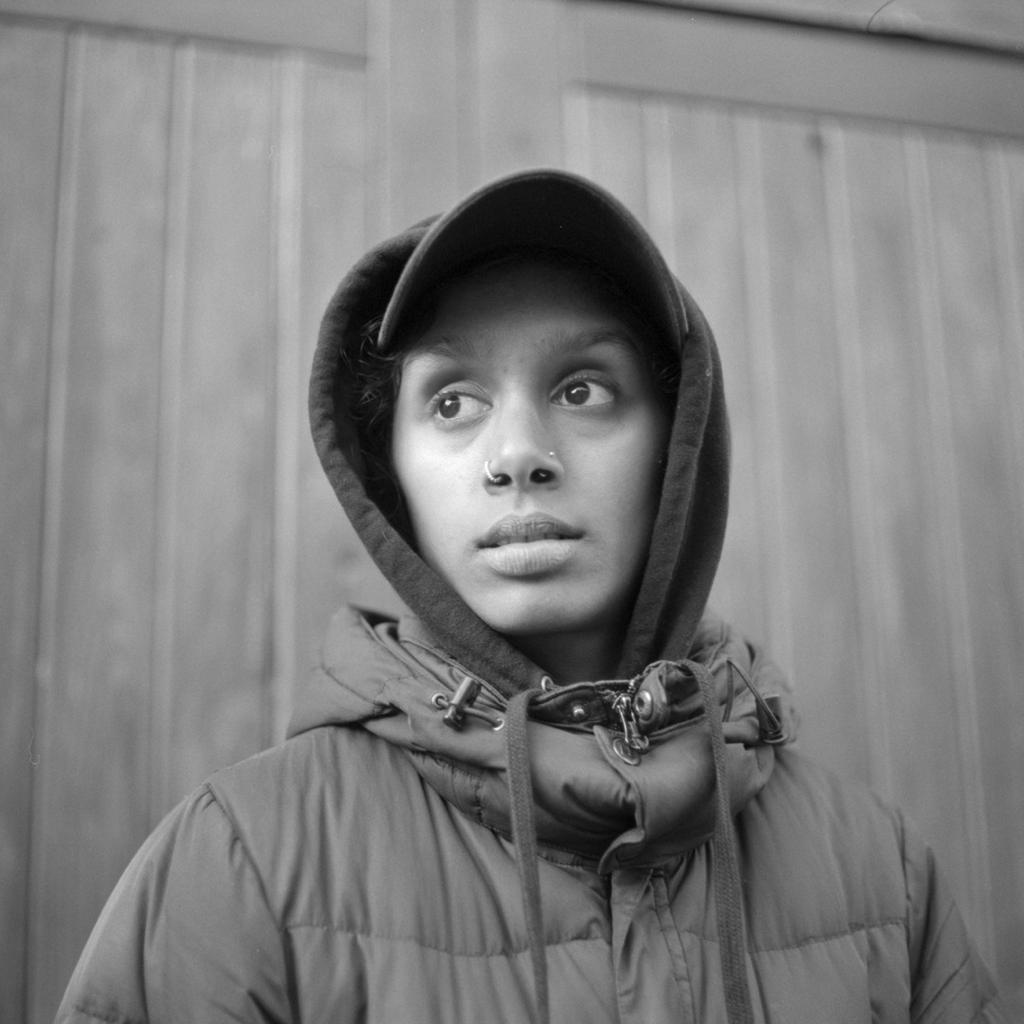
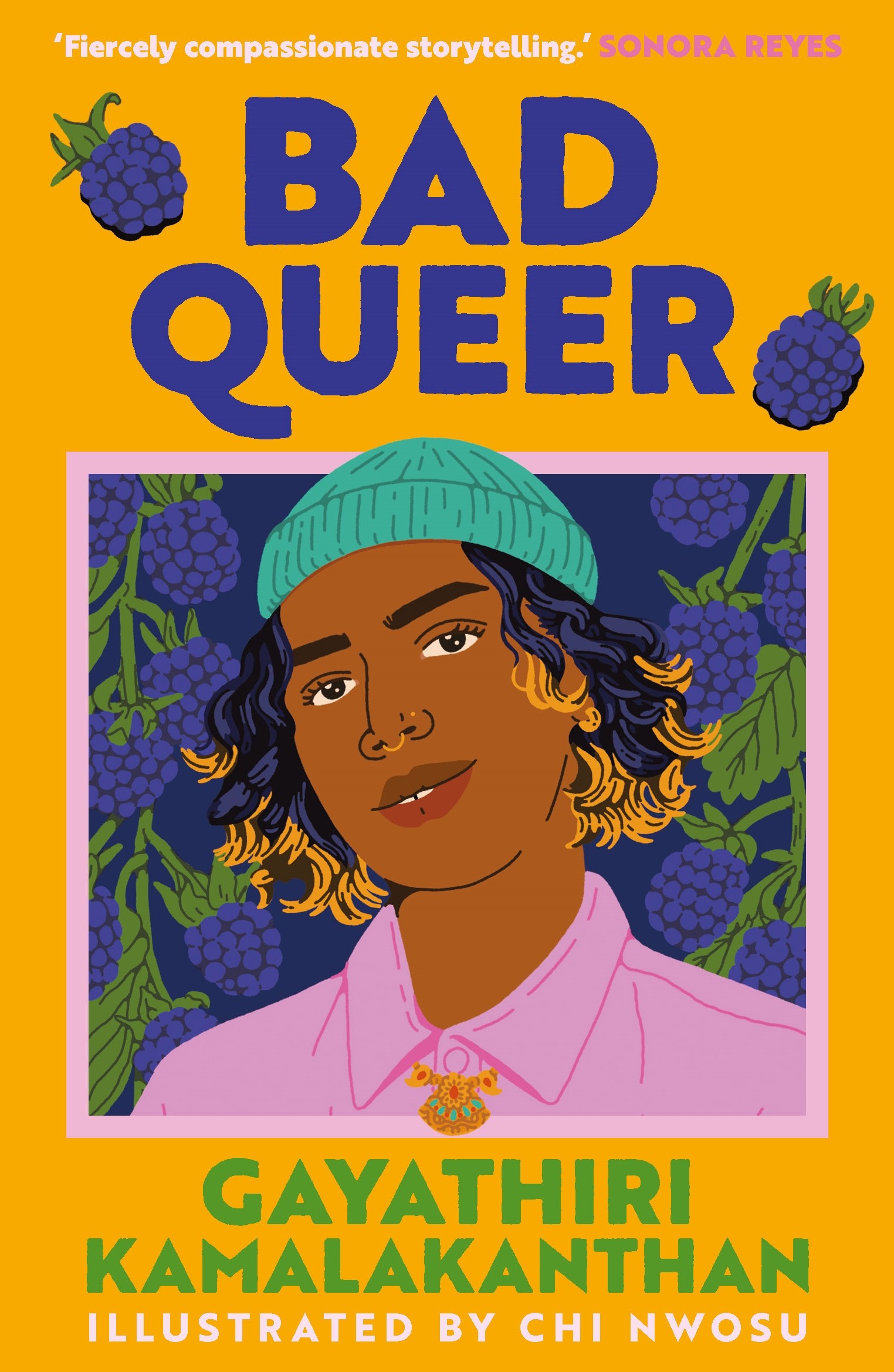
Months after the opening night of their debut play Period Parrrty, Gayathiri Kamalakanthan releases their first book; a novel-in-verse titled Bad Queer. Published by Faber & Faber with illustrations by Chi Nwosu, Bad Queer is a coming-of-age tale following Surya who navigates their first love as a non-binary teenager.
Both Period Parrrty and Bad Queer are coming of age stories centring on teenagers exploring their sexuality. What about this stage in a person’s life is rich for writing?
I think when you're coming into young adulthood – particularly with Bad Queer – Surya and their friends are 17 going on to 18 at the end, and it's such a transformative period. You're really forming your politics. You're understanding your position in the world and how it shapes you, and how you can shape it…. there's so much discovery going on about who you are, but also what the world can be like, whether that is… really nice feelings of love and friendship and romance, but also the sort of oppressive powers as well. And I think so much emotion is really heightened at that time, because you're experiencing things for the first time, and I think that is all really juicy to write into.
What made you decide to write a novel-in-verse instead of conventional prose?
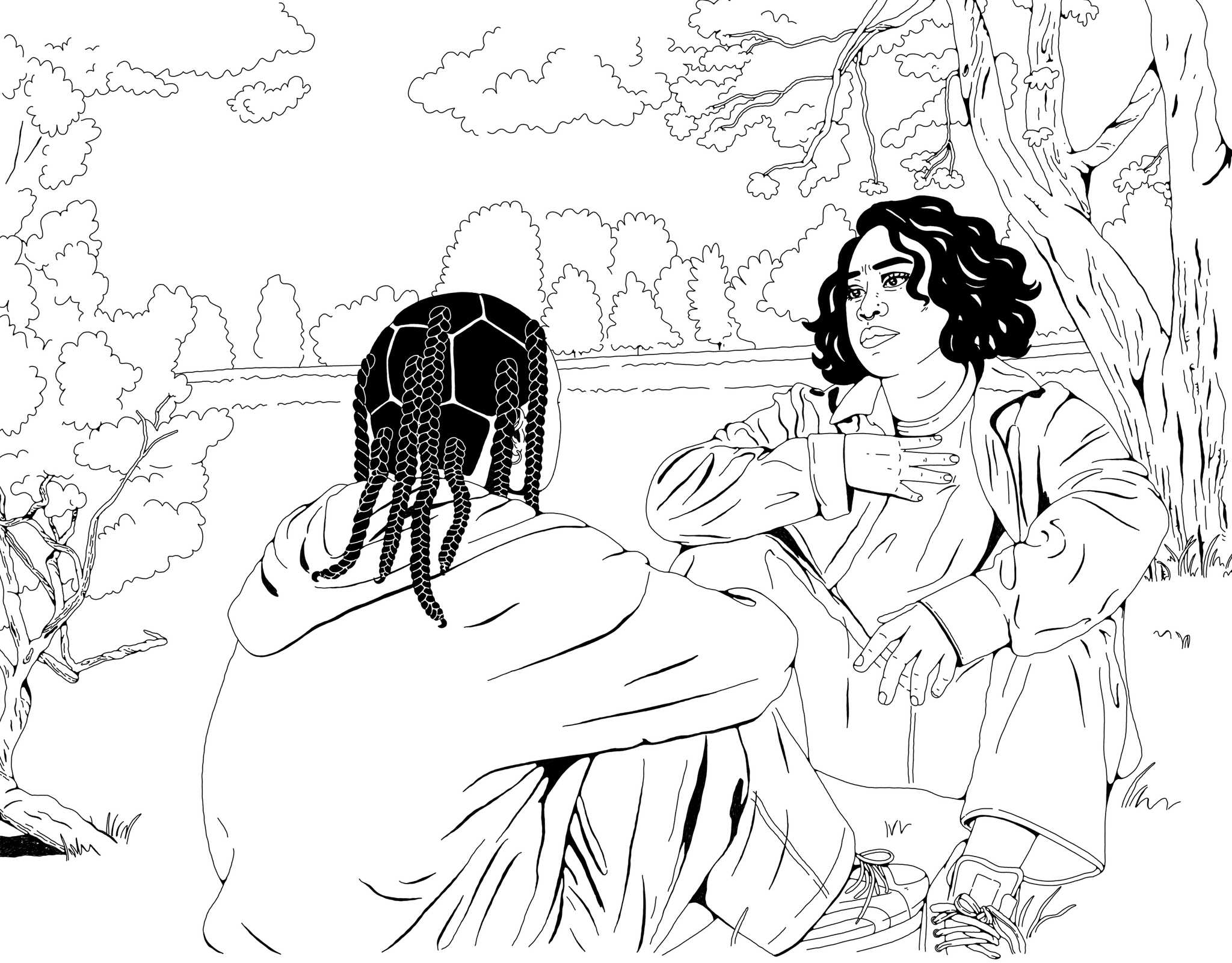
So I'm a poet, first and foremost… and my first entry point into writing is poetry. I think my brain often thinks in little fragments and images. So, it feels easier than writing more lengthy prose – just little chunks is more manageable… I read a few verse novels that really… felt like it sung off the page… It really felt like you were dancing with the book. There's so much movement in terms of line breaks and where you can sort of scatter the words on the page as well. So those were ‘The Black Flamingo’ by Dean Atta, Manjeet Mann's ‘Run Rebel’, Elizabeth Acevedo’s ‘The Poet X’: these books [are] also young adult [and] grappling with how you understand… race, sexuality, gender, also violence and how you respond to these things. I think poetry does a really good job of expressing that discovery phase.
There are quite a few young adult books… that use things like text message bubbles, illustrations throughout, font as if the character has handwritten some notes. So, that's not original to me. And when I've seen that in other books, it's just felt so real – like you're inside of that character's mind and life and it's quite captivating. So I wanted to… use those sort of stylistic elements that I've seen before.
I think what did feel new for me is putting in the Tamil script into the book. And my editor was really encouraging about putting in Tamil words. The experience of learning… the letters and then handwriting the words myself, so I understood what it was that I was putting in the book. And then asking my mum to type it out because she knows how to use the Tamil keyboard but I don't. Having that experience with my mum and my aunt, that was all such a gift for them to be able to input in this quite big way. I think for someone who's trying to be a bilingual writer, it is powerful, even to use one Tamil word in a predominantly English book. I think we're allowed to start somewhere and that was really nice.
One of my favourite aspects in the novel was the momentary breaks in the narrative to zoom into specific thoughts and feelings Surya was experiencing.
I wanted moments where we slow down and zoom into like Surya’s headspace… whether there's conflict about what they want to do next, anxieties, and often that's what it feels like in real life, like the action is playing out around you, but inside, you're like, “Oh, God, what do I do next?” And again, I think poetry is a really lovely tool to be able to tease out and freeze time in a way, to just pause and feel what you're feeling.
I wanted it to be like we are really moving alongside Surya throughout the whole book, and if we can empathize with them, then suddenly their experiences aren't ‘othered’. You're like, “Oh yeah, I've had exactly that sort of experience.” For readers who are not Tamil, who are not non-binary or queer, so much of the experience Surya has is still entirely relatable because they're a human and a teenager.
One of the narrative threads in the book follows the complicated but sweet relationship between Surya and their grandparents, Thaathi and Thaatha. One of the key emotional moments occurs within their house near the end of the book.
There are many revelations and reconciliations. What advice would you give young queer people torn between ‘traditional’ Tamil upbringing and living their truth?
With the characters of Thaathi and Thaatha, I didn't want to villainize them. Their child, who in the book is Surya’s parent, Amma. They are genderfluid, and Surya is non-binary. So Thaathi and Thaatha do find their kid and grandkid’s queerness quite confronting. It's this – to them – concerning part of their life, and the grandparents are not comfortable with it. They would much rather ignore it or… they're sort of pretending that it's not happening. And I think actually that sort of hate or fear is not theirs to begin with. It is inherited from British colonial law that came in when the British colonised Sri Lanka, and that penal code is still in existence today.
So, when you criminalize queerness – and that is what Thaathi and Thaatha have been brought up with – of course, that's going to be their mindset, and I think they are trying to figure out a way to… still be a family. And – without giving away too many spoilers – yes, Thaathi and Thaatha do start to learn about… queer gods and how their religion, Hinduism, is queer, but actually the… stronger or more important point is – love is the thing that we're here to do. And… maybe our scriptures say, “Oh yes, we have queer gods, and they have… lots of different partners, and they shift genders, etc”, but I would much rather that you chose to… love your family, love your children. Because… ultimately, underneath all of that, is the question… “Are we being the most kind and loving we can be?”
I think the title of the book Bad Queer is about Surya feeling like they're not being… a loud and proud representative in their queer Tamil identity… because they are… anxious and worried, and they keep their queerness quieter. And what I would say to anyone who feels like there's a… clash between home and tradition and their queerness is: do what is safe for you. So if that means not inviting people into your queerness at this current moment, then that's absolutely fine; you don't owe anybody the fullness of who you are…
But secondly, religion and culture might tell us XYZ, but you can interpret stories or scriptures or laws. They can all be interpreted to suit what you want them to say… If kindness and being loving is the thing that is most important to us, our family, our communities, our religion, then that's the question that you can hold on to, do you know what I mean?
And it is this question that I've asked my elders. I've said, “Sure, you can point to this law that says that ‘same sex acts [are] a crime…’ but what's the kindest thing to do here? Is it to punish people for loving other people, or is it to… let them be and to accept who they are?” So, yeah, it's sort of a long, long way of saying, I'm no longer interested in what the culture historically, is approving for us now. I think we should be able to approve our own behavior.
Friendship has been an important theme across both Period Parrrty and Bad Queer. This time we have a bigger group of friends with Maha, Akhil and Sade. Why is the ‘chosen family’ important?
We have a bigger group of friends because Bad Queer being a book, you can write as many characters as you want and it doesn't cost you any more. But with actors, you have a budget to keep to!
I think the chosen family is something for a long time that I would read about, or see on social media and think, “Oh, that would be really nice. I don't have a queer community like that.” But I really did try and build it. You go to queer poetry events, you go to queer chess club… queer Tamil lessons that can happen at the Tamil Channel that I've mentioned before, and it takes years to build that up. And I think Surya also feels at the start of the book, they don't really have a wider queer network. They have their parents and Maha, who's their best friend, but they're slowly… getting deeper and deeper into friendships with Akhil, Sade, and each of them have a relationship to queerness that is different. They're not policing each other. They're sort of figuring out things like consent and boundaries and open relationships together and I think it's just important to see more of that. But also to reassure people that, it doesn't kind of happen like this, like, “Oh, I've come out, and now I've got this automatic, chosen family around me.” It often doesn't happen like that. It's kind of slow to build, and sometimes you feel lonely, and Surya often feels lonely.
And so I think I wanted to show a chosen family that's not perfect. We're going to fall out. We're going to take each other for granted and and sometimes, you know, not be totally honest with each other, but ultimately, relationships are something we will work on, and we might not know how to do it right the first time, but it's kind of iterative, right? One, they can be hard work, but two, that it's worth it, and your people are there, and you will find them. I wanted that hope to be in the book.
The novel leads up to Surya’s Youth Theatre performance, which becomes a powerful consolidation of their own identity. How do you feel the reverberations of the civil war ties into identity politics?
Surya understands that their parents and grandparents came to the UK escaping the genocide of Tamils, and there's a lot of expectations that Thaathi, Thaatha, Amma and Mum have of Surya. There's this ‘good immigrant’… idea. So it's presenting, in a certain way, the idea of going to university, and what does success look like? And university being the start of your career. And there's also the struggle that Thaathi and Thaatha experienced trying to gain citizenship here – it's all a long ordeal. And Surya comes to learn about all of that, and really understands why there is such a push for Surya to… go and get the best grades, and… be ‘respectable’ in the ways that they wouldn't define for themselves. And I think that sort of child of refugees, or child of immigrants, feeling is so strong.
There's a line I think that Thaathi says, which is, “We need to prove that a family like ours can be successful.” That's a lot of pressure.
And this idea that we have survived as part of the Tamil diaspora who left Sri Lanka, we have survived so that you can… live out like Thaathi and Thaatha’s dreams. It's not the case that Surya has been asked, “What would you like your future to look like?” by their grandparents. And so there is that clash there.
And again, I didn't want it to feel like Thaathi and Thaatha were villains who were guilt tripping Surya into a certain type of respectable life. Because I really wanted to understand where Thaathi and Thaatha were coming from and to them this is how you provide stability, and that is their way of loving. It's just that their way of loving doesn't match up with what Surya needs. Because… they're not a girl, they likely won't go to university, have this ‘respectable’ career… all the kind of stages that are expected. I think for Surya to understand why Thaathi and Thaatha are the way they are, they need to really talk to them and understand, “What have you learned about queerness in the past that has demonized it? Can you just see me as a human being? I'm your grandchild, I'm not actually that different. Being queer or non binary is not actually that different at all.”
And… if people are oppressed because they're Tamil and people are oppressed because they're trans, like there is an understanding between these two identities. Both Thaathi and Thaatha, and Surya can understand the harm that's been experienced, and then choose not to further enact it. I think that's kind of what's coming up in the end performance. It's the understanding that Thaathi and Thaatha took a risk when they left Sri Lanka and that they have… built a life for their family, but at the same time, they came here so that their family would have more freedom, more opportunities, and so the younger generations should be able to live out that freedom.
Five (more) works of art which have inspired Gayathiri Kamalakanthan.
1. Amma’s Pride (dir. Shiva Krish) – It's a short documentary film… about a Tamil Indian trans woman and her mum really supporting her through her marriage and anti-trans societal pressures. But to see people speaking in Tamil about, seeing like a mother elder figure supporting her trans daughter.It was so moving. And I sent it to all my family who wouldn't necessarily watch it if it was in English. And I feel like it is especially powerful to say your politics in the language of your family.
2. The Poet X (Elizabeth Acevedo) – Specifically her performing extracts of it, I think, is really captivating – you get a sense of her political drive in her voice, in her body language. And I think, if people aren't so into reading, but they would listen to or they would watch something, that's a way of absorbing art that doesn't require you to have to sit down and read, which sometimes isn't for everyone. And also, like Surya in Youth Theatre learns how to be confident and write and then perform in a way that's really empowering. And watching Elizabeth Acevedo is also how I wrote Surya coming into their power through performance.
3. We Are Lady Parts (dir. Nida Mansoor) – It is a musical-comedy about a Muslim punk band. And again, the politics of it is really strong throughout, and also it's really fun. And I think Nida Mansoor is especially good at making political art feel really pleasurable to watch. And it's kind of the love and rage and together, I feel, is really powerful in that.
4. This is Uncomfortable (hosted by Reema Khrais) – the tagline is talking about money and how it complicates our life. And specifically, I think money can be quite a taboo subject to talk about. And I was also thinking in the book about things like money or refugee status and feeling sort of ‘othered’, and the uncomfortableness of not feeling that a place is home or you don't have somewhere to belong. But how do you talk about it in a really slow, approachable way? I've listened to maybe hundreds of hours of this podcast, and underneath what Rima writes, I think everything is really kind, and I also wanted to be really kind and curious with my characters.
5. Two Black Boys in Paradise (dir. Baz Sells) – It's based on a poem that [Dean Atta] wrote. It's stop motion animation and it's free to watch on 4OD. It's just really beautiful, about self love and acceptance. And it makes me think that poetry can be so many things, like a book, a short film, it can be artwork on a wall. It's also why I love poetry, because it's so malleable to mold itself into different other artworks as well.
Bad Queer is available to buy now.
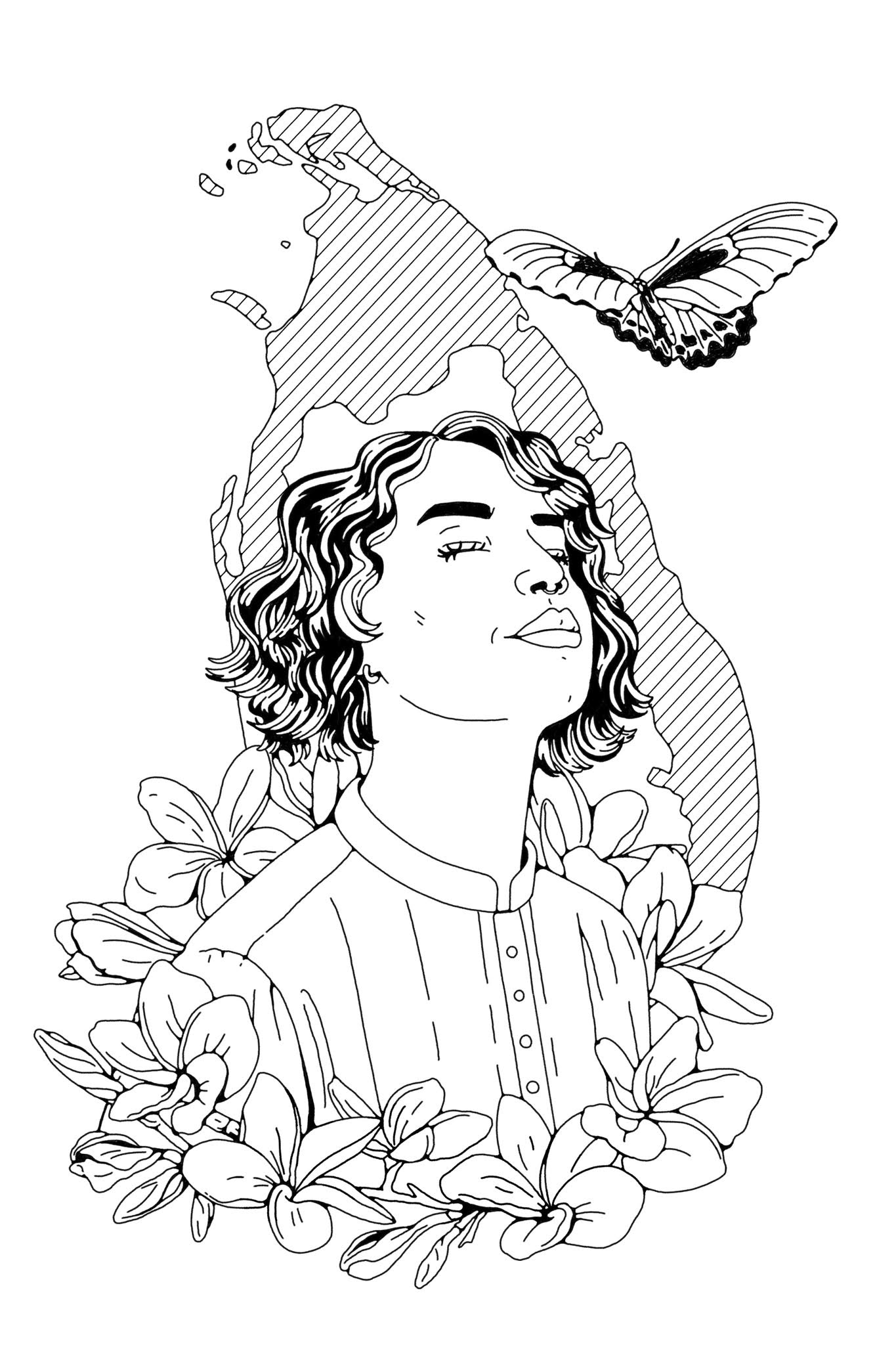
Illustrations by Chi Nwosu.