
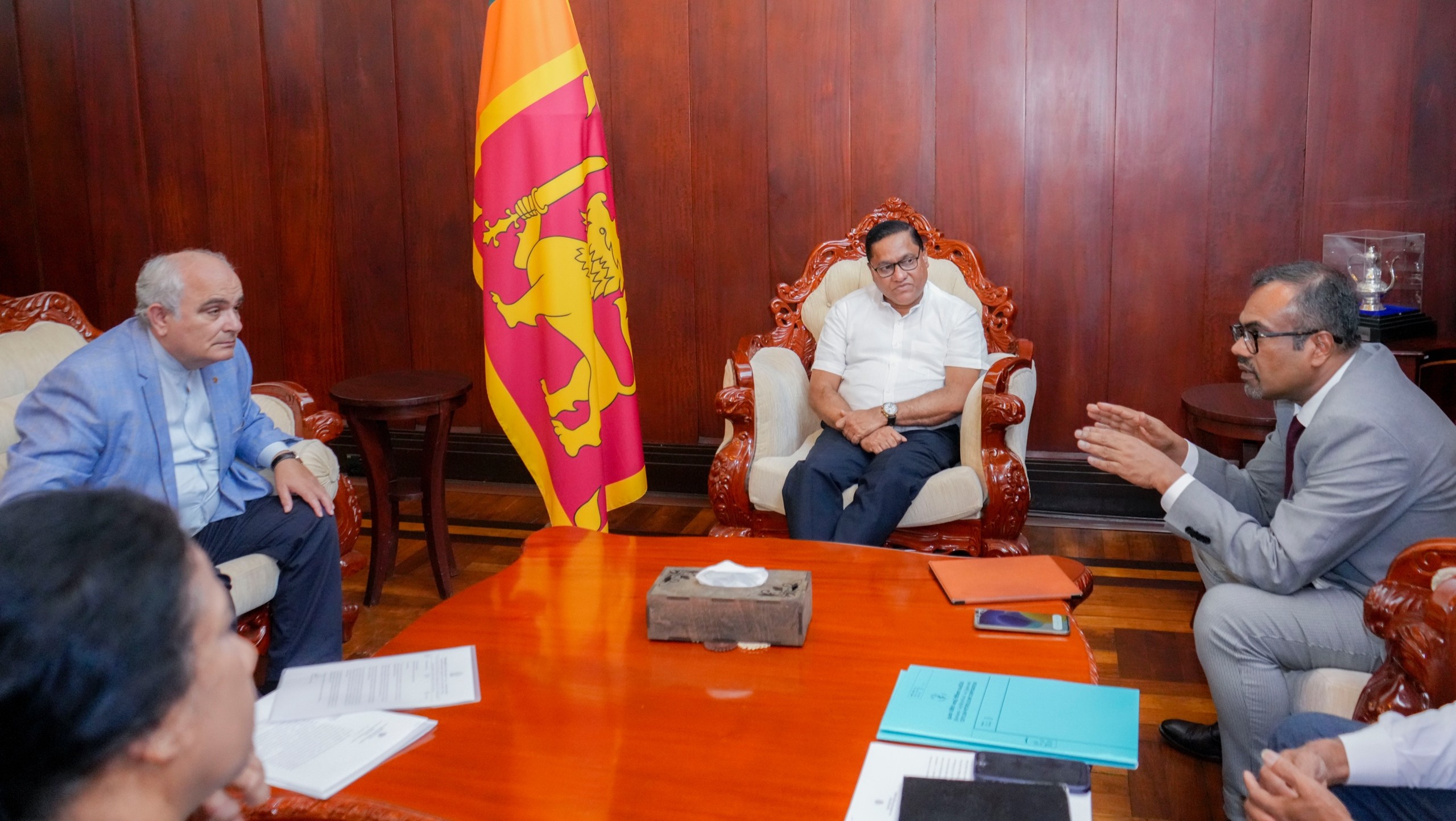
Sri Lanka is exploring the possibility of importing fuel from Russia as the island faces mounting pressure on energy supplies due to ongoing global disruptions linked to conflict in the Middle East.
Foreign Minister Vijitha Herath held discussions with Russian Ambassador to Sri Lanka Levan S. Dzhagaryan on Wednesday at the Ministry of Foreign Affairs, Foreign Employment and Tourism, focusing on securing alternative fuel sources.
The talks come as global fuel supply networks have been disrupted by the ongoing war involving the United States, Israel and Iran, and amid a recent easing of restrictions on the purchase of Russian oil.
During the meeting, Minister Herath examined the option of sourcing fuel from Russia in an effort to maintain stability in Sri Lanka’s fuel supply.
Ambassador Dzhagaryan agreed to convey Sri Lanka’s request to Moscow and to coordinate with relevant institutions.
The discussions follow a decision by the United States to temporarily ease sanctions, issuing a 30-day waiver allowing countries to purchase Russian oil and petroleum products that had been left stranded at sea. US Treasury Secretary Scott Bessent described the move as a “short-term measure” aimed at promoting “stability in global energy markets”.
In recent years, Washington had imposed strict penalties on countries purchasing Russian oil, including tariffs and other measures targeting buyers such as India, amid efforts to restrict Moscow’s revenue linked to the war in Ukraine. As a result, large quantities of sanctioned Russian oil had remained on tankers off the coasts of India and other Asian countries, with traders seeking alternative buyers.
Sri Lanka’s renewed interest in Russian fuel comes as the government has already taken steps to curb domestic consumption, including a mandatory state holiday every Wednesday and reintroducing rationing measures.
The move also reflects growing concern over the island’s vulnerability to external energy shocks. Sri Lanka imports all of its fuel requirements and remains heavily dependent on global supply chains, particularly those linked to the Middle East.
However, in a statement issued on 18 March, the Russian Embassy in Colombo sought to clarify reports surrounding the discussions.
“In the light of the circulation of various speculative reports regarding the meeting between the Russian Ambassador L.Dzhagaryan and senior officials from Sri Lankan Ministry of Foreign Affairs concerning energy supplies, the Embassy is authorized to state that no financial or logistical questions were discussed during the talks. The Embassy is working on these issues.”
The development comes as Sri Lanka continues to navigate economic fragility following its 2022 financial crisis, with authorities seeking to secure energy supplies while managing limited foreign reserves and rising global uncertainty.