
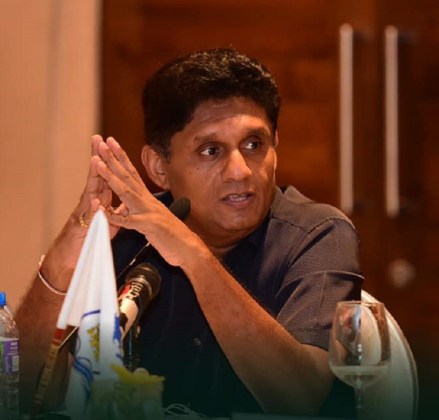
Opposition Leader Sajith Premadasa has questioned how a US submarine was able to enter Sri Lanka’s Exclusive Economic Zone (EEZ) and carry out an attack on an Iranian naval vessel without the government being aware of its present.
Speaking during a parliamentary debate on emergency regulations on Thursday, Premadasa said it was “alarming” that Sri Lankan authorities unaware that a submarine had entered waters close to Sri Lanka and carried out a deadly attack, which has reportedly killed over 100 Iranian sailors.
The comments follow the sinking of the Iranian warship IRIS Dena in the Indian Ocean south of the island. As previously reported, the vessel was reportedly struck by a torpedo launched from a United States submarine while sailing near Sri Lanka’s maritime boundary.
The vessel was reportedly just 44 nautical miles (81km) off Sri Lanka's southern coast.
Sri Lankan naval vessels later launched a rescue and recovery operation in the waters off Galle after bodies and survivors were discovered in the sea. Dozens of Iranian sailors were rescued and taken to hospital, while scores of others were reported dead.
Addressing parliament, Premadasa questioned how a submarine could operate so close to Sri Lanka without being detected by the country’s defence systems.
“If a submarine had entered our waters 40 nautical miles from Sri Lanka, did we not have the technology to detect it? Do we not have surface radars? Sonobuoys or underwater sonar networks? Do we not have towed sonars or satellite surveillance? At a time when our national security was at its highest level, a submarine entered our Exclusive Economic Zone and carried out an attack. But the government said it was not sure of the cause. This alone shows the level of our national security,” he said.
Premadasa also called on the government to clarify what diplomatic steps had been taken to safeguard Sri Lanka’s maritime zone and whether the attack constituted a violation of international maritime law.
His remarks come amid continuing scrutiny of the circumstances surrounding the sinking of the Iranian vessel. Premadasa also warned that the wider regional conflict could have significant economic consequences for Sri Lanka, particularly if tensions disrupt shipping routes through the Strait of Hormuz.
He said such disruptions could lead to increases in the price of fuel, gas, medicine and food, placing further strain on Sri Lanka’s already fragile economy. The Opposition Leader urged the government to explore immediate fuel procurement options from India and Russia in order to mitigate the risk of shortages.
He went on to warn of the potential environmental consequences of the incident, cautioning that the sunken Iranian vessel could trigger marine pollution similar to previous maritime disasters near Sri Lanka. Premadasa referred to earlier incidents including the X-Press Pearl and New Diamond disasters and urged authorities to closely monitor the surrounding waters for signs of pollution.
He further called on the government to ensure the safety of Sri Lankan migrant workers in the Middle East, noting that nearly one million Sri Lankans are employed in the region and that their remittances remain a critical source of foreign income for the country.