
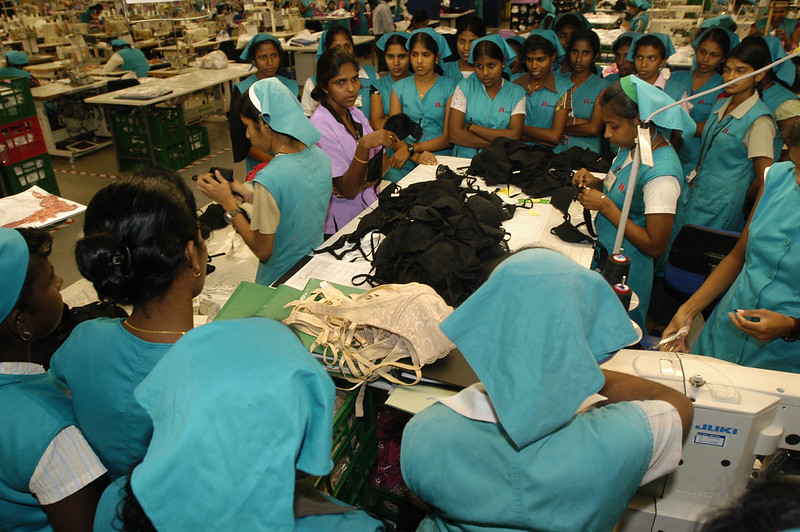
(Photo of Sri Lankan Garment Workers, Credit ILO Asia-Pacific)
MAS Holdings has confirmed it will cease garment manufacturing operations at its Methliya facility in Thulhiriya, a move that has raised concerns over job losses and the broader impact on Sri Lanka’s already strained economy.
The company announced that the plant, located within the MAS Fabric Park in Thulhiriya, will be repurposed to expand fabric manufacturing capacity, including knitting, dyeing and finishing operations. Garment production at the site will be reallocated to other MAS facilities in Sri Lanka.
Around 2,200 employees at the Methliya plant are directly affected. MAS stated that all employees have been offered transfers to other MAS facilities either within Sri Lanka or overseas, including in Jordan, with a three month salary incentive offered to those who accept relocation. Those who choose not to relocate have been offered compensation, according to the company.
It said the decision follows a prolonged contraction in global apparel demand, citing declining orders from key export markets such as the United States, the European Union and the United Kingdom. MAS also pointed to economic slowdowns, high inflation, tariff pressures and wider policy shifts affecting the global apparel sector.
However, the closure has intensified concerns over the stability of Sri Lanka’s largest export industry, which remains a major source of foreign exchange and employment. The apparel sector has long been a pillar of the country’s economy, and reductions in production capacity risk compounding existing economic pressures.
Opposition leader Sajith Premadasa warned that the closure of MAS facilities could have far wider consequences. He said that as many as 26,000 people could lose employment if further closures proceed, and cautioned that the relocation of apparel production to countries such as India would further weaken Sri Lanka’s industrial base.
“Mas Holdings is one of the companies which came up as a result of the 200 apparel factory programme introduced by my father, late President Ranasinghe Premadasa. Factories of Mas Holdings used to produce world-renowned brands such as Victoria's Secret, Adidas and Calvin Cline. Sri Lanka seems to be losing the opportunity of producing these brands,” he said.
The warning reflects growing anxiety over capital flight and industrial relocation as global brands adjust supply chains. Sri Lanka has faced increasing competition from lower cost manufacturing hubs such as Bangladesh and Vietnam, as well as shifting trade policies and currency pressures.
The garment sector has been one of the country’s primary export earners for decades. Any contraction in output or employment is likely to deepen Sri Lanka’s economic crisis, which has already been marked by debt distress, inflation and reduced foreign reserves.
MAS has stated that its restructuring is part of a wider global reorganisation, pointing to recent closures in Haiti and the Dominican Republic. It said operations at other facilities are continuing and that any future decisions would be communicated to employees.
Nevertheless, the closure of the Methliya plant has intensified concerns that Sri Lanka’s export industries are losing competitiveness and investment. Economists have warned that further losses in manufacturing could lead to declining export earnings, rising unemployment and increased pressure on public finances.