
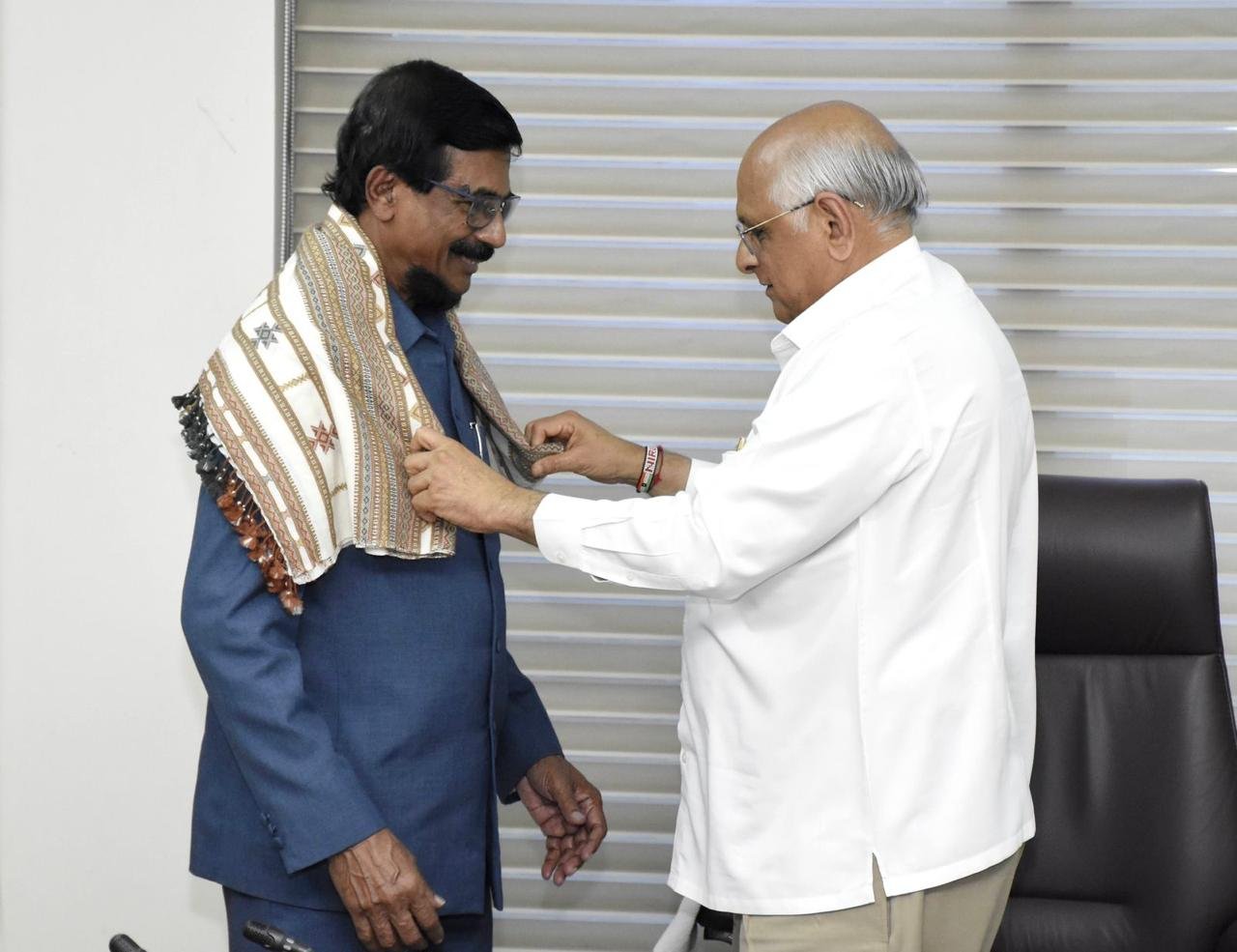
Janatha Vimukthi Peramuna (JVP) General Secretary Tilvin Silva has insisted that his party was “never against India” as he sought to recast its historic opposition to the Indo-Lanka Accord, following his first official visit to India.
Speaking to the Sunday Times, Silva rejected claims that the JVP had shifted from an anti-Indian stance to a pro-India position, arguing instead that the party had only opposed the policies of the Indian government under former Prime Minister Rajiv Gandhi and the Sri Lankan administration of J.R. Jayewardene
.
“We were never against India. What we acted against was the Indian government of the time under Rajiv Gandhi and the J.R. Jayewardene government in Sri Lanka and the political policies they followed,” he said. “Hence, we opposed both the governments of Rajiv Gandhi and J. R. Jayewardene. It happened in light of the Indo-Lanka Accord, which we say even today is something that shouldn’t have happened.”
Silva added that historical grievances should not obstruct present-day relations, stating, “That’s a history from 38 years ago, and now the world has changed. India has changed, and we have changed also. We don’t have to make the past an obstacle to future relations… History is history, and we have all learnt from it. We have to work to suit the present times. It’s wrong to live in the past.”
His remarks come as the JVP-led National People’s Power government continues to deepen diplomatic and economic ties with India, despite the party’s history of opposing ties with India.
Defending the JVP’s past
Responding to criticism that the party’s anti-Indian stance fuelled violence during the second JVP insurgency, Silva placed responsibility on the Jayewardene administration.
“That destruction could have been averted by J. R. Jayewardene. If he had not signed the Accord without even informing his Cabinet and by keeping the public in the dark, the situation would not have arisen,” he said, adding that protests had initially been peaceful before state repression escalated the situation.
Silva declined to express remorse for the JVP’s actions, instead arguing that the party had merely reacted to state policies. “Even Isaac Newton has said that ‘for every action there is an equal and opposite reaction.’ We have not acted. We have only reacted,” he said. “They are the ones who have to show remorse for what happened, not us.”
He maintained that the JVP bore no responsibility for the 1983 anti-Tamil pogrom, stating, “If we were involved in any way, there should have been at least one court case against us. It’s clear that it was the UNP that created the riots and used it to ban the JVP along with the Communist Party of Sri Lanka and the Nava Sama Samaja Party (NSSP).”
Embracing ties with India
Silva struck a markedly different tone when discussing present relations with India, describing the administration of Indian Prime Minister Narendra Modi as a “genuine friend”.
“I think all governments after Rajiv Gandhi did not adopt a policy of coercion towards Sri Lanka. We can safeguard our sovereignty and work with the Modi government in a friendly manner. We feel that the Modi government is a genuine friend to us,” he said.
He added that concerns among Sri Lankans about India’s geopolitical influence were diminishing, arguing that such fears had been shaped by earlier policies of Indian governments. “I feel with the policies of the current Indian government toward Sri Lanka, the suspicions are receding,” he said.
“There are some who try to create a bogeyman of India. They are the same people who are also willing to kneel down in front of India if they are asked to. The reason we felt anger toward India in the past was because Sri Lanka’s rulers at the time also gave in to pressure from India. They did not have the fortitude to stand up to those pressures. If a government can be firm about its stance, then it can overcome undue influence from any quarter.”
Silva also denied that Sri Lanka was currently under pressure from India on key political questions, including devolution under the 13th Amendment. “No, there is no such pressure on us,” he said, adding that his discussions with Indian officials did not include the ethnic question.
Addressing concerns about agreements signed between Sri Lanka and India, Silva insisted that no secret deals had been concluded. “No secret agreements have been signed, and all the frameworks of the agreements have been tabled in parliament,” he said. “We came to build this country, and we will not take any decisions that would be harmful to the country.”
He also rejected suggestions that India had influenced cabinet reshuffles within the government.
In a separate interview with The Hindu, Silva confirmed that the JVP had revised its political education programmes, removing previous references to “Indian expansionism”.
“We still have the ‘five classes’ [in our political education], but there is none about India specifically,” he said, outlining that the party’s cadre are now trained on issues such as the economic crisis, the national question, the history of the left movement, the path to socialism and building a Bolshevik party.
On Sinhala Buddhism
Silva also rejected accusations that the JVP-NPP administration was hostile to Buddhism.
“Have we said this anywhere? Those who say this are trying to create a bogeyman like they did before the election by portraying us as being anti-Buddhist,” he said, pointing to recent state-sponsored religious events and his own personal background in Buddhist education.
“But the opposite is true. We arranged a special exposition of the Sacred Tooth Relic. We have given state patronage to Buddhism, and recently, for the first time, the sacred Devnimori Relics of Lord Buddha were sent from India for exposition here. The President regularly visits the Dalada Maligawa and pays his respects to the Maha Nayaka Theras. Those who say we are against Buddhism are the ones who were the cat’s-paw of the Rajapaksas and, having lost their powers, are now spreading such stories. Those saying such things are doing more harm to Buddhism than good. I come from a Buddhist family. I went to Daham Pasala. From Grade Six to Grade Ten, I studied at a Pirivena. For my Advanced Level examination, I took four subjects, including Buddhist Culture.”
“We live by the teachings of the Buddha.”