.jpeg)
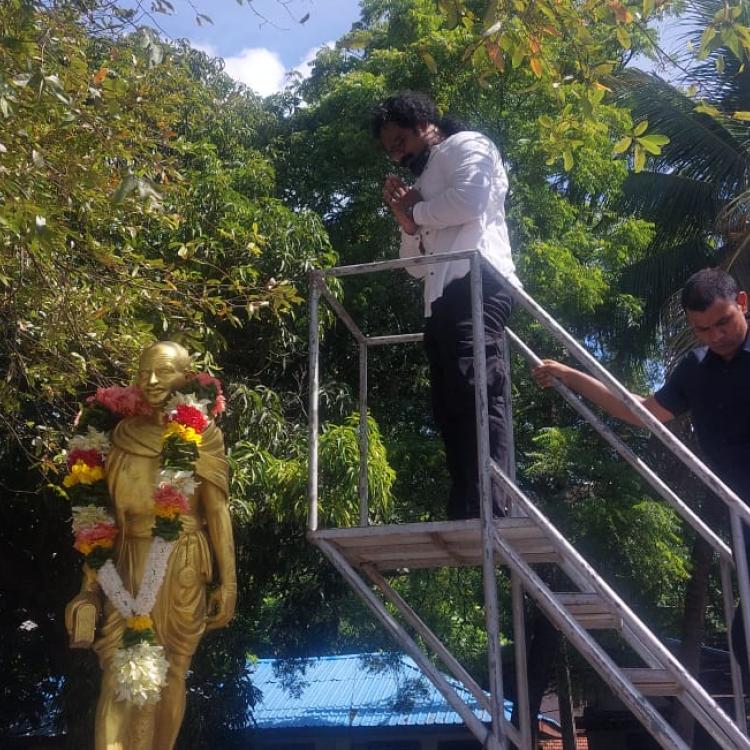
The 130th birth anniversary of Kanagasabai Mudaliyar Thamby Sellappa, founder of the Jaffna Public Library, was commemorated on Tuesday at the library premises in Jaffna.
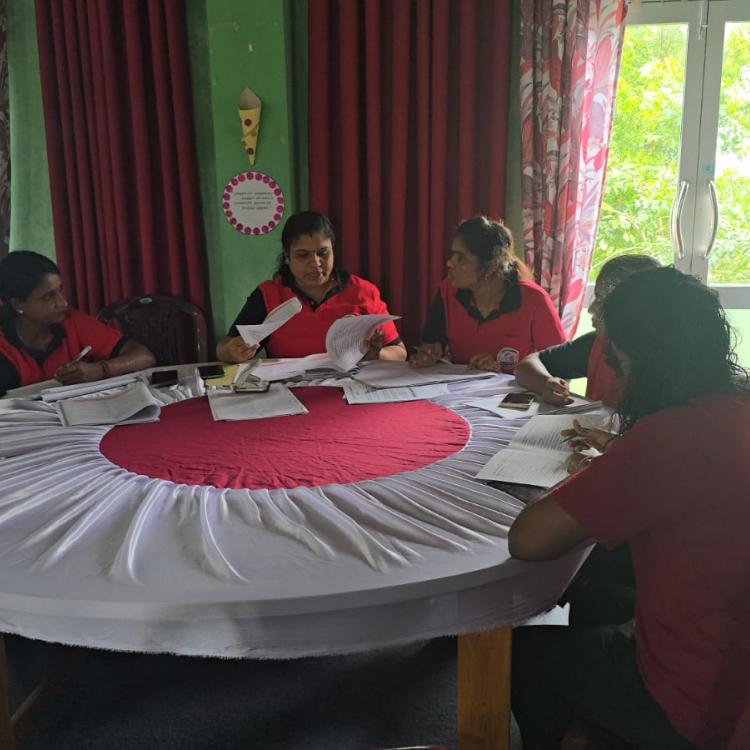
The event brought together the Municipal Commissioner of Jaffna, Kishnendran, the Chief Librarian, the Assistant Librarian, library staff, representatives of the Readers’ Circle and relatives of K.M. Sellappa. Attendees gathered at the site that remains one of the most powerful symbols of Tamil intellectual life and cultural resilience in Tamil Eelam.
K.M. Sellappa was born on 24 February 1896 and served as a court clerk at the Jaffna Court. He was known as a scholar proficient in both Tamil and Sinhala and became widely respected for his dedication to education and public learning. Sellappa, fondly known as “Puttur Sellappa,” first founded a modest library in Puttur in 1933 using books from his own personal collection.
.jpeg)
In June 1934, a committee was formed to establish a public library in Jaffna. Sellappa contributed both his own books and a sum of Rs. 1,184.22 collected from well-wishers. The library initially functioned in a rented house near the Jaffna Hospital, housing 844 books and subscribing to 34 periodicals. In 1935, after coming under the responsibility of the Jaffna Urban Council, it moved to another rented building.
In 1953, the Jaffna Public Library was established at its present site. Built in a distinctive Dravidian architectural style, it grew into one of Asia’s most renowned libraries, housing tens of thousands of manuscripts, books and irreplaceable Tamil texts.
.jpeg)
Sellappa passed away on 24 April 1958, but his legacy endured through the institution he founded, which became a central pillar of Tamil cultural and intellectual life in the North-East.
That legacy was violently targeted in June 1981, when the Jaffna Public Library was burned in an act widely recognised as state-backed arson carried out by Sri Lankan security forces and Sinhala mobs. Nearly 100,000 books and manuscripts were destroyed, including rare palm-leaf manuscripts, historical records and centuries of Tamil scholarship. The burning of the library is widely regarded as one of the most devastating attacks on Tamil culture, and a precursor to the anti-Tamil pogrom of 1983.
Despite its later reconstruction, the destruction of the library remains emblematic of the systematic erasure and repression faced by the Tamil nation. For Eelam Tamils, the library stands as both a monument to knowledge and a reminder of state violence against Tamil heritage.
.jpeg)