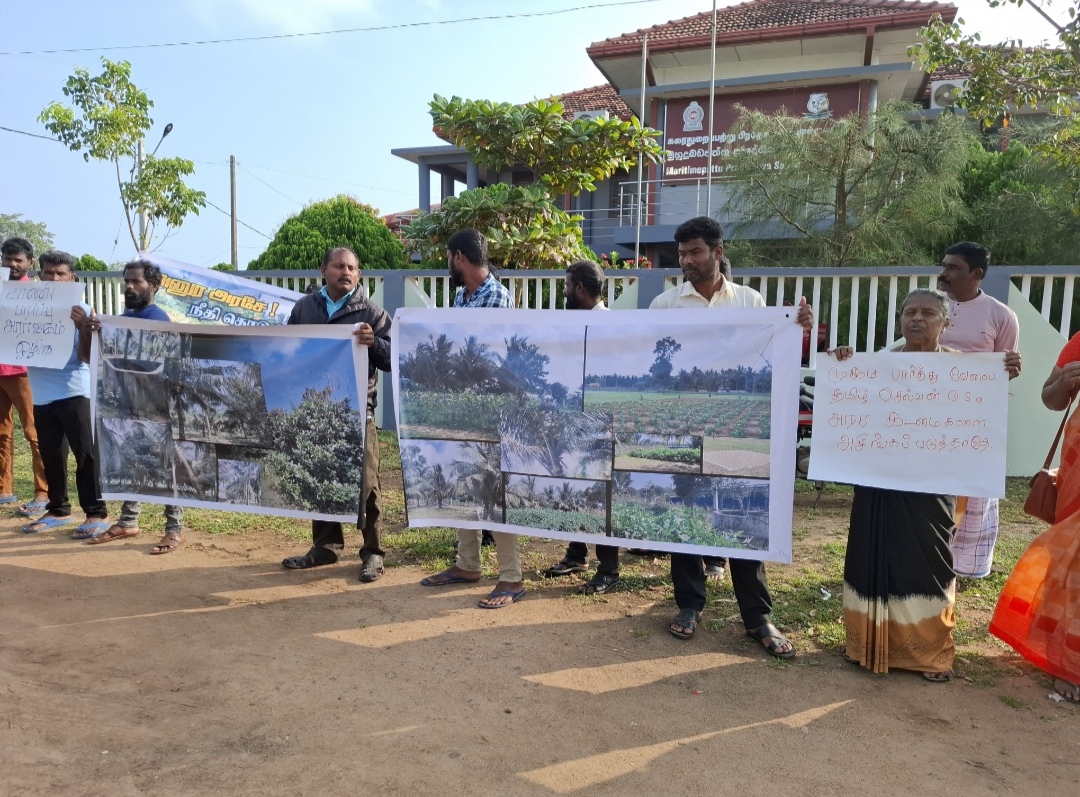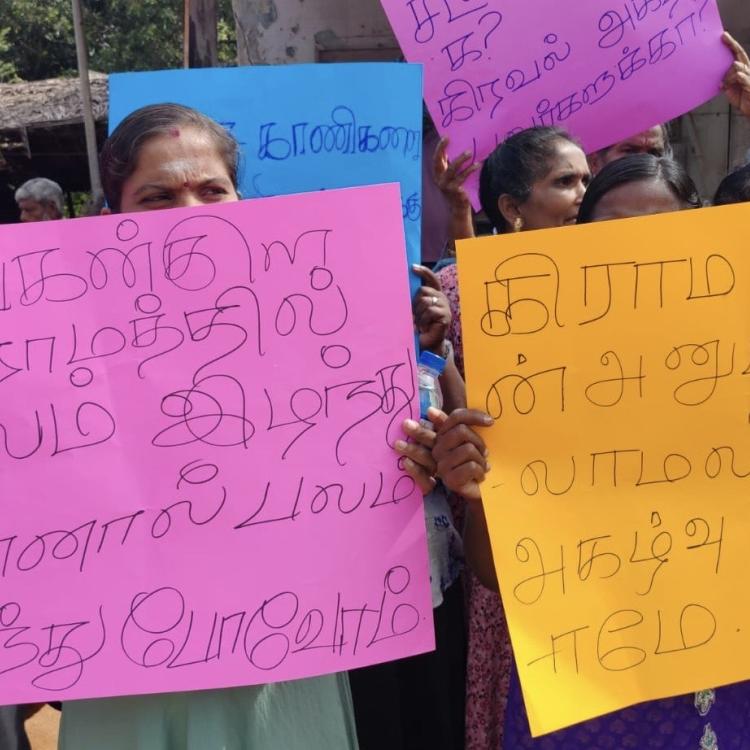
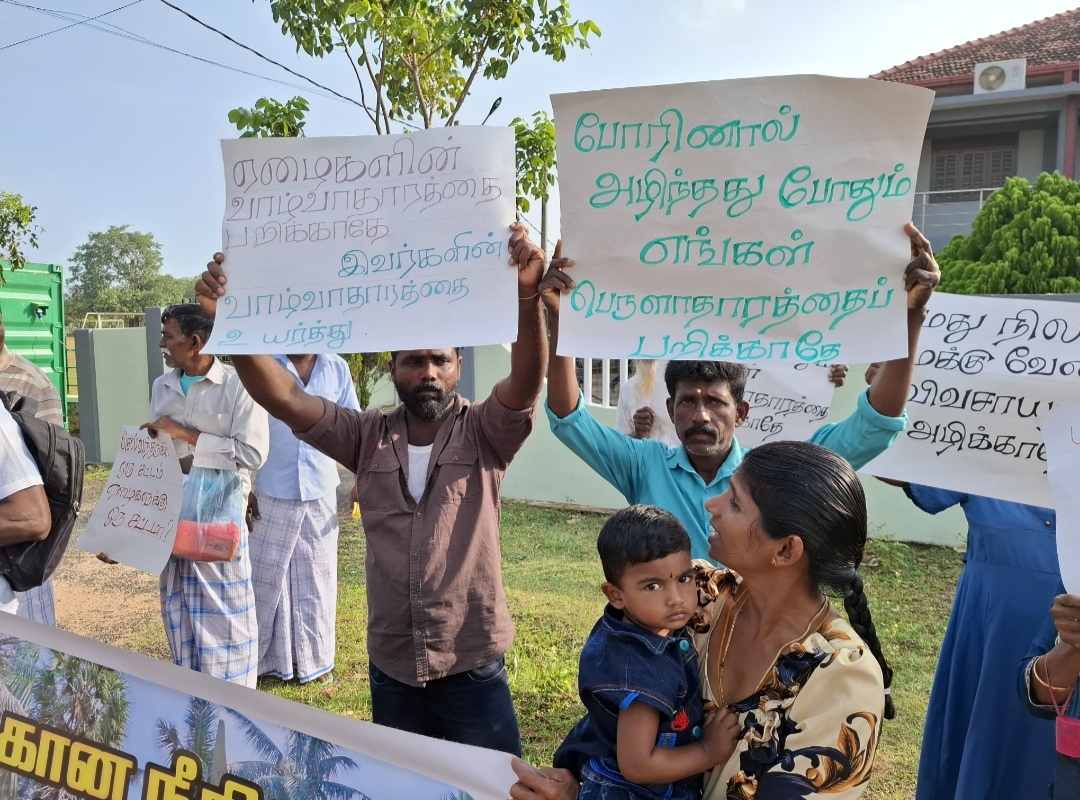
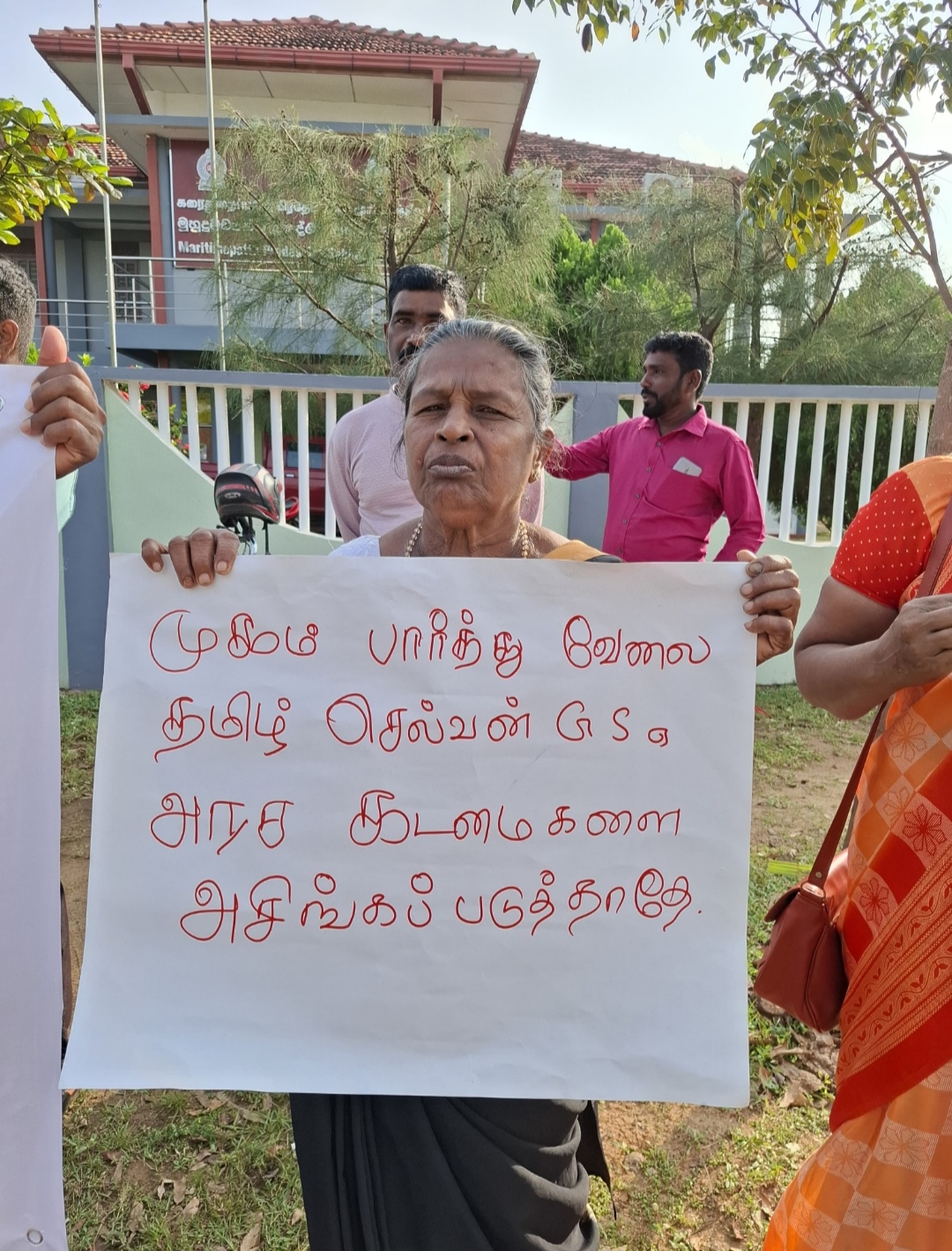
Tamil landowners staged a protest in front of the Mullaitivu District Secretariat on 27 January 2026, accusing the Puthukudiyiruppu Divisional Secretariat of initiating legal action against nearly 60 landholding families in the district.
The demonstration was organised by residents of the Kombavil Grama Niladhari Division in Puthukudiyiruppu, alongside members of the public from Devipuram and surrounding areas. Protesters said the action was held in response to what they described as arbitrary and discriminatory measures taken by officials of the Puthukudiyiruppu Divisional Secretariat, including land officers and Grama Niladhari officers.
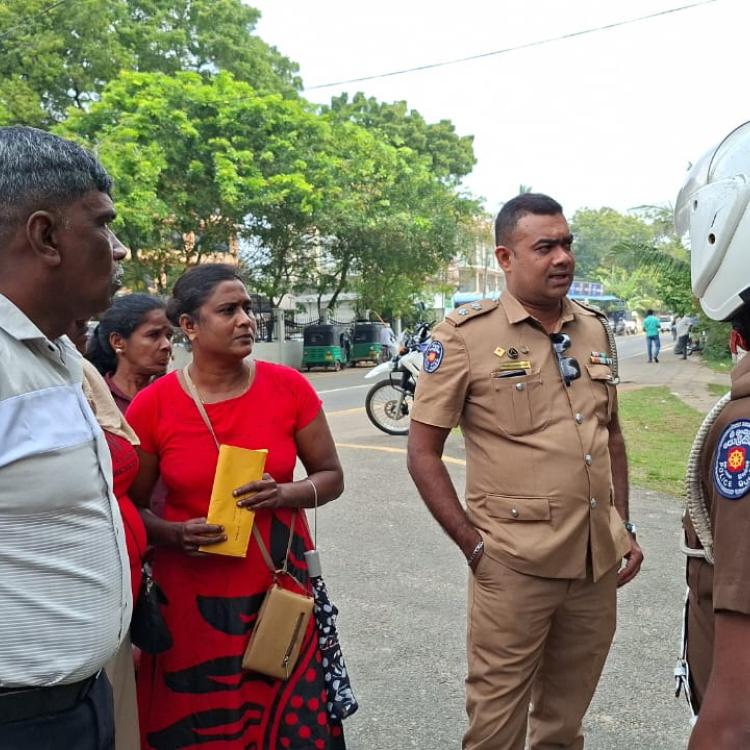
During the protest, memoranda outlining their grievances were handed over to Vanni District Member of Parliament T. Ravikaran and the Mullaitivu District Additional Government Agent, urging immediate intervention to halt the legal proceedings.
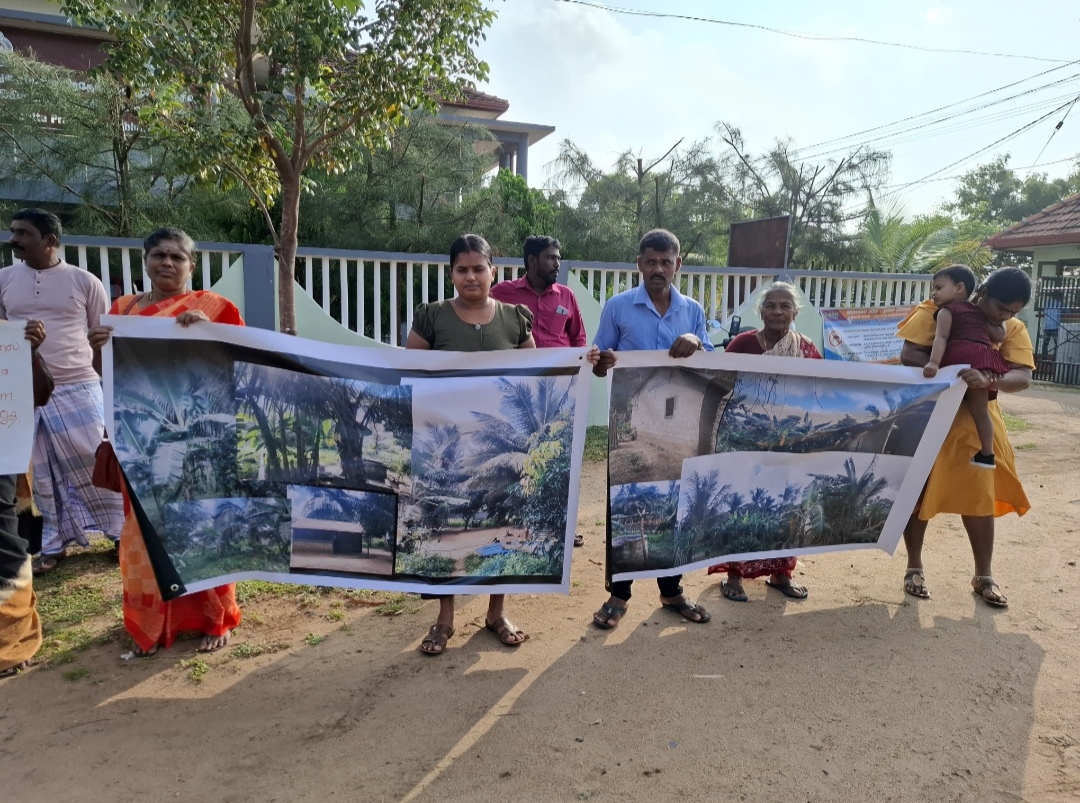
Speaking to the media, the protesters explained that the Sri Lankan government had allocated them only half an acre of land each, on which they had built homes and planted coconut trees. They said that, in order to sustain their livelihoods, they had rehabilitated and cleared adjacent scrub forest land, cultivated seasonal crops, planted creepers, and engaged in cashew cultivation on nearby plots that had long remained unused.
However, they alleged that officials from the Divisional Secretariat had subsequently issued Form ‘A’ notices ordering them to vacate these cultivated lands with immediate effect. Following the issuance of these notices, legal action was initiated against the affected families, they said.
Protesters further claimed that the enforcement of land regulations was being carried out selectively. While certain individuals were said to have occupied and regularised ownership of lands extending up to 15 acres, no action had been taken against them. By contrast, poor Tamil families cultivating small plots for subsistence were being targeted through eviction notices and court proceedings.
They stated that they had repeatedly raised the issue with the Mullaitivu District Government Agent, the Land Commissioner, Members of Parliament from the current Sri Lankan government, and had even submitted appeals to the Presidential Secretariat. Despite these efforts, they said no response or relief had been forthcoming.
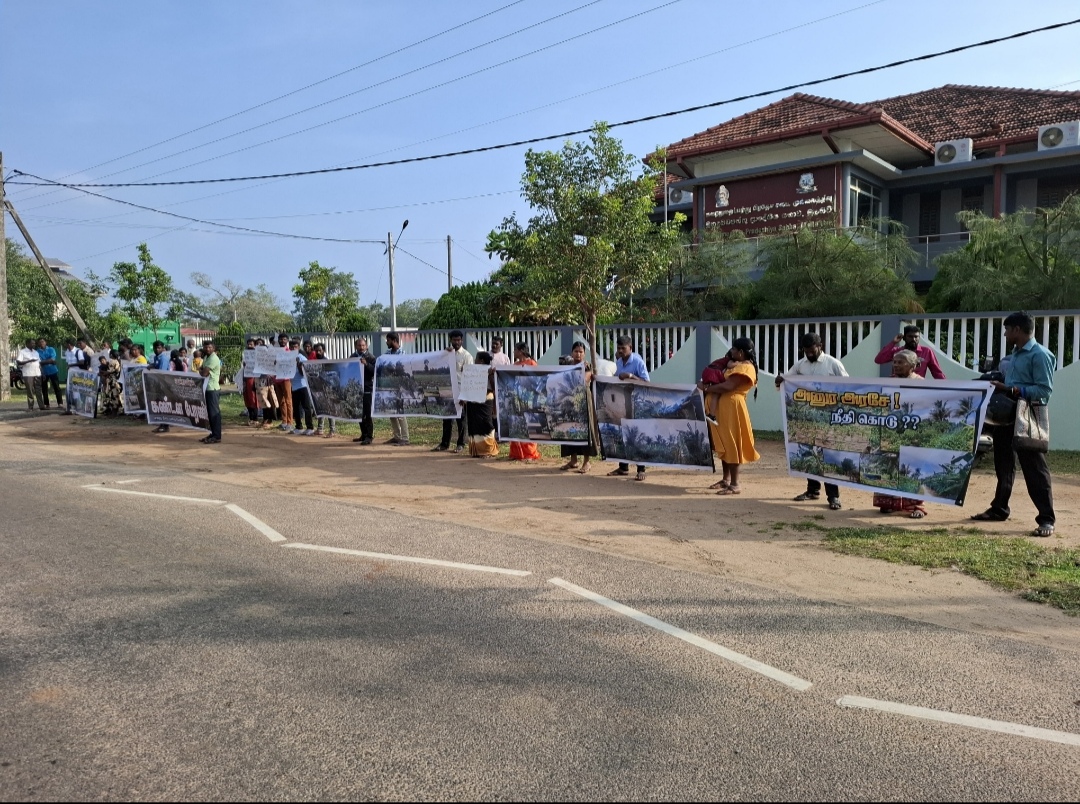
In this context, protesters described the demonstration as a last resort, organised after exhausting all available administrative and political channels. They warned that continued legal action against vulnerable Tamil families would deepen economic hardship in a region already devastated by war, displacement, and long-standing land insecurity.
The protest adds to growing concerns across the Tamil homeland over land governance, where locals have repeatedly accused state institutions of uneven enforcement, bureaucratic harassment, and the failure to protect the livelihoods and land rights of war-affected Tamil families.