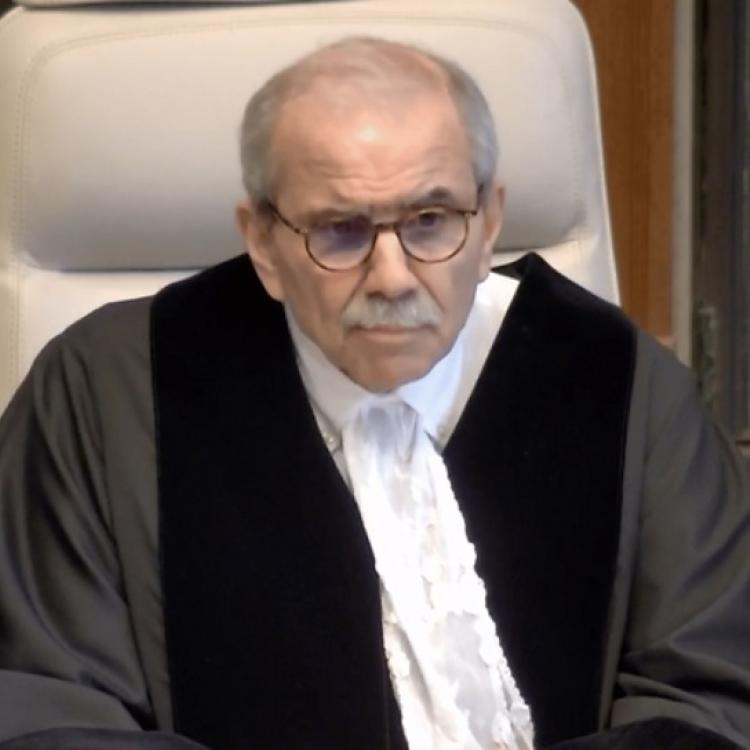
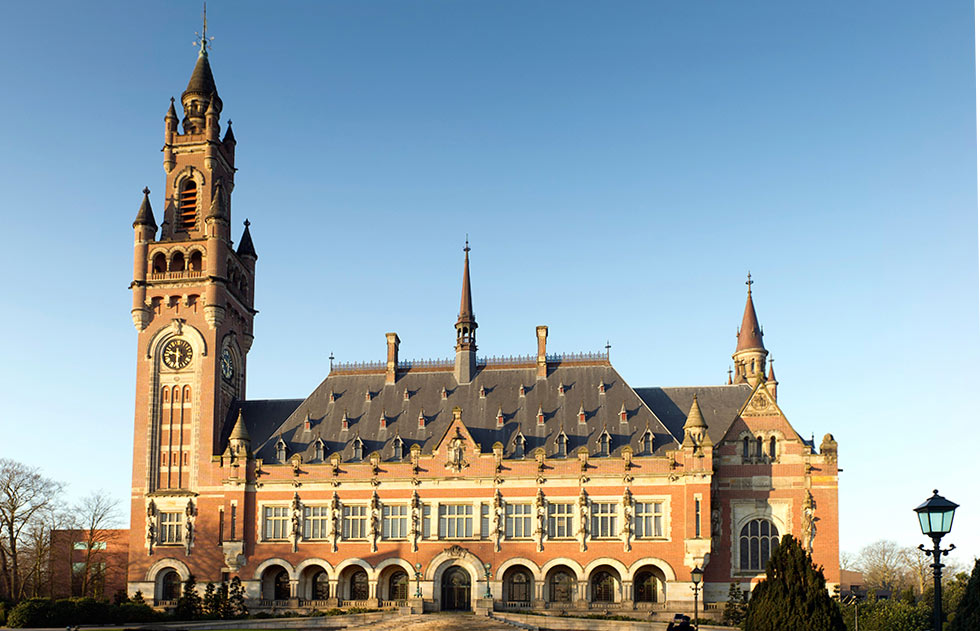
The International Court of Justice (ICJ) announced on last week that it will hold hearings in a case accusing Myanmar of committing genocide against its Rohingya minority.
The proceedings, scheduled to run from 12 to 29 January 2026, relate to a case filed by The Gambia in November 2019. The case alleges that Myanmar breached its obligations under the 1948 Convention on the Prevention and Punishment of the Crime of Genocide in connection with the 2017 military crackdown against the Rohingya population, carried out by Myanmar’s armed forces alongside Buddhist militias.
The ICJ has allocated three days, from 21 to 23 January, for the examination of witnesses, which will take place in closed sessions.
A United Nations fact-finding mission, which was denied access to Myanmar, concluded in 2018 that the military campaign involved “genocidal acts”, citing widespread killings, sexual violence and the systematic destruction of Rohingya villages.
Myanmar has rejected the UN’s findings and has consistently denied allegations of genocide, claiming its actions were legitimate responses to attacks by Rohingya militants in Rakhine State. Responding to the UN report in 2018, government spokesman Zaw Htay said Myanmar had established an Independent Commission of Enquiry to counter what he described as false allegations by UN agencies and the international community. In November 2017, the military had already cleared itself of wrongdoing following an internal investigation.
In January 2020, the ICJ unanimously ordered Myanmar to implement a series of provisional measures, requiring it to take steps to prevent acts of genocide and to preserve evidence related to the allegations.
The case is the first genocide case to be heard on its merits by the ICJ in more than a decade. Since the adoption of the Genocide Convention, the court has formally confirmed only one instance of genocide, in relation to the 1995 Srebrenica massacre in Bosnia.
Legal observers have highlighted the case’s significance for other contemporary genocide proceedings before international courts. Parallels have been drawn with South Africa’s case against Israel at the ICJ, particularly in how genocidal intent is argued through patterns of conduct rather than solely through mass killings. As in the Rohingya case, emphasis has been placed on forced displacement, the systematic destruction of civilian life, and persistent state denial. Critics argue that these cases expose the international legal system’s longstanding reluctance to recognise genocide while it is unfolding, raising questions over whether international law can move beyond retrospective acknowledgment towards timely accountability.
Several states have been admitted as intervening parties. These include Canada, Denmark, France, Germany, the Netherlands and the United Kingdom, which filed a joint declaration of intervention, as well as the Maldives, Slovenia, the Democratic Republic of Congo, Belgium and Ireland.
The intervening states have argued that genocide is not limited to mass killings and, according to Reuters, have said in written submissions that genocidal intent must be assessed not only through death tolls but also through patterns of forced displacement, crimes against children, and sexual and gender-based violence.