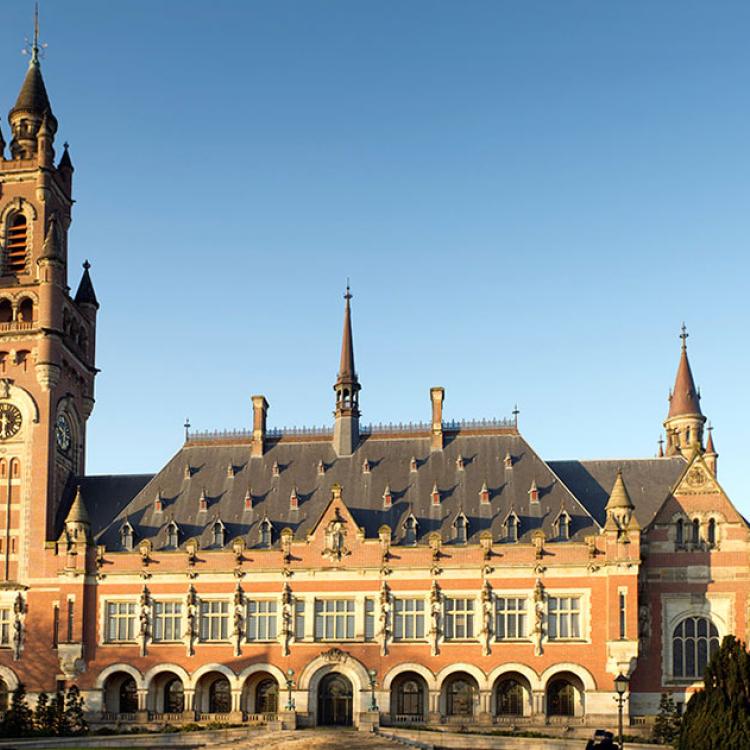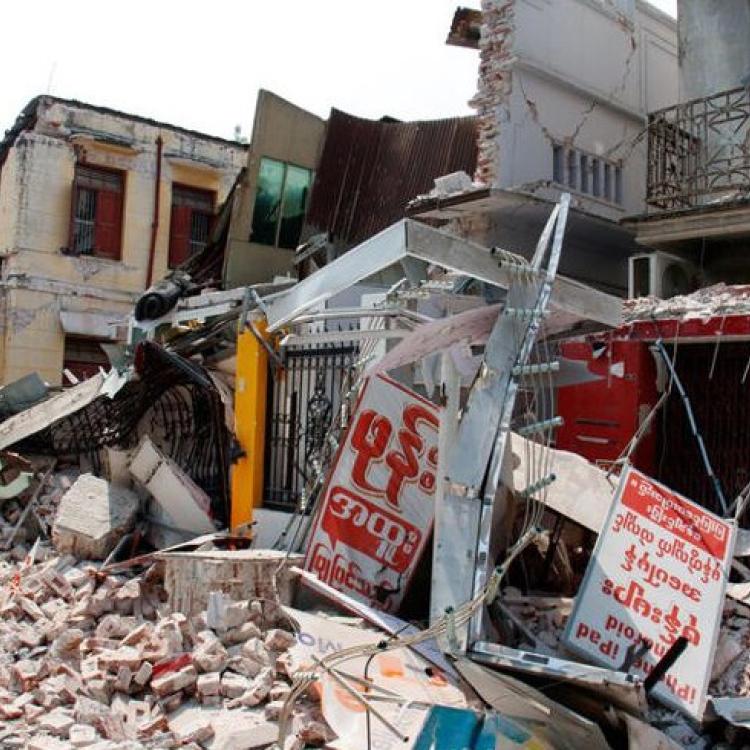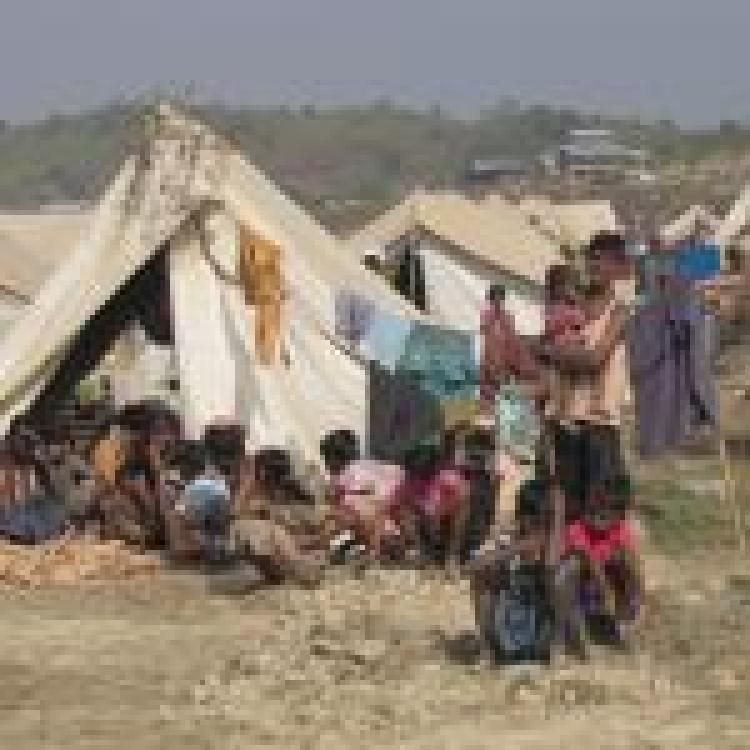

This week, the charge that Myanmar committed genocide against the Rohingya went before the International Court of Justice for three weeks of testimony.
Gambia, a West African country, filed the suit in 2019 on behalf of the 57-nation Organisation of Islamic Cooperation. The International Court of Justice, in The Hague, allowed the case to proceed on the premise that international law gives countries a mandate to act against genocide anywhere in the world, even if they are not affected.
On the same basis, the International Court of Justice, an arm of the United Nations, later allowed the 2023 genocide charge by South Africa against Israel, which is still at an early stage. Israel has rejected the charge.
The case, centres on military operations in 2016 and 2017 that forced more than 700,000 Rohingya to flee to neighbouring Bangladesh.
The Gambia will present its first arguments from Monday until Thursday. It has accused Myanmar’s military of systematic clearance operations against the Rohingya, and of committing mass murder, rape and torching villages, with the “intent to destroy the Rohingya as a group in whole or in part”.
Myanmar has denied the allegation of genocide and will present its arguments from 16-20 January. Unusually for the court, survivors will give evidence in the case. Proceedings will end on 29 January.
Dawda A. Jallow, the attorney general and justice minister of Gambia, said in his opening remarks to the 15-judge court that Myanmar’s military rulers had turned the lives of the Rohingya “into a nightmare subjecting them to the most horrific violence and destruction one could imagine.” He said his country was prompted to file its case, under an international treaty known as the Genocide Convention, because of its own experiences with a military regime.
“Myanmar merely asserts that the motive of its operations was counterterrorism,’’ Philippe Sands, a member of Gambia’s legal team, told the court, but the scale and systematic nature of the campaign went far beyond any military goal, he said. “The only reasonable conclusion is that Myanmar acted in this case with genocidal intent.’’
Another lawyer on that team, Paul Reichler, cited extensive witness testimony, primarily from 2017, including 54 instances of houses being locked and set ablaze with families inside. Witnesses recounted women and girls being gang raped and some times mutilated, he said, and children being wrenched from their mothers’ arms and thrown into fires. Satellite images showed dozens of villages burned to the ground.
In its 80-year history, the nearest the World Court has come to holding a nation responsible for genocide was in 2007, in a case brought against Serbia by Bosnia. In that case, the judges ruled that the 1995 Srebrenica massacre in Bosnia was an act of genocide, and that Serbia had failed in its duty to prevent the atrocity. But a divided court did not find Serbia guilty of the slaughter, itself, though it was committed by Bosnian Serb forces that worked closely with Serbia.
Read more at the Guardian,