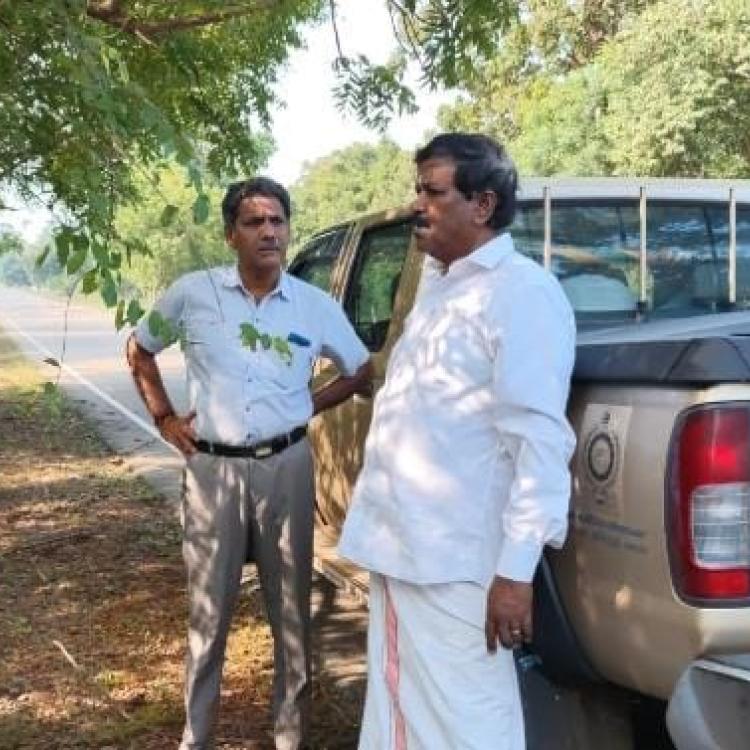

Tamil residents of Samanankulam have raised serious concerns over yet another illegal Buddhist temple, this time being constructed within the Pillaiyar Temple complex at Kallumalai, allegedly with the involvement of Sri Lanka’s Department of Archaeology.
Local residents state that, for several years, Sri Lanka’s Department of Archaeology had actively obstructed construction and renovation work at the Pillaiyar Temple. After the area was declared an archaeological site through the erection of a name board, permission was granted only for ritual worship at the existing temple. All construction activities were suspended, and even basic renovation works were prohibited.
Following sustained public agitation and pressure from the Tamil residents, approval was eventually obtained from the relevant ministry during the previous administration, allowing construction work on the Pillaiyar Temple to recommence.

However, residents allege that the Department of Archaeology has since taken advantage of this renewed activity. Claiming to be carrying out restoration work, the department has proceeded to construct a vihara within the temple premises, specifically at the site of an existing octagonal pavilion. Locals fear that the department calculated that public opposition would be limited if the work was framed as archaeological conservation.
Historians and archaeologists have raised further concerns, pointing to the historical significance of the site. In the past, an octagonal Sivalingam was reportedly recovered from the very area where the pavilion once stood. According to researchers, this Sivalingam was later found near the Ellappamaruthankulam tank bund and is currently enshrined at a temple in the Ellappamaruthankulam area.
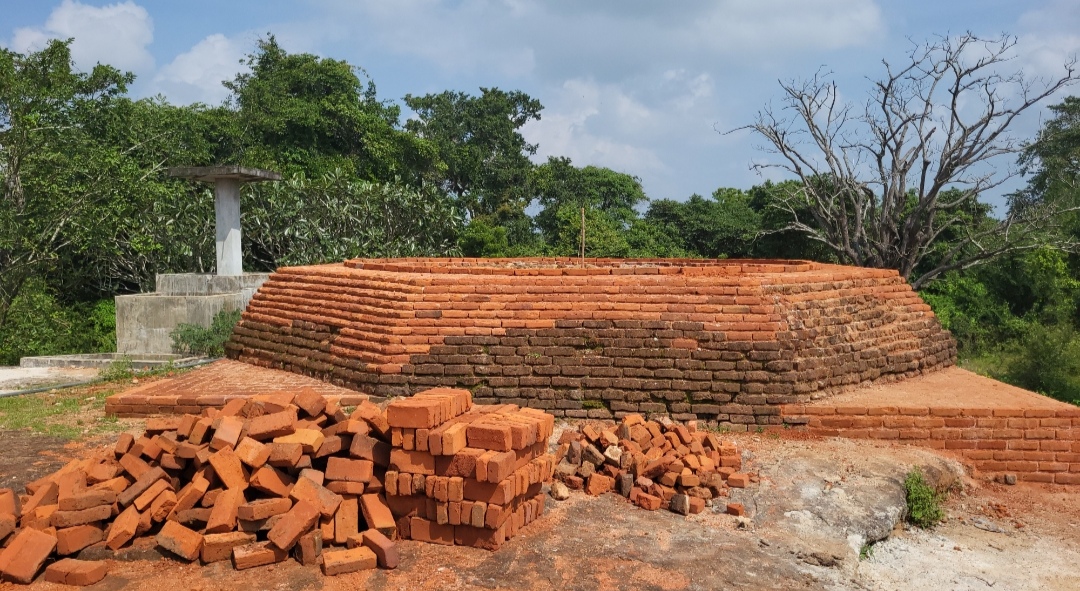
Despite this context, vihara construction is now reportedly underway at the precise location of the former octagonal pavilion. Scholars note that similar octagonal Sivalingams have been identified in Kilinochchi, Kurunthoor Malai, and in Kumbakonam in India. They argue that a comparable octagonal Sivalingam likely existed in the Samanankulam area and may have been worshipped in ancient times within the pavilion.
Researchers stress that these historical narratives require rigorous academic investigation, rather than unilateral construction that risks permanently altering or erasing Tamil religious and archaeological heritage.