
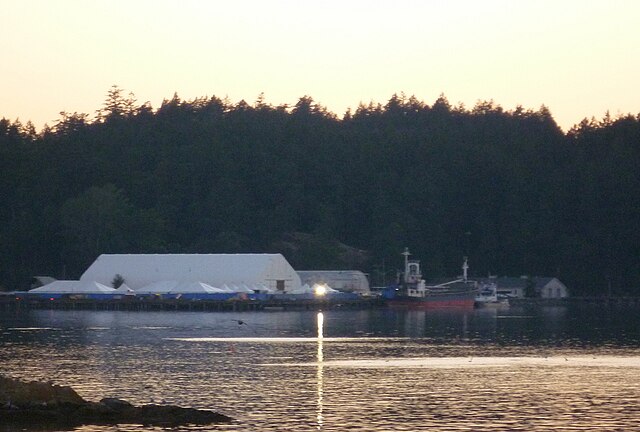
A Tamil refugee who fled to Canada by sea is facing deportation to Sri Lanka, despite fears of imprisonment, torture and arbitrary detention, as reported by The Breach and Toronto Star. Kugatheeswaran Thuraisinkam was one of the 492 passengers aboard the MV Sun Sea, which arrived in British Columbia in August 2010 after the Tamil genocide.
In late 2009, Thuraisinkam left the island due to threats by Sri Lankan authorities, who linked him and his family to the Liberation Tigers of Tamil Eelam (LTTE). Over fifteen years after surviving a months-long perilous journey across the Pacific Ocean, he is still fighting for the right to stay in Canada.
Precarious status in Canada
"We were stuck on that boat for a long time. It was crowded. There wasn’t enough food or water. We thought we were all going to die," he said in an interview with the Toronto Star. The voyage caused significant trauma, especially as one of the passengers died on the ship and was buried at sea.
Thuraisinkam made a claim for refugee status the day the vessel docked off the western coast in Vancouver. He was detained for three months, and following his release, he moved to Toronto, where he worked in jobs such as construction and carpentry.
"I came to Canada because there were problems back home and if I go back, I fear I may face the problems again," he told The Breach. "It’s very difficult."
His refugee claim was denied in 2012 as Canadian authorities cited inconsistencies in Thuraisinkam’s accounts of being linked to the LTTE. Appeals and a subsequent pre-removal risk assessment have not supported his case, as his previous lawyer failed to submit evidence that the passengers of the ship would face persecution if they were deported back to Sri Lanka.
Throughout the years, authorities have attempted to remove him from Canada. According to reports, the government’s travel documents for his deportation incorrectly stated that he had arrived in 2018, even though multiple court documents confirm that he arrived on the MV Sun Sea in 2010.
Thuraisinkam’s legal submissions suggest that the government drafted the document and forced him to sign it without him understanding its contents. "In not disclosing the true date of Applicant’s arrival in Canada, this strongly suggests that even the CBSA/Canadian government accept there is risk to MV Sun Sea returnees in Sri Lanka," stated his legal documents.
The Canadian Border Services Agency (CBSA) refused to provide information on the specific case. "The CBSA is committed to removing as soon as possible all foreign nationals who are inadmissible to Canada and subject to an enforceable removal order," a spokesperson said.
Thuraisinkam has experienced immigration detention, homelessness and family separation from his wife and three children since seeking safety in Canada. "For years I have survived by sleeping outside, sometimes in bus shelters," he said in an affidavit to the Federal Court.
Threats of torture and detention
According to legal documents, Thuraisinkam fears ‘imprisonment, torture, arbitrary and indefinite detention and even death’ if he were deported to Sri Lanka. These documents cite the cases of two fellow passengers who were detained and tortured upon their arrival in Sri Lanka.
One passenger was brutally stripped, starved and tortured by the Terrorism Investigations Division. He died in a car crash, although family members and community advocates suspected that he was murdered. Following his death, his lawyer called for a moratorium on removals to Sri Lanka. Sri Lankan authorities also detained another passenger aboard the MV Sun Sea upon his forced return to the island.
Last year, the Federal Court said officials "needed to assess the applicant’s risks in light of the evidence about mistreatment of other MV Sun Sea returnees."
The risk of torture remains very high in Sri Lanka. In 2022, a Tamil man whose refugee claim was rejected in Switzerland was deported back to Sri Lanka, where he was tortured and sexually violated.
This was "not the only case we have seen of a Tamil being deported to Sri Lanka from a European country and then detained and tortured again," said Yasmin Sooka, the Executive Director of the International Truth and Justice Project.
"Asylum authorities are handling life and death cases and though these cases are complex to assess officials do need to do a more careful job," she continued.
In August, the United Nations Human Rights Commissioner's office report on Sri Lanka detailed arbitrary detention, torture and deaths in custody on the island, ‘with a lack of effective investigation into these cases.’
"The ongoing trends observed during the reporting period, such as threats, intimidation, and violence targeting victims and civil society actors, as well as continued serious human rights violations including arbitrary arrests and detentions under the Prevention of Terrorism Act, torture, and custodial deaths must be addressed," the report states.
Imminent deportation
Last week, CBSA refused to defer Thuraisinkam’s removal, as authorities were not convinced that he would be at risk of inhumane treatment should he be sent to Sri Lanka. The agency plans to deport Thuraisinkam on April 16, 2026, but his lawyer is appealing the agency’s decision in court.
"I wanted to live in this country, despite all the struggles or hurdles, because I’m determined not to go back to Sri Lanka," said Thuraisinkam.
When questioned if he would support the removal of Thuraisinkam to Sri Lanka, Gary Anandasangaree, the Minister of Public Safety, stated, "The matter is before the courts, so I will leave it to the courts to decide."
"I have in the past advocated for those who particularly come on the MV Sun Sea not to be returned to Sri Lanka because we’ve had at least one incident of an individual who was alleged to have been killed by the government several years ago," he continued.
"However, I do believe that the courts in Canada will be the best place to adjudicate this matter," Anandasangaree concluded.
The Minister of Public Safety, who has the final say on removals, decided not to intervene in the case, despite advocating for Tamil refugees who arrived by sea and criticising the previous government’s treatment of them.
Canada’s treatment of Tamil refugees arriving by sea
The arrival of Tamil refugees aboard the MV Sun Sea received significant political and media attention in Canada, leading to harsher refugee laws.
The Minister of Public Safety at the time, Vic Toews, portrayed the Tamil refugees as ‘suspected human smugglers and terrorists’ even before the ship arrived in Canada. The media echoed these sentiments by portraying the Tamils as ‘queue-jumpers’ and ‘back-door home invaders.’
The passengers were subjected to intense interrogation, interference in their refugee claims processes, and prolonged detention, including children who accompanied their mothers in detention. CBSA instructed its staff to ‘take maximum advantage’ of immigration detention of the Tamil passengers and to ‘ensure that a deterrent for future arrivals is created.’
The Canadian government failed to disclose evidence that the passengers would be at risk if they were returned to Sri Lanka. It was also reported that the government had been collaborating with Sri Lankan authorities to establish the identity of the Tamil passengers. The Canadian Council for Refugees (CCR) expressed serious concerns by stating that this would be ‘particularly damaging if personal information is shared with the persecuting government.’
The negative portrayal by both political and media actors put the passengers on board at risk of danger if they were returned to Sri Lanka. Many cases were accepted because, as passengers on the Sun Sea, they were at risk of human rights abuses by the Sri Lankan government.
"The Canadian government’s public pronouncements associating the boat with terrorism led the government of Sri Lanka to believe that the Sun Sea passengers were Tamil Tigers," stated CCR.
In October 2009, the MV Ocean Lady, carrying 76 Tamil refugees, arrived off the west coast. Of the 568 Tamils who fled to Canada by sea between 2009 and 2010 after the Mullivaikkal genocide, the majority of their refugee claims were accepted.