
Sri Lanka’s proposed Protection of Occupants Bill, 2025 has ignited a debate, with critics warning that a law intended to shield tenants from harassment and unlawful eviction may instead destabilise the rental market, undermine legal certainty, and scare away much-needed foreign investment.
Former Justice Minister Ali Sabry PC has argues that the draft legislation risks reversing hard-won legal reforms and creating economic distortions that could ultimately harm tenants themselves.
Sabry reminded lawmakers that Sri Lanka deliberately moved away from rigid statutory tenancy regimes such as the 1972 Rent Act, which were widely blamed for shrinking the rental market and discouraging private investment. Only in 2023 did Parliament enact the Recovery of Possession of Premises Given on Lease Act, No. 1 of 2023, designed to strike a more balanced relationship between landlord rights and tenant protections.
“To reintroduce sweeping statutory protections without corresponding obligations,” Sabry warned, “is to return to an outdated model under the guise of reform.”
At the heart of the controversy are provisions that would require landlords to continue supplying essential services such as water and electricity, and to maintain premises, even where tenants are in clear breach of contract by failing to pay rent, utilities, or condominium management fees.
According to Sabry, the Bill would compel landlords to restore services and sustain occupants while lengthy court proceedings unfold, effectively forcing property owners to absorb losses indefinitely. Such provisions, he said, create a moral hazard by granting uninterrupted statutory protection regardless of whether tenants meet their basic contractual responsibilities. In the context of condominium living where unpaid charges affect management corporations and other unit owners the financial consequences extend far beyond the individual landlord.
Sabry also cautioned that the Bill cuts across the legal framework established by the 2023 Act, introducing overlapping remedies and interim protections without first testing tenant compliance. The result, he warned, would be legal uncertainty, inconsistent enforcement, and a weakening of judicial coherence.
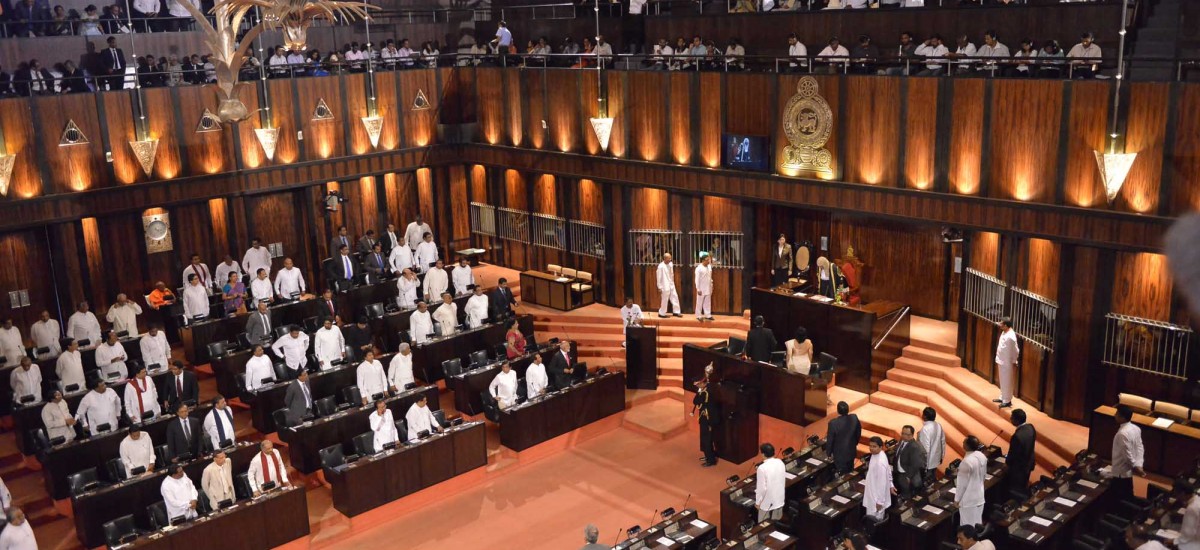
Concerns over the Bill’s economic fallout were echoed in Parliament this week, with Opposition MPs warning that the legislation is already damaging Sri Lanka’s investment climate.
MP Ravi Karunanayake told Parliament that three foreign companies had reportedly exited Sri Lanka due to concerns surrounding the proposed law, while at least eight local companies were preparing to file fundamental rights petitions challenging it. Urging Justice Minister Harshana Nanayakkara to intervene, Karunanayake stressed that Sri Lanka “cannot afford to lose foreign investors” at a time of ongoing economic fragility.
Other MPs raised alarms about the effect on the housing market. MP Dayasiri Jayasekara warned that the Bill appears to prioritise tenants at the expense of house owners, making people increasingly reluctant to rent out properties. MP Chamara Sampath Dassanayake went further, alleging that families affected by Cyclone Ditwah in Badulla have been unable to secure rental housing despite receiving government grants, as landlords fear the consequences of the new law.
Much of the anxiety centres on the Bill’s punitive enforcement mechanisms. The legislation allows tenants to seek contempt of court proceedings against house owners in certain circumstances, including where a fiscal is obstructed in executing a court order.
Under these provisions, a landlord could be ordered to show cause within 14 days and, if found guilty of contempt, face fines of up to Rs. 500,000, imprisonment for up to one year, or both. The Bill also criminalises the discontinuation of essential supplies and prohibits landlords from restricting repairs to utilities or using threats to evict tenants.
Critics argue that while these measures target abusive practices, their breadth and severity risk criminalising ordinary contractual disputes, further deterring property owners and investors alike.
Justice Minister Nanayakkara has sought to downplay fears, insisting that only “highhanded” landlords would be affected and urging property owners not to act out of fear. He noted that the Bill remains open to public objections and amendments.
However, for Sabry and other critics, cosmetic revisions may not be enough. As an alternative, he has proposed targeted amendments to the existing 2023 Act rather than the introduction of an entirely new statutory regime. Tenant protection, he argues, should be explicitly conditional on compliance such as payment of rent or depositing rent in court, settling utility bills, and clearing condominium charges.
Beyond landlord-tenant relations, the controversy surrounding the Protection of Occupants Bill sends a broader signal about Sri Lanka’s policy direction. At a time when the country is struggling to attract foreign capital and restore confidence in its legal and regulatory environment, critics warn that unpredictable and heavy-handed intervention in property rights could prove costly.