.jpeg)
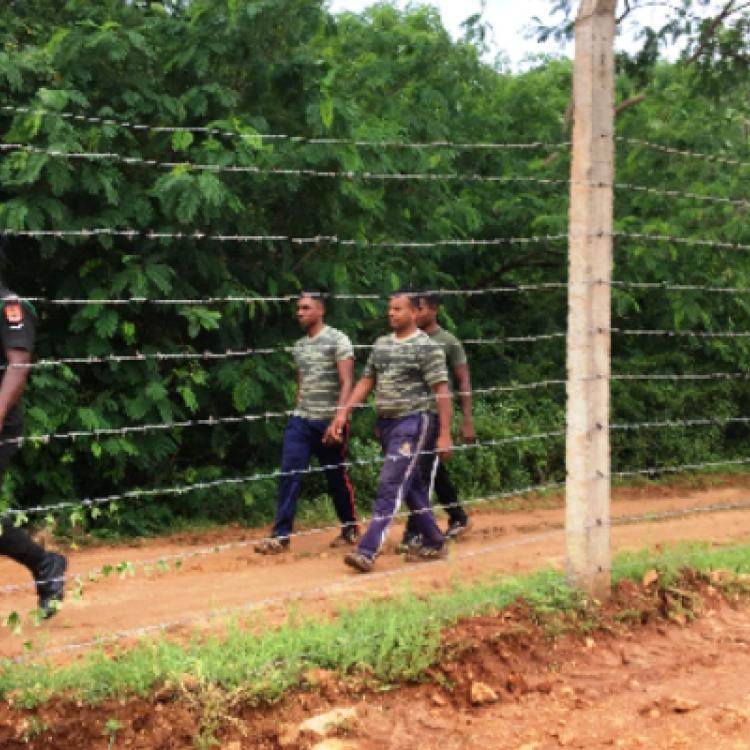
Sri Lankan military personnel who had been stationed on land in Pandatharippu belonging to the Manipay Pradeshiya Sabha have fully vacated the premises, with the land formally handed back to civilian authorities last week.
Following the withdrawal, the Sri Lankan military transferred control of the land to the Sandilipay Divisional Secretary. Divisional Secretary Kumarasamy Prabhakaramoorthy subsequently handed over the land to the Chairman of the Manipay Pradeshiya Sabha, Kanthaiya Jesithan, completing the process of restitution.
.jpeg)
The land, measuring 31 perches, is owned by the Manipay Pradeshiya Sabha and had been taken over by the Sri Lankan military around 2012, several years after the end of the armed conflict. Since then, it had been used as a military camp.
Significantly, the site previously housed a slaughterhouse owned by the Pradeshiya Sabha. Due to continued military occupation of the land, the slaughterhouse had been forced to operate from rented premises in the Tellippalai area for more than a decade.
.jpeg)
Commenting on the return of the land, the Chairman of the Manipay Pradeshiya Sabha said that steps would be taken to implement viable economic projects on the site in order to generate revenue for the local authority. He added that public opinion, as well as the views of local ward members, would be sought on whether the slaughterhouse should be re-established at its original location, after which an appropriate decision would be taken.
These developments take place against the broader backdrop of long-standing demands by Tamil representatives and local authorities for the release of civilian and local government lands held by the military in the Tamil homeland, years after the end of the armed conflict.
Tens of thousands of Sri Lankan soldiers continue to be stationed across the North-East, occupy vast swathes of land.
.jpeg)