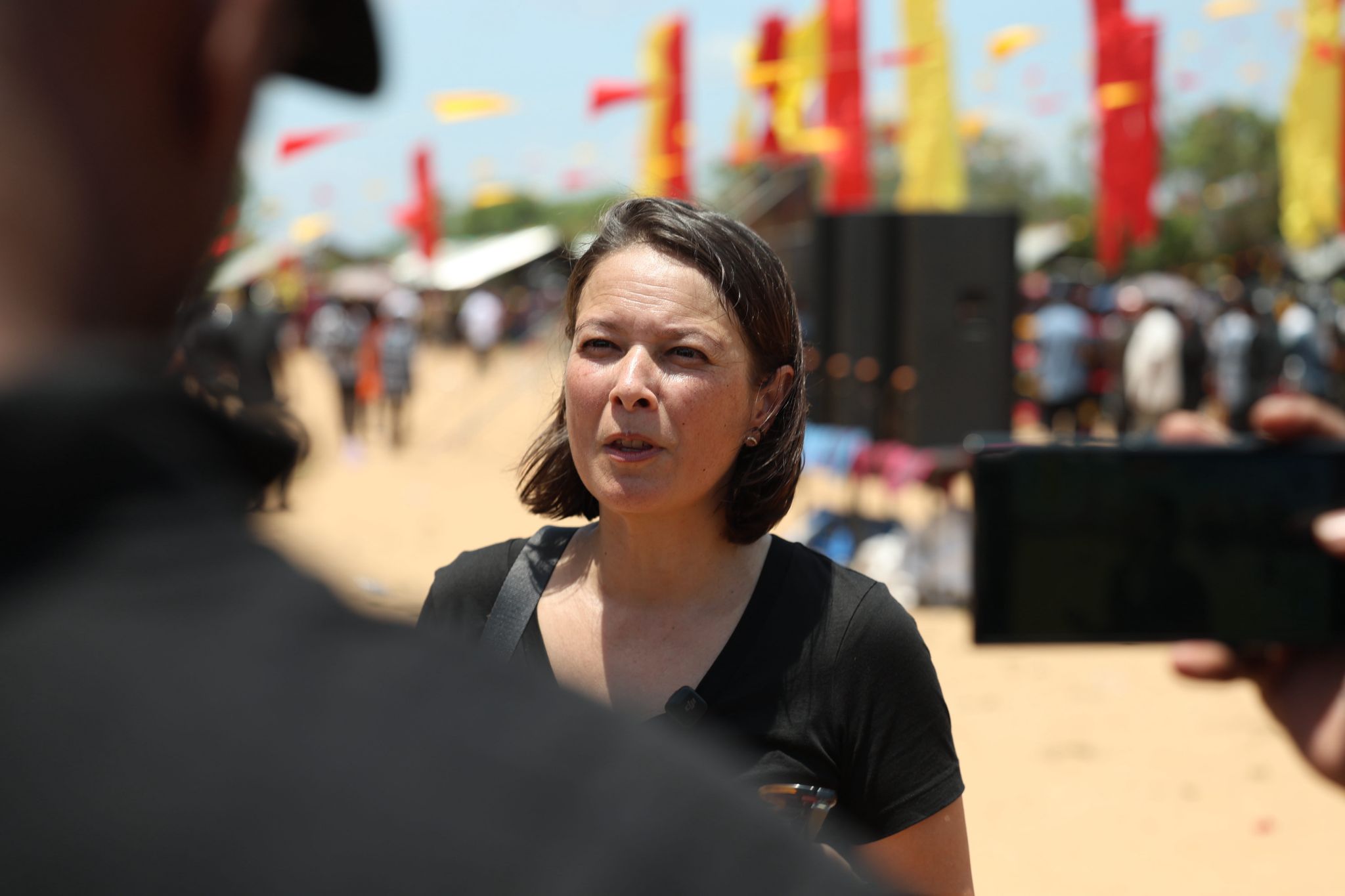
Human Rights Watch’s Asia director Elaine Pearson has come under criticism after calling for a “domestic accountability mechanism” whilst attending Tamil Genocide Remembrance Day commemorations in Mullivaikkal this week, despite repeatedly stating that the organisation stood in “solidarity” with Tamils.
Pearson was part of a Human Rights Watch (HRW) delegation that attended commemorations in Mullivaikkal on 18 May alongside representatives from the Swiss government, stating that they had come “to stand in solidarity with the Tamil victims”.
However, speaking to reporters at the remembrance event, Pearson called for a “domestic accountability mechanism with a strong international component” to address the crimes committed during the armed conflict.
Her remarks quickly drew criticism from Tamil activists and observers, who pointed out that survivors, victims’ families, political parties and Tamil civil society organisations have consistently demanded a fully international accountability mechanism with criminal prosecutions, arguing that successive Sri Lankan governments have repeatedly failed to deliver justice domestically.
Tamils have also consistently maintained that the atrocities committed during the final stages of the armed conflict constituted genocide, a position that has received growing international recognition in recent years. Canada’s parliament formally recognised the Tamil genocide in 2022, whilst political figures and parliamentary representatives in several countries, including Australia this week, have echoed calls recognising the crimes committed against Tamils as genocide.
In a statement released earlier this week, Canadian Prime Minister Mark Carney said genocide recognition was “an important step in acknowledging this painful history.”
When questioned about whether HRW’s position of seemingly standing in “solidarity” with Tamil survivors conflicted with demands they have repeatedly articulated, Pearson defended the organisation’s stance.
“I don’t think we have an obligation to necessarily repeat calls that are not in line with the position of our organisation,” she responded.
“You can say that.”
Pearson was further challenged on whether speaking of “solidarity” whilst refusing to endorse calls for fully international accountability or acknowledge genocide risked distorting the demands being raised by survivors themselves.
“I am saying why we are here, I am not saying why other people are here,” she said. “Other people are here for many different reasons… so yeah, I don’t actually see it as a conflict at all. And also I’ve seen many t shirts also saying ‘war crimes remembrance’.”
The remarks came as organisers at Mullivaikkal issued a declaration warning that the Tamil nation continues to face systematic efforts aimed at erasing its identity, culture and historical memory. The declaration reiterated calls to prevent the Sinhalisation and Buddhisisation of the Tamil homeland, secure international accountability for the Tamil genocide and recognise the Tamil nation’s right to self-determination.
Human Rights Watch is one of several major international organisations that has faced longstanding criticism over its response during the final stages of the armed conflict, when the Sri Lankan military killed tens of thousands of Tamils in Mullivaikkal.
To date, the organisation has continued to avoid describing the atrocities as genocide, instead referring to “allegations of war crimes”.