
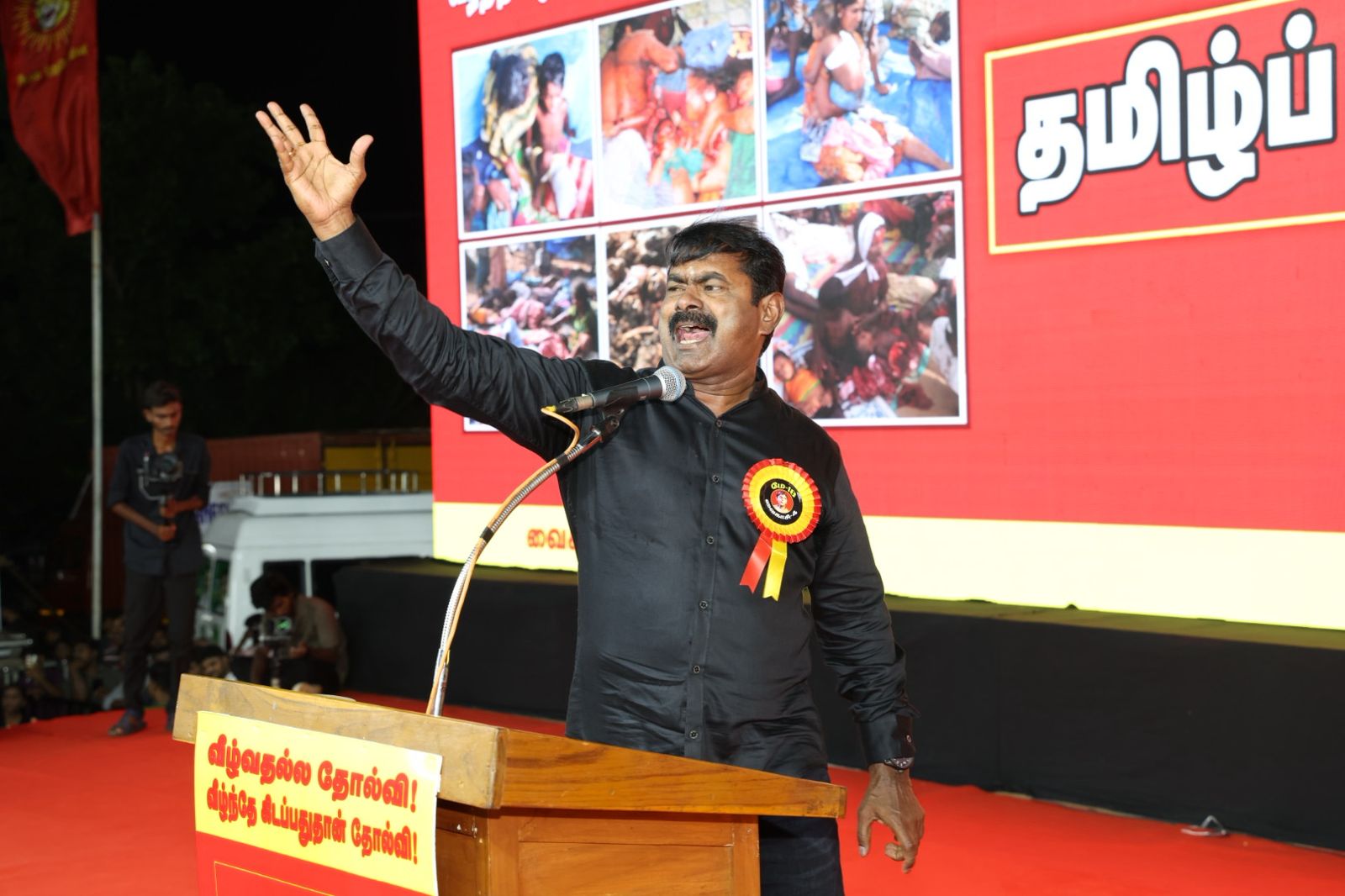
Naam Tamilar Katchi (NTK) chief Seeman has called on Tamils worldwide to unite as one, as the Tamil people are being forced to fight for its survival and that "political liberation" remains the only path forward.
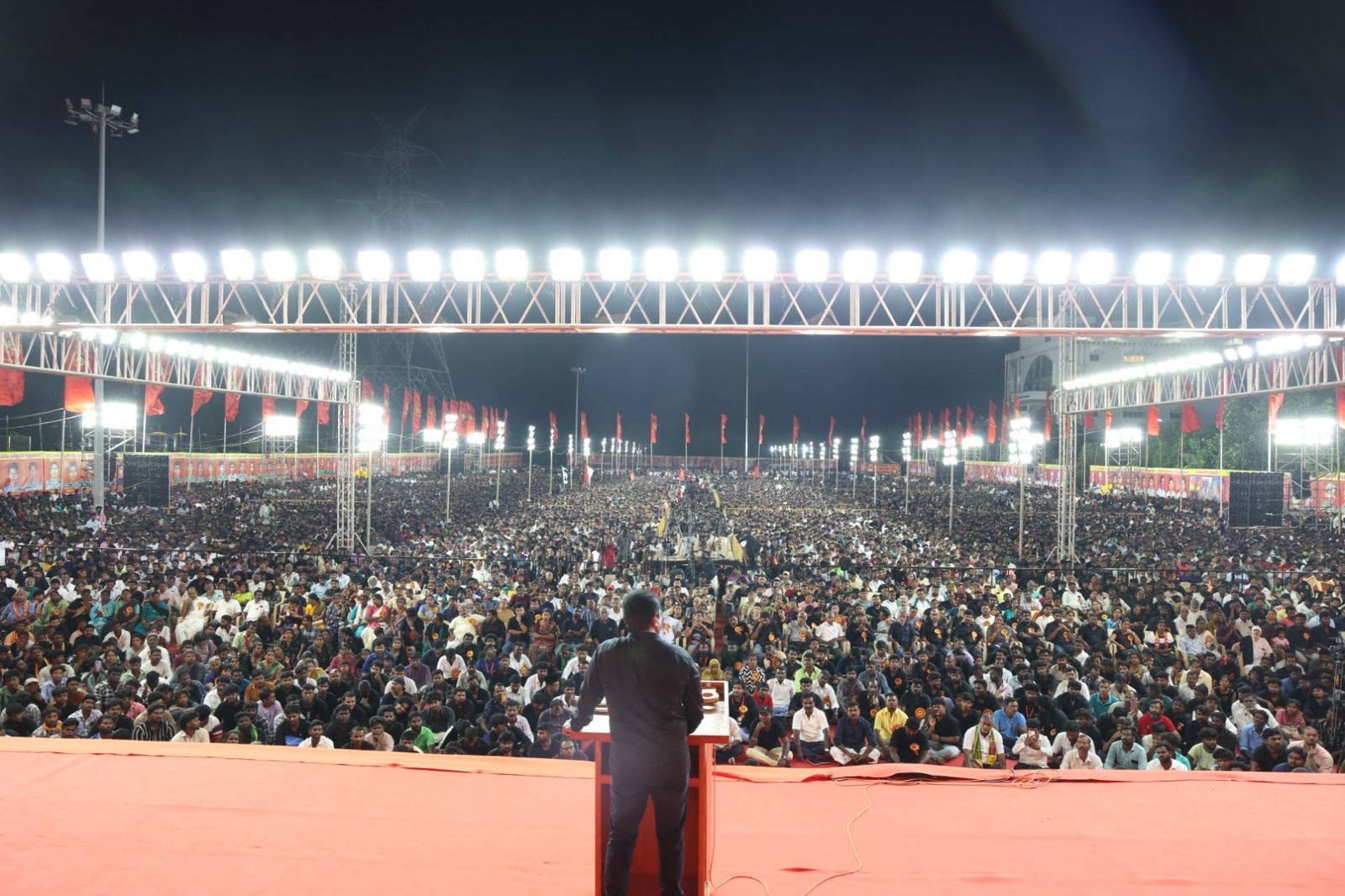
Addressing a large crowd of tens of thousands of people to mark Tamil Genocide Remembrance Day in Maraimalai Nagar, Chengalpattu district, on Monday evening (May 18), Seeman urged Tamils across the world to rally behind Tamil nationalism and pursue political revolution.
“Tamil Eelam is near. Victory is certain,” he told supporters. “Political liberation is the only path available to our people. Every Tamil must participate in and win this political revolutionary struggle. Otherwise, even the memory that the Tamil identity that existed on this earth will disappear.”
Claiming that Tamils had been left isolated internationally, Seeman said the Tamil people could rely only on themselves. He praised the armed struggle for Tamil Eelam as a movement carried out without foreign military assistance, stating that the people themselves had fought for their liberation.
Referring to the end of the armed struggle, Seeman criticised the international community, saying promises of a political solution made to the Tamil people had not materialised. “The same international community that asked the Tamils to lay down their weapons in exchange for a political solution remains silent today, and there is still no political solution,” he said.
During the rally, Seeman also announced what he termed the formation of a “Naam Thamilar Political Revolutionary Force”, describing party supporters not merely as political activists but as “Tamil national soldiers” committed to a defined political objective.
Seeman dismissed the 13th Amendment to the Sri Lankan Constitution as inadequate, arguing that the devolution framework fails to provide meaningful autonomy to the Tamil homeland in the North-East of the island. He contended that subsequent constitutional provisions place ultimate authority in the hands of the Governor, who is appointed by the Sri Lankan state, thereby limiting the powers of provincial administrations.
Reaffirming his long-standing support for Tamil self-determination, Seeman called for an internationally supervised referendum in Tamil Eelam to determine the political aspirations of the Tamil people. He said the people should be allowed to decide whether they wished to continue living under the Sri Lankan state or establish an independent Tamil Eelam.
“Let the people decide,” Seeman said, arguing that the outcome of such a vote should be respected by all parties. He stated that if a majority endorsed independence, a separate state could be proclaimed as the “Tamil Eelam Socialist Republic”. Conversely, he added that he would accept the verdict and withdraw his demand for Tamil Eelam if the people voted against independence.
The NTK leader further proposed convening what he called a “Tamil Eelam National Recognition Conference”, saying that the Tamil Nadu government must engage with international leaders and governments to determine who supports or opposes the Tamil national cause. He argued that such a forum could help establish a clearer international position on Tamil self-determination.
Seeman also renewed calls for Indian citizenship to be granted to Eelam Tamil refugees who have lived in Tamil Nadu for decades. Noting that more than 200,000 refugees had spent generations in Tamil Nadu, he questioned why they had not yet received citizenship, comparing their situation to that of other refugee communities recognised by India.
In a lengthy section of his speech, Seeman argued that Tamils are the indigenous inhabitants and the rightful owners of the entire South Indian landmass. Citing the writings of historians Tony Joseph and Richard Martin, he asserted that all the other races settled in territories originally inhabited by Tamils. He further questioned claims that Sri Lanka belongs exclusively to the Sinhalese, validating that Tamils as the rightful owners of the land.
Seeman also criticised India’s approach towards Tamil issues, accusing successive governments of failing to adequately support Tamils facing persecution or hardship. Comparing India’s response to incidents involving Indian citizens from other states with the treatment of Tamil fishermen detained in Sri Lankan waters, he alleged that ethnic identity influenced the level of official concern shown by authorities.
Throughout the address, Seeman repeatedly framed the preservation of Tamil language, history and identity as central to the future of the Tamil nation. He argued that peoples who abandon their language and forget their history ultimately decline, while those who protect both are able to endure and prosper despite adversity.
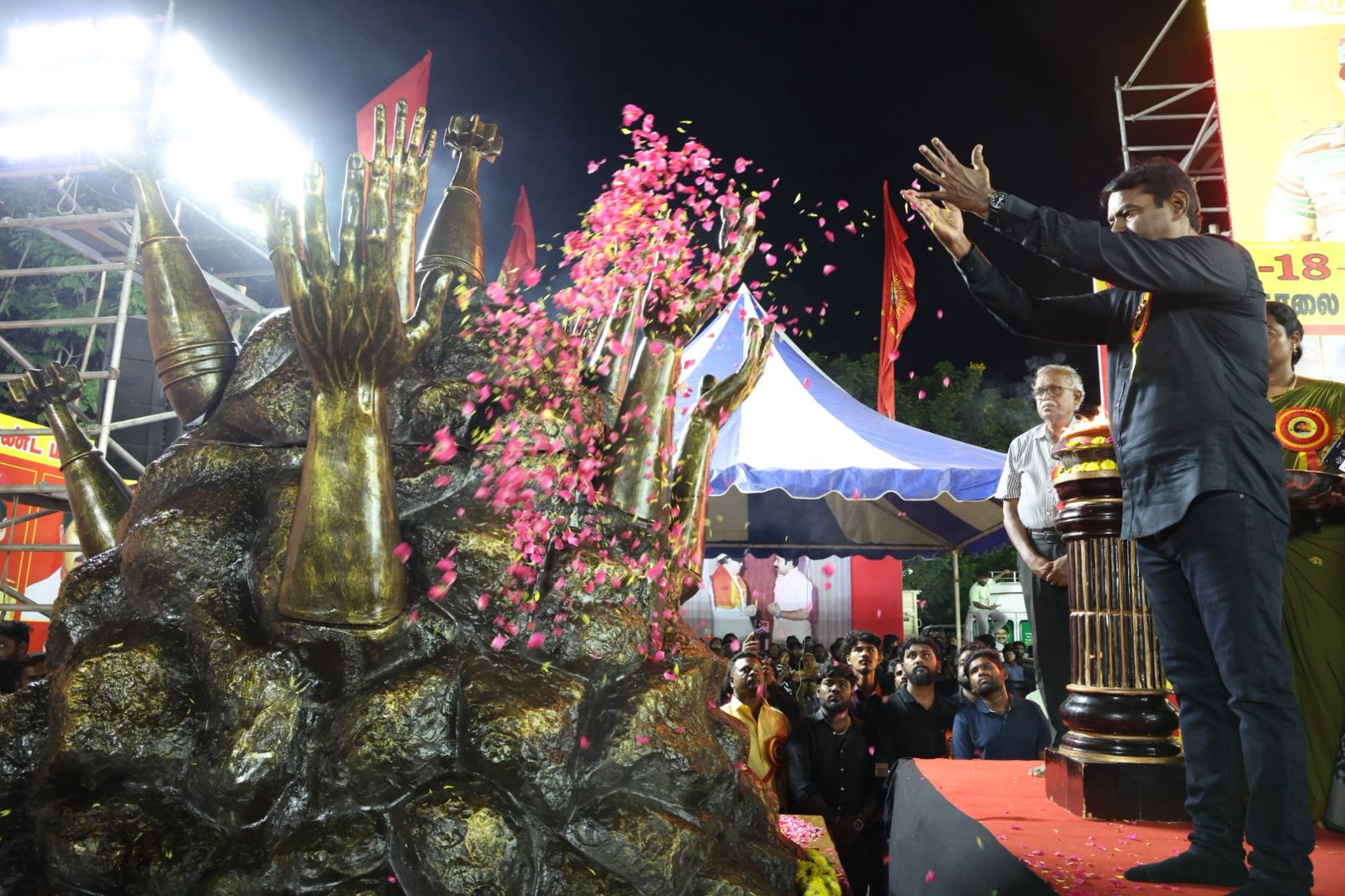
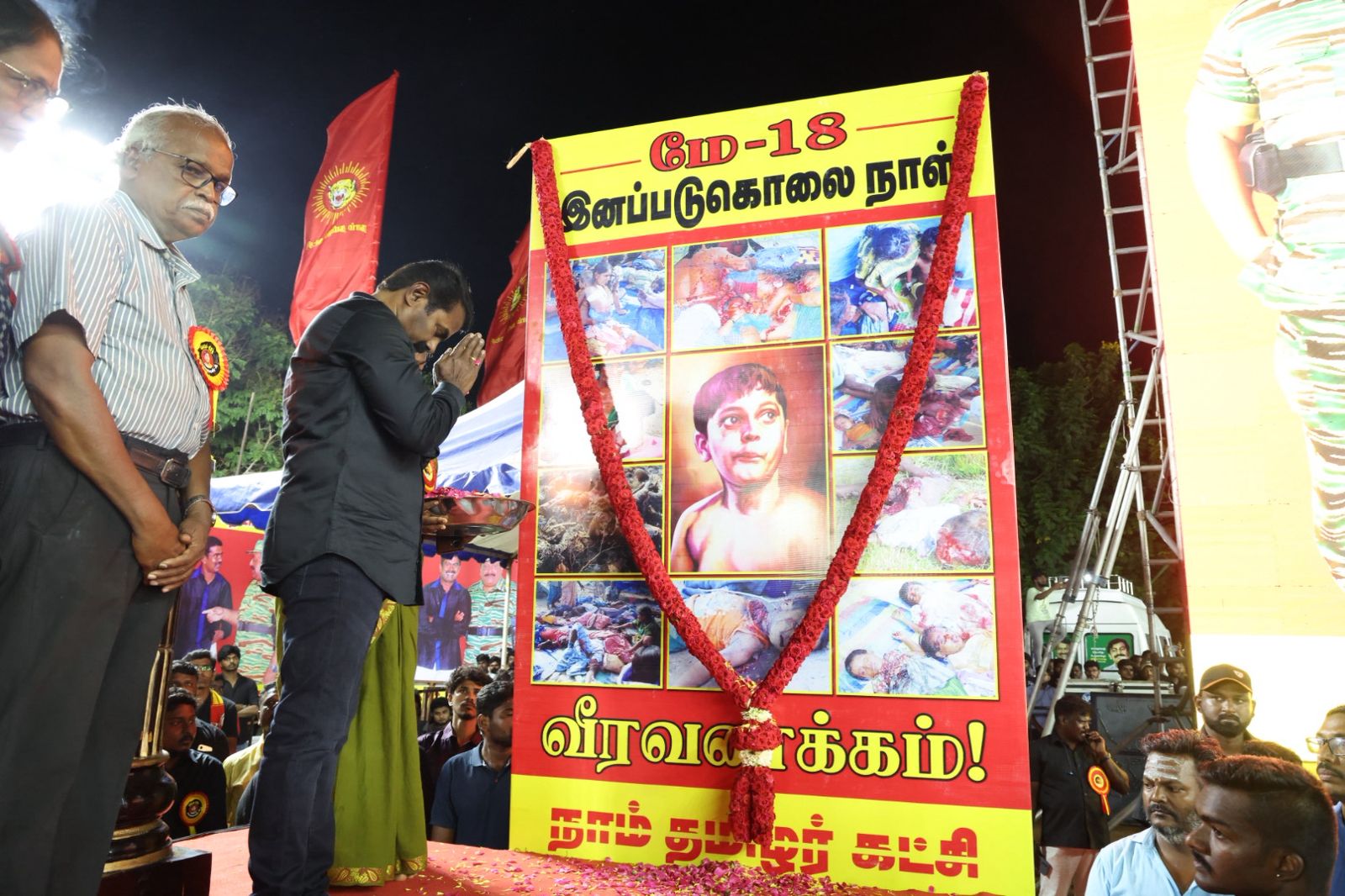
The meeting was held as part of annual observances marking May 18, observed by Tamils worldwide as Tamil Genocide Remembrance Day. Large numbers of supporters attended the event, with participants carrying portraits associated with the Tamil liberation struggle.