
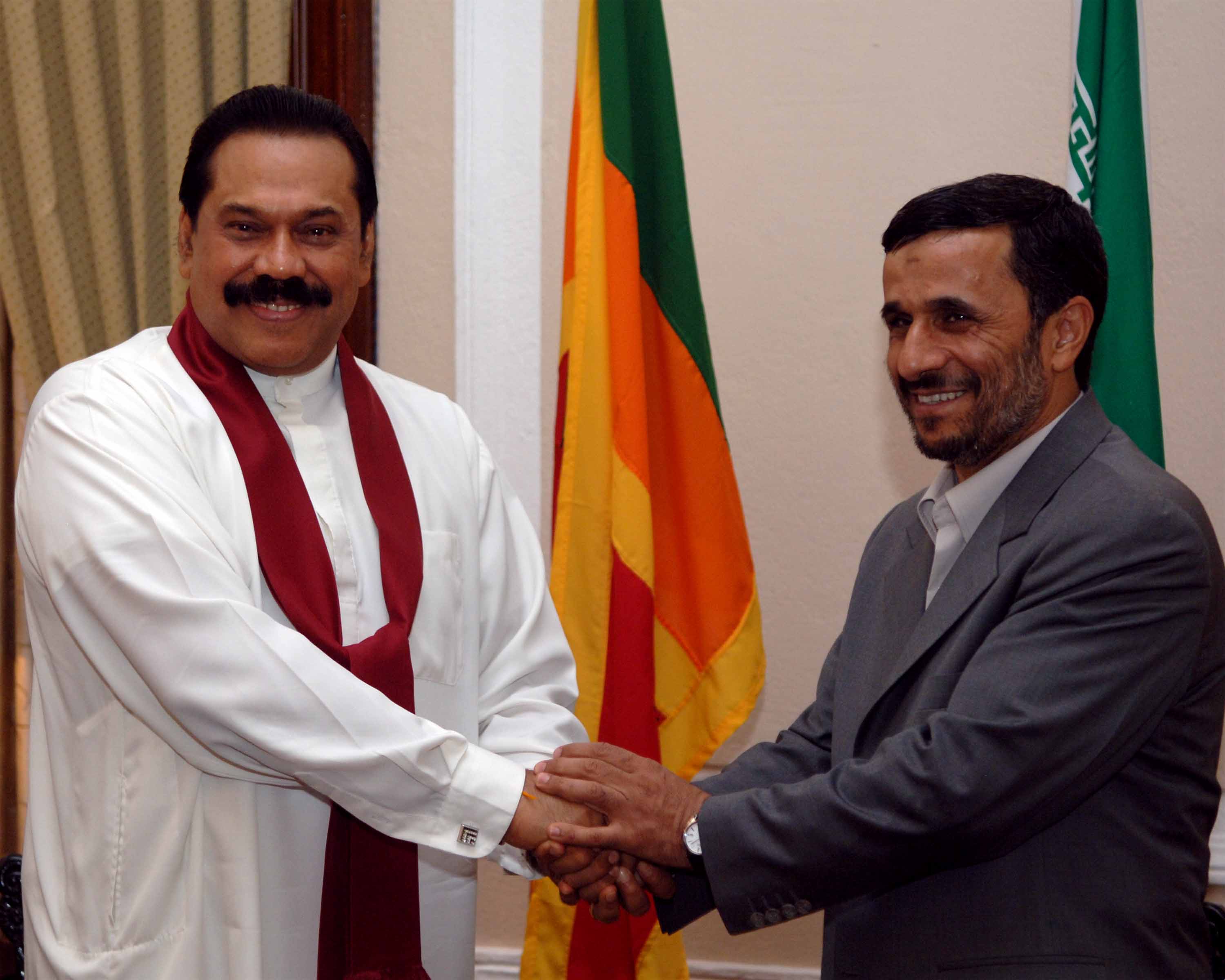
Sri Lanka Podujana Peramuna (SLPP) MP Namal Rajapaksa has expressed support for Iran following unconfirmed reports that former Iranian president Mahmoud Ahmadinejad was killed in an air strike, as his father Mahinda Rajapaksa called for an immediate end to the escalating Middle East conflict.
In a social media statement, Namal Rajapaksa said:
“Shocked to hear of the assassination of former Iranian President Mahmoud Ahmadinejad who was a close friend of Sri Lanka & was also instrumental in launching several projects including the upgrading of the Sapugaskande Oil Refinery and the Uma Oya Multipurpose projects when he visited the island in 2008 under the invitation of former President Mahinda Rajapaksa. Iran has always been a true friend and I offer my deepest condolences to the families of all those who have reportedly been assassinated in the air strikes today . We stand with the people of #Iran at this hour of need and call on all parties to exercise restraint and discussions than chosing a path of war.”
The remarks follow circulating reports in foreign media outlets that Ahmadinejad may have been killed in what has been described as an Israeli or United States air strike targeting a residential property linked to him. Iranian authorities have not issued any official confirmation and independent verification remains unavailable. Details surrounding the alleged strike, including timing and responsibility, remain unclear.
Ahmadinejad served as Iran’s president from 2005 to 2013 and remained a prominent political figure. His presidency coincided with a period of close engagement between Tehran and Colombo, particularly under Mahinda Rajapaksa’s administration during the war against the Tamil nation.
Iran and Sri Lanka have close ties with Tehran having supplied $150m worth of arms to Sri Lanka in 2005, barely weeks after the Indian Ocean tsunami devastated the island. In 2007, weeks after LTTE commandos smashed Anuradhapura airbase in ‘Operation Ellalan’, Colombo approached Iran for a loan to replace destroyed aircraft.
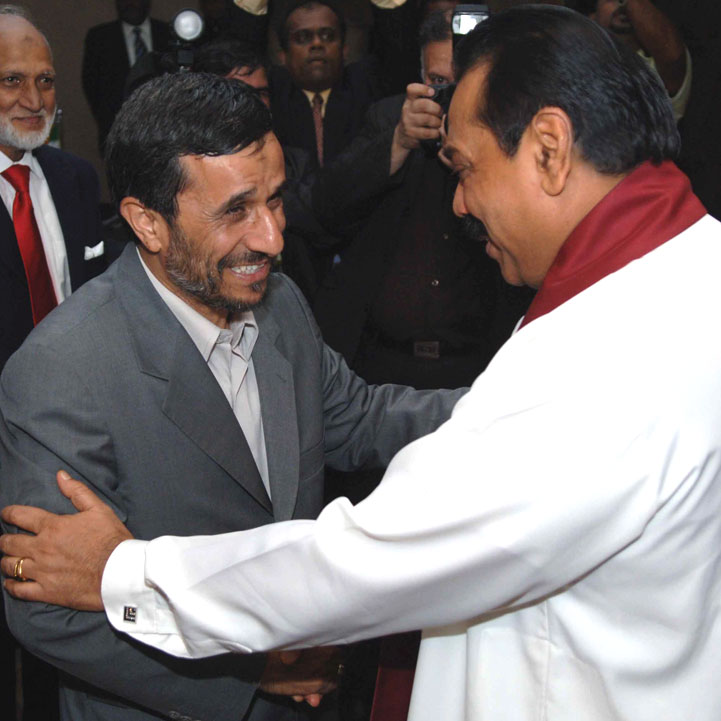
During Ahmadinejad’s 2008 visit to Sri Lanka, he inaugurated major projects including the modernisation of the Sapugaskanda oil refinery and the Uma Oya multipurpose scheme, funded through Iranian loans and assistance valued at more than US$1.9 billion.
Government statements at the time described the partnership as yielding “immense benefits”, with six memoranda of understanding signed between the two states. Iran subsequently emerged as one of Sri Lanka’s largest donors, even as Western governments raised concerns over human rights abuses and the escalation of the armed conflict in the Tamil homeland.
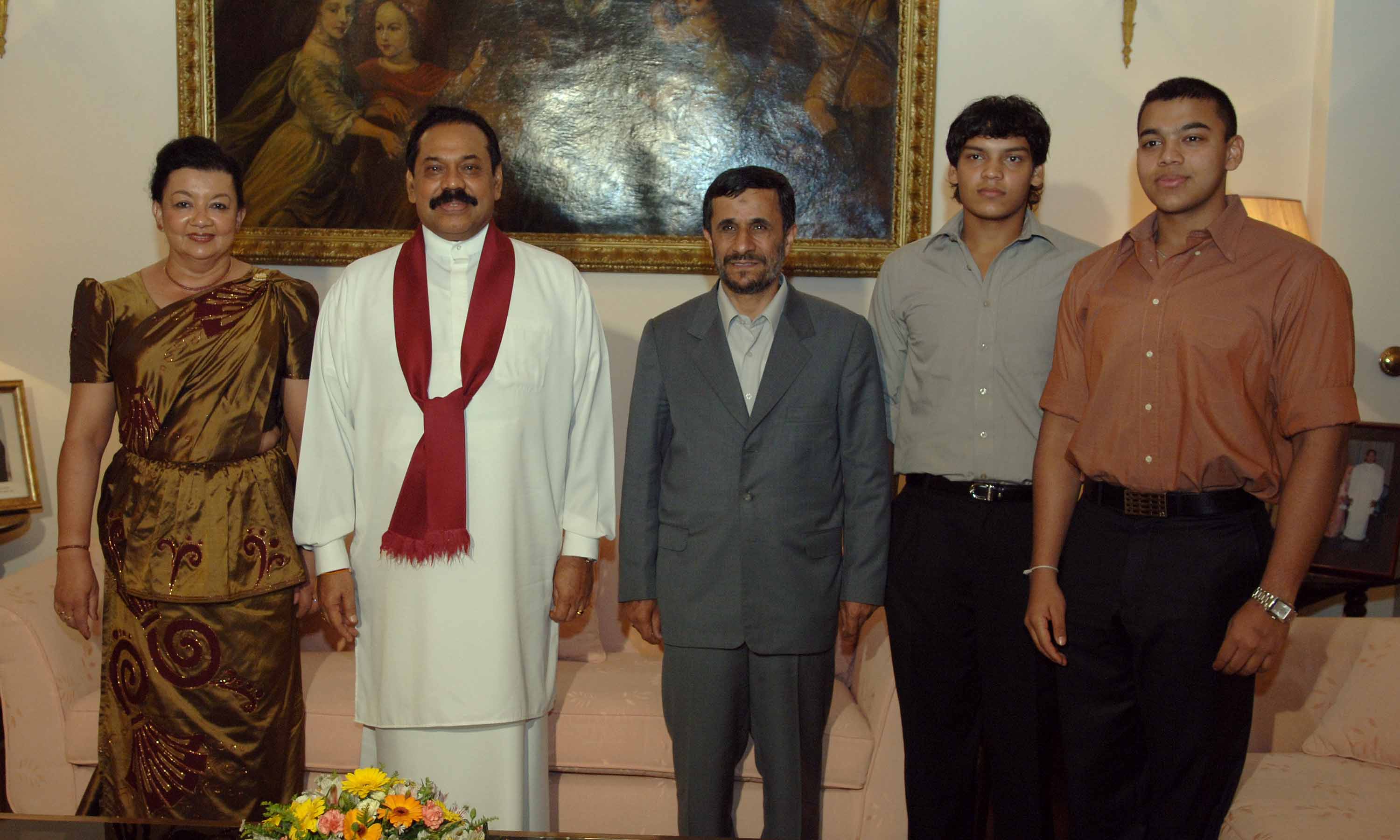
Tehran also indicated willingness to deepen cooperation across sectors, including energy and infrastructure, and offered technical assistance, while Sri Lanka pursued closer ties with countries that were less critical of its human rights record.
Sri Lanka has maintained economic links with Iran in recent years, including a mechanism to repay crude oil debt through tea exports to Tehran, allowing Colombo to settle obligations without breaching sanctions.
Separately, former president Mahinda Rajapaksa said the conflict in the Middle East must be brought to an end as soon as possible. Speaking to journalists after attending a religious sermon at the Imbulakanda Sri Sambuddhi Viharaya in Homagama, he said the war should be concluded at the earliest possible time and that powerful countries should intervene to bring about a resolution.
The comments from the Rajapaksa family come as tensions in the Middle East intensify, with potential implications for global oil markets and Sri Lanka’s fragile economic recovery. The island remains heavily dependent on Middle Eastern energy supplies, export markets and migrant labour, making it particularly vulnerable to regional instability.