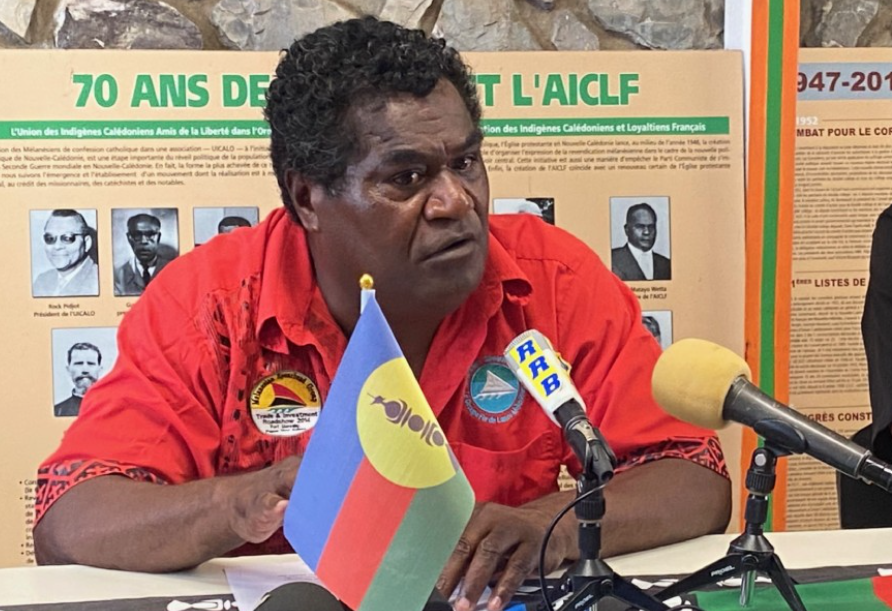
A prominent Kanak pro-independence leader has accused the French government of deliberately preventing his return to New Caledonia by withholding his passport, months after he was cleared to travel home by a Paris appeals court.
Christian Tein, an Indigenous Kanak leader arrested in June 2024 following deadly unrest in New Caledonia, said French authorities were “deliberately dragging out” the re-issuance of his passport, effectively trapping him in mainland France. Tein had been charged with offences including complicity in attempted murder and organised theft with a weapon, all of which he denied. Most of the charges were later dropped, and in October the appeals court authorised his return to the territory.
Tein spent a year in solitary confinement and said the psychological impact had been severe. He remains under formal investigation for conspiracy and organised robbery, charges he insists are baseless. “Psychologically, you never come out of this kind of situation unscathed,” he said.
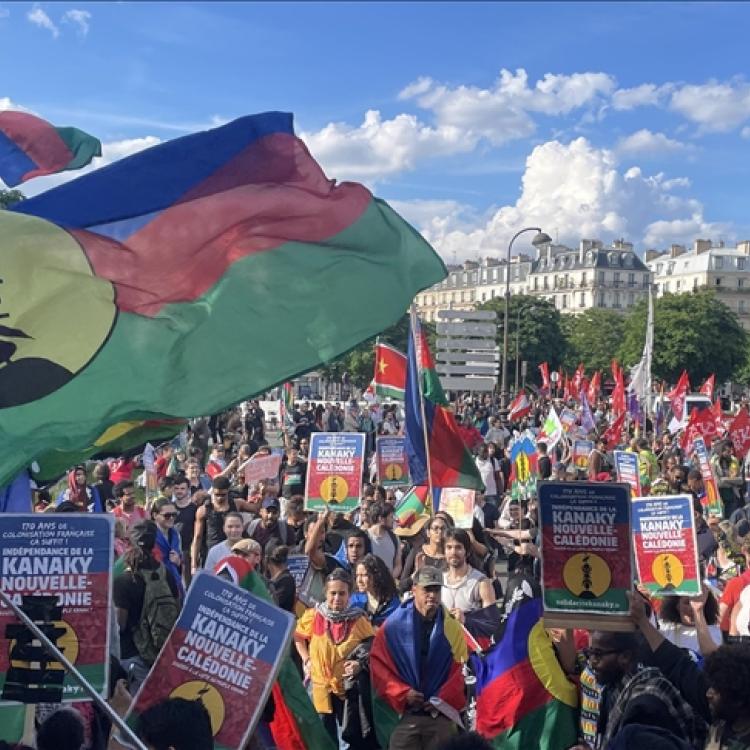
New Caledonia, or Kanaky, has been ruled by France since 1853 and remains one of its overseas territories. Tensions spiralled in May 2024 after French President Emmanuel Macron attempted to change voting laws to allow thousands of long-term French residents to vote. Kanaks, who make up around 41 percent of the territory’s population, warned the change would permanently undermine the pursuit of independence.
The proposal triggered the worst violence in the islands since the 1980s with fourteen people killed, most of them Kanak. Demonstrations escalated after authorities flew Tein and six other Kanak activists 10,600 miles to France on a private chartered plane. Rights groups described the transfer as a “deportation”, evoking the territory’s long history of colonial repression.
Activists have also raised concerns about the treatment of other Kanak detainees. Among them is Guillaume Vama, a 31-year-old agroforestry expert who was also flown to France. Vama described being hooded at gunpoint, handcuffed for 96 hours and denied medical treatment for injuries sustained during arrest.
“I felt completely dehumanised, treated like an animal,” he said.
The International Prison Observatory noted that many in Kanaky viewed the transfers as a continuation of colonial practices designed to isolate and intimidate Indigenous leaders.
Macron eventually abandoned the voting law and announced the Bougival accord, granting limited new powers while keeping Kanaky under French control. Some pro-independence figures signed the agreement, but Tein, who was elected president of the Kanak National and Socialist Liberation Front while in prison, did not.
“We reject Bougival,” he said. “But I need to be at the table to discuss the future of the country.”
Tein insists the struggle for Kanaky’s self-determination must continue. “I am 57 years old and I don’t think I have the right to pass this problem on to future generations,” he said. “Independence is our only ambition.”
Read more from The Guardian here.