The Government of Japan and the Food and Agriculture Organization of the United Nations (FAO), in partnership with the Sri Lankan government, have launched a US$1.33 million initiative aimed at restoring fisheries and rebuilding livelihoods in the Eastern Province following the devastation caused by Cyclone Ditwah.
The project, which will be implemented between June 2026 and November 2027, is expected to support more than 1,500 fishers across the districts of Amparai, Batticaloa and Trincomalee, whilst strengthening the resilience of local communities against future climate-related disasters.
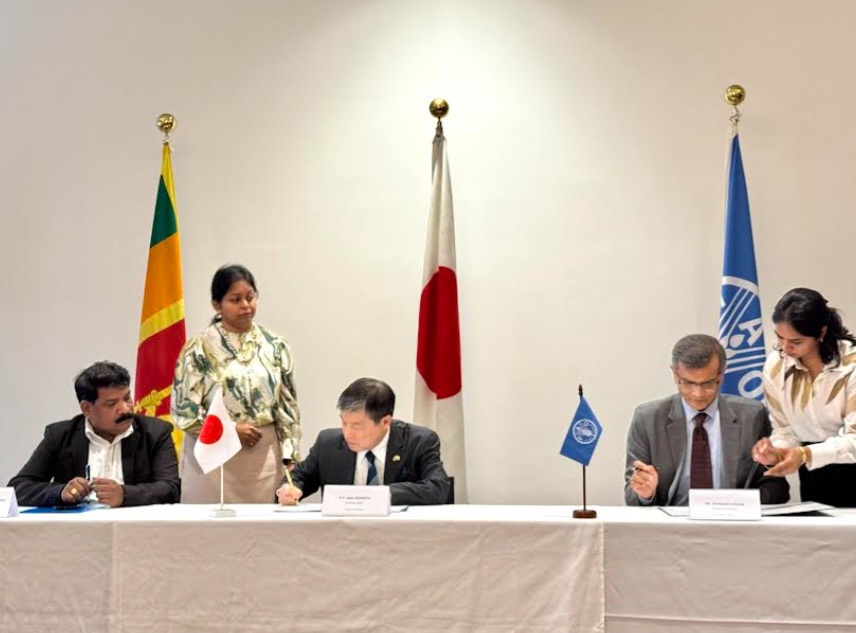
The agreement was signed by Japanese Ambassador Akio Isomata and FAO Representative for Sri Lanka and the Maldives Vimlendra Sharan at a ceremony held at the Japanese Embassy in Colombo. Sri Lanka's Minister of Fisheries, Aquatic Resources and Ocean Resources Development, Ramalingam Chandrasekar, was also in attendance.
Cyclone Ditwah caused widespread flooding across large parts of the island earlier this year, with the Eastern Province among the worst-affected regions. The disaster severely disrupted inland fisheries, damaging infrastructure, destroying fish stocks and undermining the livelihoods of thousands of families dependent on reservoir-based fishing.
Floodwaters and emergency releases from reservoirs resulted in the loss of large numbers of fish fingerlings and mature fish, whilst fishing equipment and fisheries infrastructure suffered extensive damage.
The resulting disruption to breeding cycles and fish production significantly reduced incomes for fishing communities already facing economic hardship.
The new initiative aims to restore fisheries production through a range of interventions, including the release of fish fingerlings into major reservoirs, the establishment of community-managed breeding facilities, the provision of floating fish-breeding cages and the installation of protective net barriers designed to prevent future fish losses during flooding events.
According to project details, 5.48 million fish fingerlings will be released into targeted reservoirs across the Eastern Province.
The programme will directly benefit 1,504 fishers operating across 30 reservoirs and is expected to improve food security and livelihoods for more than 6,000 family members.
Community-managed fish-breeding facilities capable of producing approximately 16 million fingerlings annually will also be established, significantly increasing future fish production capacity.
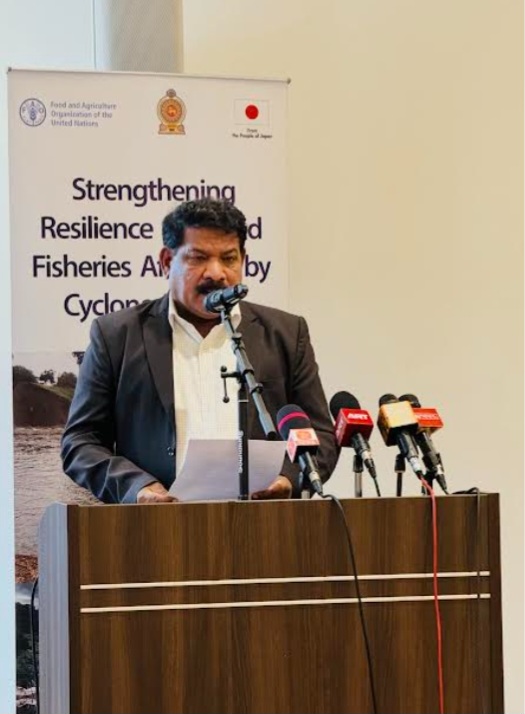
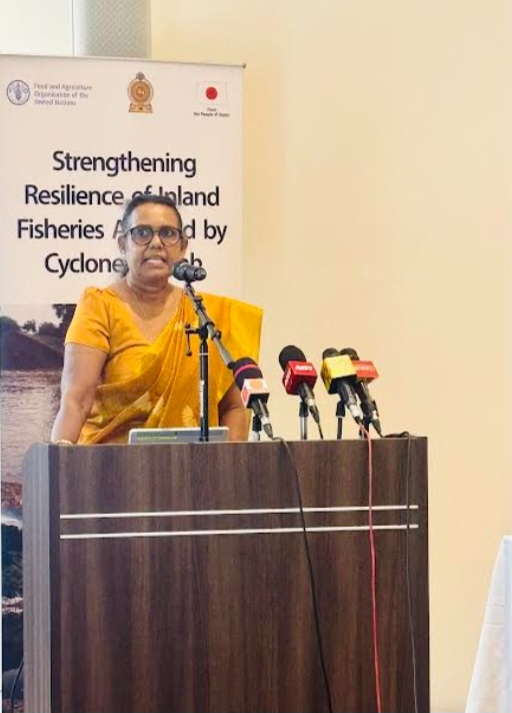
Speaking at the launch, Fisheries Minister Ramalingam Chandrasekar highlighted the impact Cyclone Ditwah had on inland fishing communities.
“Cyclone Ditwah had a devastating impact on inland fishing communities in the Eastern Province. Many of these families depend entirely on reservoir fisheries for both their livelihoods and food security. This project, implemented in partnership with the Government of Japan and FAO, will help rebuild fish stocks and restore incomes. It will also strengthen the resilience of fishing households, enabling them to better withstand future climate-related challenges,” he said.
Japanese Ambassador Akio Isomata described the initiative as both a recovery effort and a long-term investment in climate resilience.
“The introduction of floating fish-breeding cages and the installation of protective net barriers are important technological measures that will help safeguard fisheries resources and mitigate the impacts of future extreme weather events,” he said.
Isomata also noted the growing importance of inland fisheries amid rising costs faced by marine fishing communities.
“Inland fisheries require comparatively less fuel and serve as an important source of protein, making them vital to Sri Lanka’s national food security. The Government and people of Japan will continue to stand alongside Sri Lanka as steadfast friends and partners in its journey towards sustainable and resilient development,” he added.
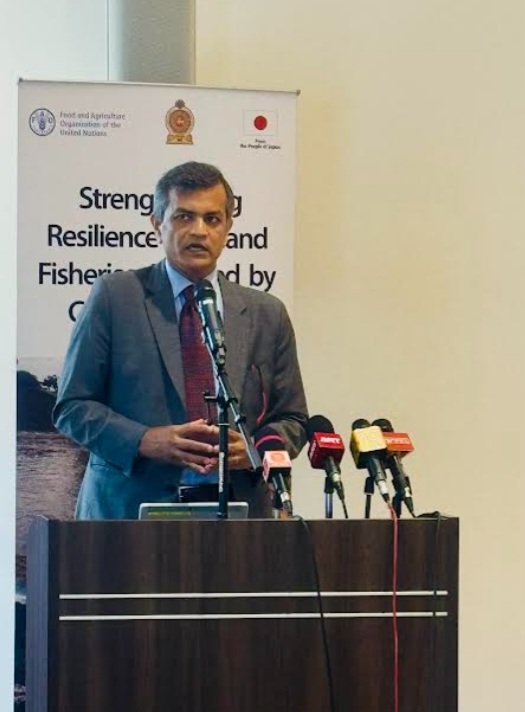
FAO Representative Vimlendra Sharan emphasised that the project extends beyond emergency relief and seeks to create more sustainable fisheries systems.
“This initiative goes beyond immediate relief by helping communities rebuild sustainable and climate-resilient inland fisheries systems. Through reservoir restocking, improved fingerling production, protective infrastructure and enhanced community capacity, FAO is supporting affected fishers to restore their livelihoods, improve food security and strengthen their ability to withstand future climate-related challenges,” he said.
The project will be implemented by FAO in collaboration with Sri Lanka's Ministry of Fisheries, the National Aquaculture Development Authority and local community-based fisheries organisations.
Training programmes will also be provided to local fishers and fisheries organisations on fingerling production, fish-breeding cage management, maintenance of protective net barriers and sustainable fisheries management.
Organisers say these measures are intended to ensure the long-term sustainability of the initiative and enable local communities to independently manage and expand fisheries production in the years ahead.
The announcement comes as communities across the North-East continue to recover from the impact of Cyclone Ditwah, which caused widespread damage to homes, livelihoods and infrastructure earlier this year.