
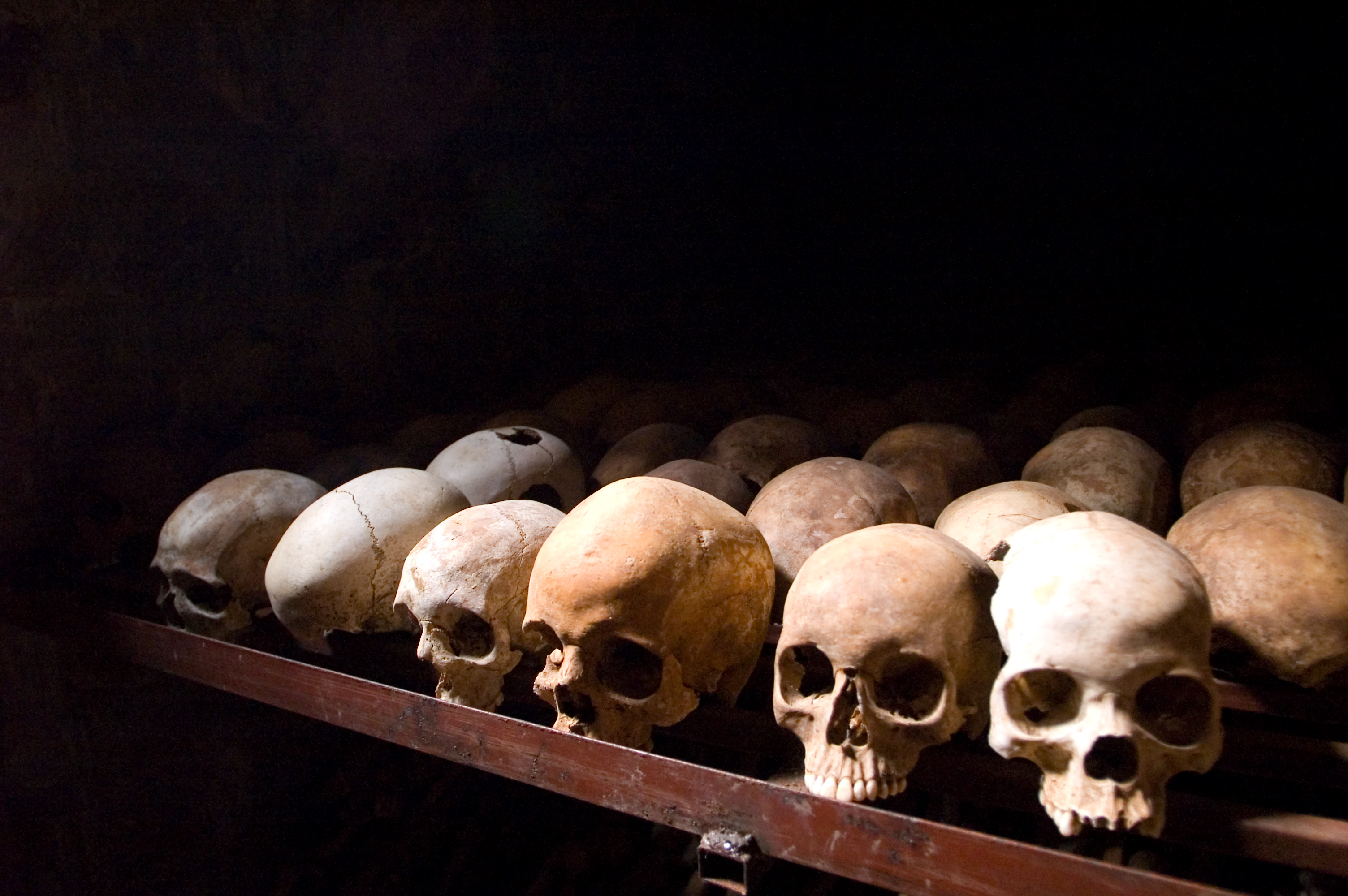
Rwandan genocide memorial in Nyamata (Fanny Schertzer)
German prosecutors have arrested a German-Rwandan national on suspicion of complicity in genocide and 25 counts of murder during the 1994 genocide against the Tutsis in Rwanda.
The suspect, identified only as Innocent S. under German privacy rules, was arrested in the central German state of Hesse on Wednesday.
According to Reuters, German prosecutors allege that the man ordered the deaths of 25 Tutsis on five separate occasions while serving as an assistant to the mayor of Kayove in northwestern Rwanda.
Prosecutors further allege that he used his position to incite the extermination of Tutsis in the town and had death lists drawn up. In one case, he is accused of personally taking part in a killing by stabbing a victim in the chest with a knife.
The suspect has reportedly been living in Germany since the early 2000s.
He was expected to be brought before an investigating judge at Germany’s Federal Court of Justice, who would decide whether he should remain in pre-trial detention.
The arrest forms part of Germany’s wider use of universal jurisdiction, a legal principle that allows courts to prosecute grave international crimes such as genocide, crimes against humanity and war crimes regardless of where they were committed. Germany has previously prosecuted suspects linked to the 1994 genocide in Rwanda under the same principle. One of the most notable cases was that of Onesphore Rwabukombe, a former mayor in Rwanda, who was sentenced to life imprisonment by a German court in 2015 for aiding the genocide.
The latest arrest comes more than three decades after the genocide, during which more than 800,000 Tutsis and moderate Hutus were systematically massacred by Hutu extremists over roughly 100 days between April and July 1994. The killings were carried out through a coordinated campaign of violence involving state officials, militias, local administrators and extremist propaganda networks.
The United Nations-backed International Criminal Tribunal for Rwanda was established after the genocide and became the first international tribunal to deliver verdicts related to genocide. During its operation, the tribunal indicted 93 people and sentenced 62.
Despite those prosecutions, efforts to secure justice have continued across national courts decades after the killings ended.
Rwanda’s annual genocide commemorations have repeatedly highlighted the continuing trauma carried by survivors and the importance of accountability, remembrance and the rejection of denial. Mass graves linked to the genocide were still being uncovered more than 24 years later, with survivors’ organisations warning that convicted perpetrators had often failed to reveal the whereabouts of victims.