
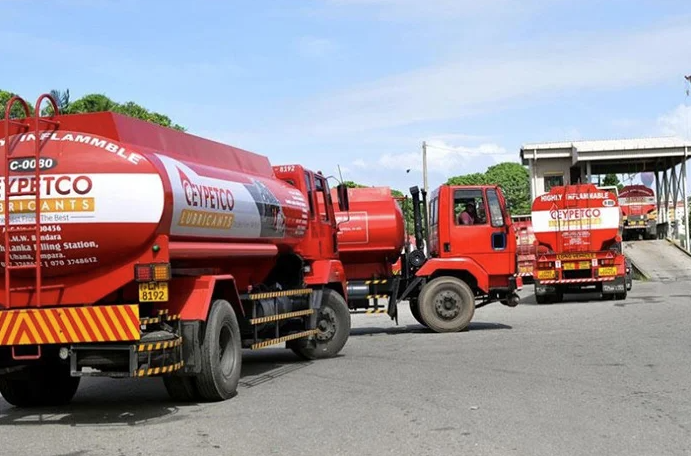
Long queues formed at fuel stations on Monday as escalating conflict in the Middle East triggered fears of another fuel shortage on an island still recovering from its 2022 economic collapse.
Motorists lined up at filling stations across the island as reports of strikes involving the United States, Israel and Iran heightened concerns over global oil supply disruptions. The panic buying came despite assurances from authorities that Sri Lanka has sufficient stocks of diesel and petrol for 35 and 37 days respectively.
"There is fuel. People are panicking because of the war and they are themselves creating these lines. So people are just flocking to the stations, but there is enough fuel in Sri Lanka," Mohammed Aslem, a three wheeler driver waiting in a queue in Colombo, told Reuters.
Sri Lanka remains heavily dependent on fuel imports, spending US$3.83 billion on oil last year. Most refined fuel shipments arrive from India and Singapore, while the state run refinery relies on crude oil from the Middle East. Any disruption to the Strait of Hormuz, a key global oil route, would directly threaten supply chains to the island.
Officials from the Ceylon Petroleum Corporation said there are confirmed shipments until the end of the month but acknowledged that Colombo lacks storage capacity to hold fuel beyond a few weeks. The corporation increased distribution, releasing more than five million litres of fuel even on a public holiday in an attempt to stabilise supply. Sri Lankan police have also restricted fuel sales into cans and warned of legal action against hoarding.
The renewed fuel queues have revived memories of the 2022 economic crisis, when months long shortages of petrol and diesel sparked mass protests that led to the ousting of former president and accused war criminal Gotabaya Rajapaksa. Sri Lanka is currently attempting to recover under a US$2.9 billion International Monetary Fund (IMF) bailout programme after a severe shortage of foreign currency pushed the country into default.
The current Middle East crisis now threatens to undermine that fragile recovery on multiple fronts.
Global oil prices surged in the wake of the escalation, with Brent crude rising sharply above key thresholds. Higher fuel import costs are expected to feed directly into domestic prices, driving up transport, electricity and food costs. Even modest increases in diesel prices have immediate consequences for the cost of goods across the island.
At the same time, Sri Lanka’s export sector faces disruption. The Middle East is a major destination for Sri Lankan tea, and instability in markets such as Iran, Iraq and the United Arab Emirates risks freezing orders and weakening demand. Shipping routes through the Suez Canal and the Indian Ocean corridor may also be affected, raising freight costs and delaying exports of garments and rubber goods to Europe and North America.
Remittances, which are the country’s largest source of foreign exchange, are also at risk. More than one million Sri Lankans work in the Gulf region, sending billions of dollars home each year. Any escalation that affects employment or triggers evacuations would cut a vital lifeline for the island’s economy and place pressure on the Sri Lankan rupee.
Tourism, another key source of foreign earnings, could also suffer. Much of Sri Lanka’s long haul travel relies on transit hubs in the Middle East. Flight suspensions and airspace closures in the region have already forced cancellations and delays, threatening arrivals during a peak travel period.
Authorities in Colombo have acknowledged the risks and called for restraint in the Middle East, while setting up emergency mechanisms for Sri Lankan passport holders in the region and contingency plans for tourists affected by flight disruptions.
However, the scale of Sri Lanka’s exposure to the Middle East economy means the island is vulnerable to a prolonged conflict. Rising oil costs, falling exports, reduced remittances and weaker tourism would combine to put renewed pressure on foreign reserves and public finances.