The Democratic Tamil National Alliance (DTNA) has defended students at the University of Jaffna who pulled down the Sri Lankan lion flag and hoisted black flags on 4 February, as part of coordinated protests across the Tamil homeland marking Sri Lanka’s Independence Day as a day of mourning.
The action formed part of demonstrations held across the North-East, where Tamil students, civil society organisations and families of the disappeared reiterated longstanding demands for justice, self-determination and an end to ongoing repression.
The move has since drawn criticism from the University Grants Commission (UGC), which reportedly declared the protest unlawful and called for investigations and disciplinary action against the students involved.
In response, the Democratic Tamil National Alliance (DTNA) has rejected that position, describing it as erroneous and urging authorities to address the underlying causes of Tamil protest rather than penalise students.
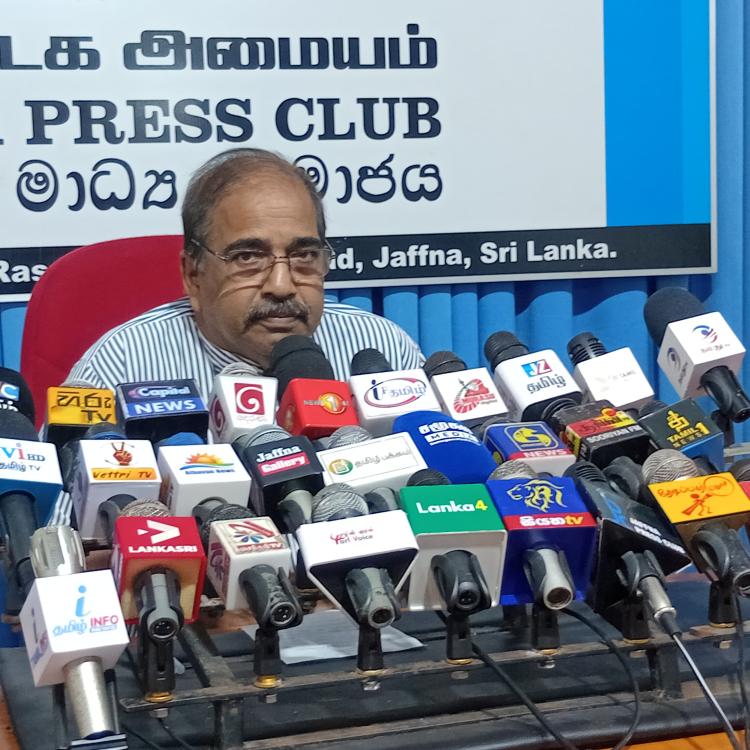
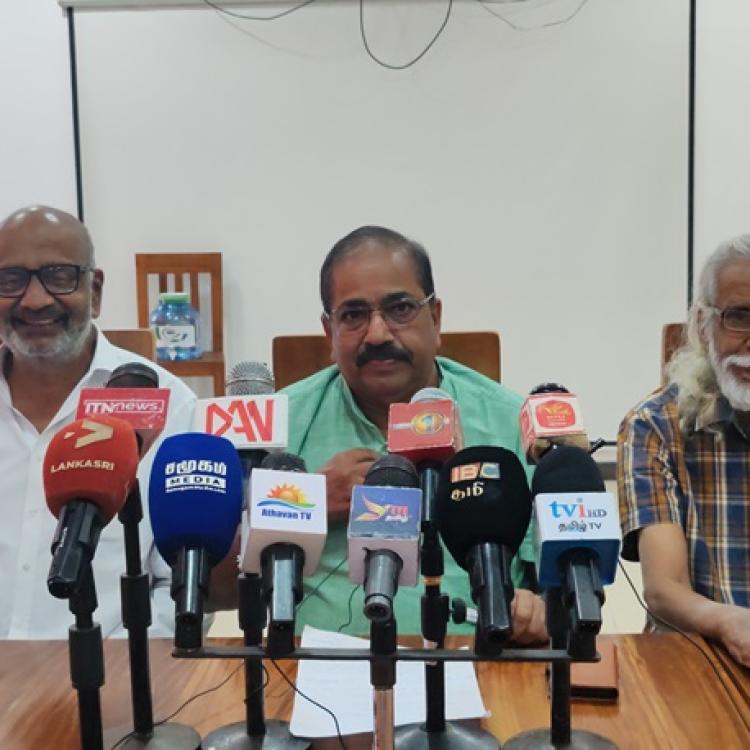
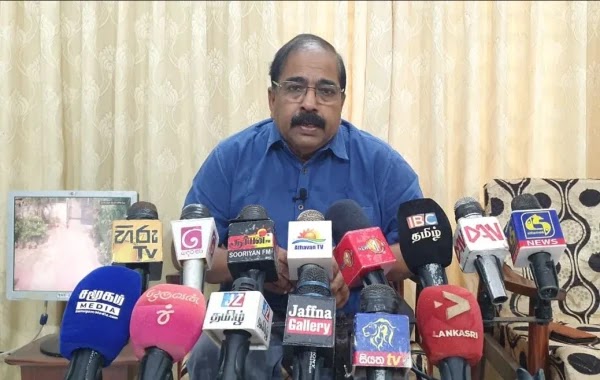
In a media statement issued by its spokesperson Suresh K. Premachandran, the DTNA stated that since Sri Lanka attained independence, Tamil people had for decades marked Independence Day as a day of mourning through black flag protests.
Premachandran noted that Sri Lanka had historically been divided into Sinhala and Tamil kingdoms, which were unified by British colonial rulers in 1833 for administrative convenience. He further asserted that governance of the island was subsequently handed over to the Sinhala majority upon independence, leaving the Tamil nation without political safeguards.
According to the DTNA, Tamil people have never accepted Sri Lanka’s Independence Day, pointing to decades of discrimination by Sinhala-majority governments, including the denial of language rights, land rights, education and employment opportunities. It stated that such conditions had led to the emergence of an armed struggle as Tamils sought to secure their own freedom.
The Alliance argued that rather than seeking to punish those who express dissent, the State should examine the reasons behind Tamil protest. It questioned why Tamil people continue to oppose state actions, why they hoist black flags, and why they organise marches and demonstrations, stating that to penalise democratic dissent is both anti-democratic and unlawful.
The statement further emphasised that freedom of speech, expression and assembly are fundamental rights guaranteed in Sri Lanka, and that the hoisting of black flags has long been a recognised expression of mourning. It added that the continued marginalisation of the Tamil nation and the absence of full freedom remain sources of profound grief.
The DTNA stated that there is no legal basis to deem the hoisting of black flags unlawful within a university or elsewhere, provided that no harm is caused to persons or property. It therefore condemned the UGC’s call for investigations and punitive action, as well as any compliance with such demands by university authorities.
The Alliance also called on the academic community to ensure that universities remain spaces where students can pursue their education freely and without fear, including the exercise of their democratic rights.
It further noted that those who came to power through mass protests and student-led mobilisation should reflect on whether it is just to suppress the democratic expression of Tamil students today.
The protests at the University of Jaffna formed part of a broader wave of demonstrations across the Tamil homeland on 4 February, where black flags were raised and vigils held to mark what many Tamils continue to regard as a day of mourning rather than independence.