.jpg)
Angry Tamils confront Sri Lankan police officers in Muththaiyankaddu
The killing of 32-year-old Ethirmanasingham Kapilraj has sent shockwaves through the North-East, as disturbing witness statements reveal harrowing details of his final hours, where he was severely beaten by the Sri Lankan military.
Kapilraj’s body was recovered from Muththaiyankaddu tank on 9 August, more than a day after he went missing. His family and multiple witnesses accuse soldiers from the 13th Battalion of the Sri Lanka National Guard (SLNG) of assaulting him and dumping his body in the water.
Three Sri Lankan soldiers have been arrested and remanded until 19 August over the killing. This follow-up reconstructs the sequence of events, based on survivor accounts, relatives’ statements and witness testimonies.
'Kasippu and ganja'
According to survivors, the chain of events began before 7 August, when Kapilraj and four other Tamil men received a call from a soldier at the 13 SLNG camp in Muththaiyankaddu.
The area is in the heart of the Vanni, one of the regions most devastated by the Mullivaikkal genocide and under heavy military occupation. Thousands of soldiers are stationed there, with a large camp by the Muththaiyankaddu water tank.
.jpg)
The occupying Sri Lankan army camp in the region.
The area, like much of the North-East under Sri Lankan occupation, has seen a rise in illicit drug and alcohol use. The Sri Lankan military has long been accused of safeguarding and even encouraging such practices as part of concerted efforts to break down the social fabric of the Tamil nation. Soldiers themselves would also regularly indulge in recreational usage.
“We know that the soldiers call our people and ask them to buy Ganja or alcohol,” said one woman. “They call people who have been suffering. When they ask, you bring it right?”
An arrangement that soldiers had reached with some locals was the supply of ‘kasippu’ – illegally brewed alcohol – in exchange for scrap metal.
“The day before yesterday, we gave the [soldier] some alcohol,” one survivor of the assault explained. “He said, ‘Come again tomorrow, I will give you roof materials.’ Yesterday he called again, saying, ‘I will give the materials, please come.’”
The men say they arrived at the camp on 7 August to find roofing sheets dismantled and stacked at the gate.
“When we were taking the roof material, the other army soldiers came with their batons and other striking weapons. They started chasing us.”
The chase and the water tank
Three of the men, including Kapilraj, tried to escape. What happened to him next is what the military disputes; whether he jumped into the water tank and drowned or was beaten and had his body dumped.
One man who was caught by soldiers recounted:
“They grabbed me and hit me aggressively… They hit me at the back with metal and with their hands all over my face, on my chin. My legs were attacked.”
He eventually escaped and ran back home.
“I saw how the soldiers were hitting the other boy,” said one of the men. “The other three had jumped into the water. But one of those who jumped went missing.”
The family’s version of events
Kapilraj’s sister and elder brother described how he had lived peacefully with his wife in the village for two years, often taking up small jobs at the camp opposite his home.
.jpg)
Kapilraj.
They spoke with reporters outside the Jaffna Teaching Hospital, where his body was initially sent for a post-mortem.
“He has no enemies, nowhere, with family members or village residents,” his sister said. But she did mention the constant threat faced by the local Tamil population from the Sri Lankan military.
“He did mention that army soldiers do make issues constantly throwing away fishing nets, cutting them, breaking boats, speaking wrongly after drinking alcohol. The residents have complained about all this to the army.”
“My brother lives right in front of the camp. So, because of that, the army would call my brother often for work and he would go and work at the camp and receive wages.”
On the evening of 7 August, they said, Sri Lankan soldiers had summoned him.
“He didn’t go when they first called, so five soldiers went to his house to check. As soon as they went in, a fight broke out. He kept asking, ‘Why did you call me by phone and now why are you hitting me?’ Everyone grabbed him all at once. One had a metal baton and hit him. As soon as they hit him, he fell down. They dragged him into the camp.”
‘We hit him so hard…’
Villagers who went to the camp that night said they were told by a soldier:
“We hit two people. You are taking away one person safely. Try to find the other before tomorrow morning. We hit him so hard we doubt he will wake up - try to find him.”
The next day, the family tried to confront the camp commander, but say they were locked inside the gates after being lured in.
“The commander came out and said, ‘Come, let’s go inside.’ When we went in, he asked the other army soldiers to lock the gates and took a video of all of us. They kept talking about other things to distract us and got us outside, then locked the gates.”
“The villagers told us that he is inside the camp, and they had searched the nearby water tank and no body was there at the time,” said Kapilraj’s brother.
Villagers confront the army
From the evening of August 7 villagers had gathered by the nearby Muththaiyankaddu tank. Kapilraj’s sister meanwhile had contacted the ICRC Vavuniya and human organisations in Colombo, in a desperate attempt to locate their brother.
She says it was this pressure from outside sources, that finally led soldiers to come out of their camp on August 8.
Frantic scenes from outside the camp show angry residents blocking army vehicles.
“Yes, of course [we have doubts],” one woman is heard saying. “All this time they would have explained what happened. They haven’t come out to speak unless I stopped them in the street like this.”
“One of our sons is missing,” an elderly woman pleads “Please look for him.”
Another villager added, “I have a feeling the boy has died from their way of hitting. Who knows.”
One woman says she saw some 30 to 35 Sri Lanka soldiers beating a person, who was yelling out to them just outside the camp, as they tried to drag him inside it. She says that man managed to escape, but as she confronted the soldiers, they told her that another had been badly beaten and that the villagers must find him as he may die.
“Why would they say that?” she questioned.
She says a senior military official admitted to beating the Tamil men but claimed one of them had jumped into the water tank. “They said to find him before he dies in one conversation, and the next they say he jumped into the water.”
They searched the water tank she says, and they were certain that the Kapilraj was being kept inside the army camp.
Despite frantic calls, the Sri Lankan police took hours to arrive and then when they eventually did, they went straight to the water tank and not to question soldiers at the camp.
After several hours when the Sri Lankan police spoke to soldiers at the camp, they reportedly told the villagers not to return to the water tank. A Sri Lankan police vehicle was then seen visiting the camp late at night.
The body is found
On the morning of 9 August, villagers say soldiers claimed they had seen a body floating.
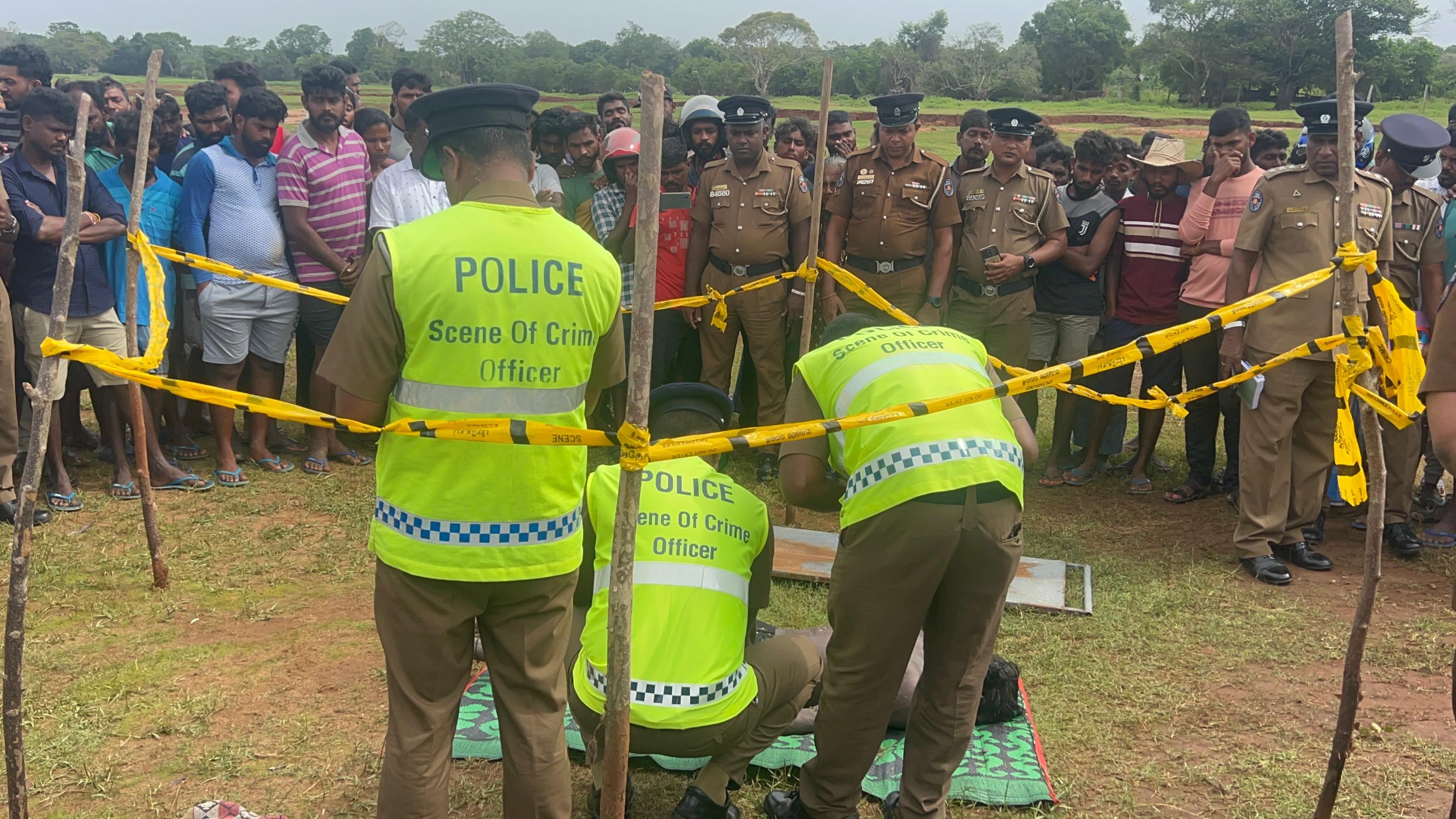
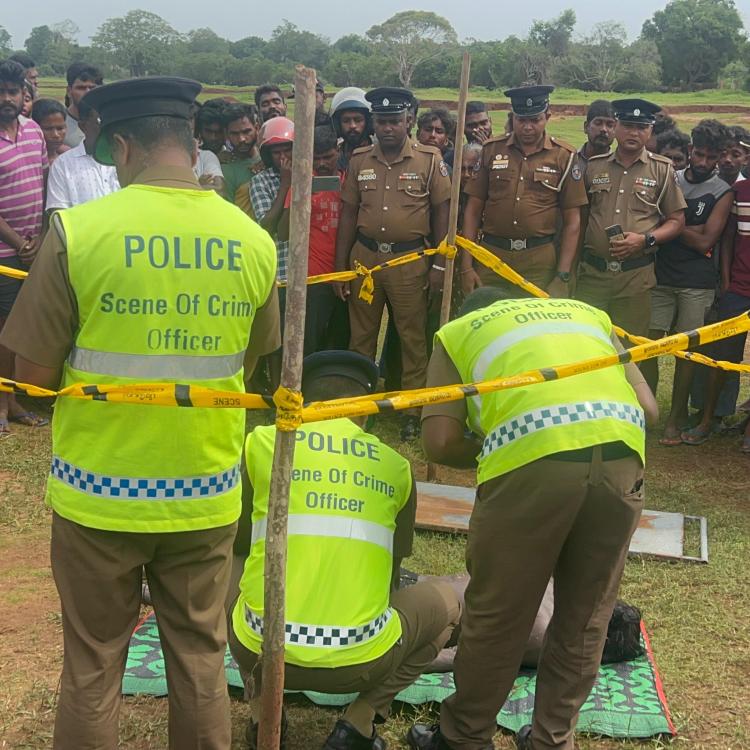
The body of Kapilraj is examined by Sri Lankan police officers.
Kapilraj’s sister recalled:
“Apparently 15 soldiers saw the body and ran back inside. These army soldiers kept him the whole time and then finally put him out.”
When recovered, his body bore visible injuries.
“On his face there’s a big scar, his eyes were bleeding, there are also marks from metal batons. We took videos and photos of everything.”
Footage from the scene – much of it too graphic to publish – shows Kapilraj’s battered, bruised and bloated body.
“For all this, we need justice for our brother. We really need it.”
Funeral and calls for justice
.jpg)
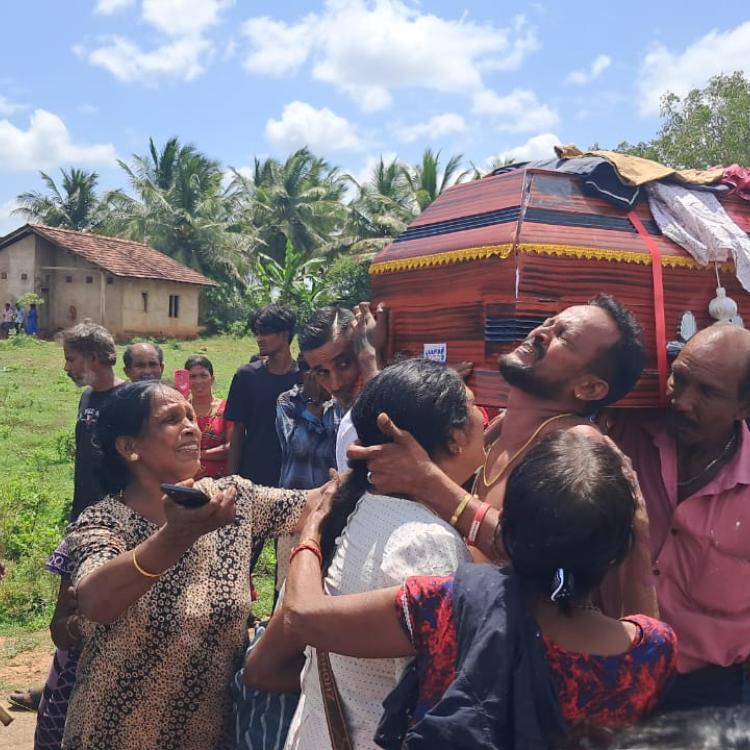
Relatives mourn as they carry his casket.
Kapilraj’s funeral took place under heavy police security in Muththaiyankaddu, with local politicians and hundreds of residents paying their respects.
His death has reignited demands for an independent, internationally monitored investigation into military abuses in the North-East, where Tamils remain under intense militarisation.
Though a few soldiers have been arrested, locals are sceptical.
“They will arrest them and let them go,” a woman in Muththaiyankaddu said. “They are all Sinhalese, they will let them go.”
“They beat and killed him.”
“This is all our land,” said an elderly villager, pointing to the army base, lamenting on how the land was once used to provide work for locals by the Liberation Tigers of Tamil Eelam (LTTE).
“Everything is their rule brother.”