The Sri Lankan Army War College hosted a two-day training programme last month centred on the army's Mullaitivu offensive, with participation from senior military figures accused of atrocity crimes during the 2009 genocide of Tamils.
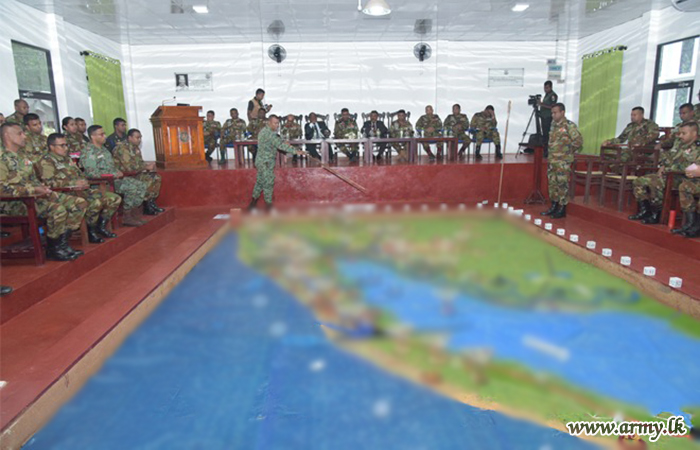
Held on 25 and 26 March, the programme brought together student officers from Senior Command Course 16 and Junior Command Course 35 for a Diners’ Club session and a battlefield case study examining the final stages of the armed conflict.
The opening session, titled “Mullaitivu - From Debacle to Victory,” was attended by more than 160 officers and staff. It featured a keynote address by Major General Nandana Udawatta (Retd), former Commander of the 59 Infantry Division, who spoke on leadership and operational planning during the offensive.
Udawatta is among a number of Sri Lankan military personnel identified by Tamil diaspora organisations in connection with alleged atrocity crimes. In 2022, a coalition of global Tamil diaspora groups launched a campaign calling for international action against 18 individuals cited in the UN’s OHCHR Investigation on Sri Lanka (OISL), urging travel bans, asset freezes, and prosecutions under universal jurisdiction. That campaign highlighted findings from the OISL report, which documented serious violations of international humanitarian and human rights law during 2008–2009, including allegations of mass atrocities committed against Tamil civilians.
The course continued with a Cloth Model Discussion analysing the capture of Mullaitivu, part of what the Sri Lankan military terms the “Northern Humanitarian Operation,” its designation for the final phase of the armed conflict against the Liberation Tigers of Tamil Eelam.
The Mullaitivu 'campaign' culminated in the atrocities of Mullivaikkal in May 2009, where tens of thousands of civilians were killed amid widespread and well-documented allegations of war crimes, crimes against humanity, and acts of genocide. United Nations investigations have found credible allegations of mass civilian casualties, including from indiscriminate shelling and the denial of humanitarian aid.
Despite these longstanding allegations, and multiple regime changes, Sri Lanka’s military continues to incorporate senior wartime commanders into its training and institutional programmes, presenting the final stages of the conflict as a model of operational success.