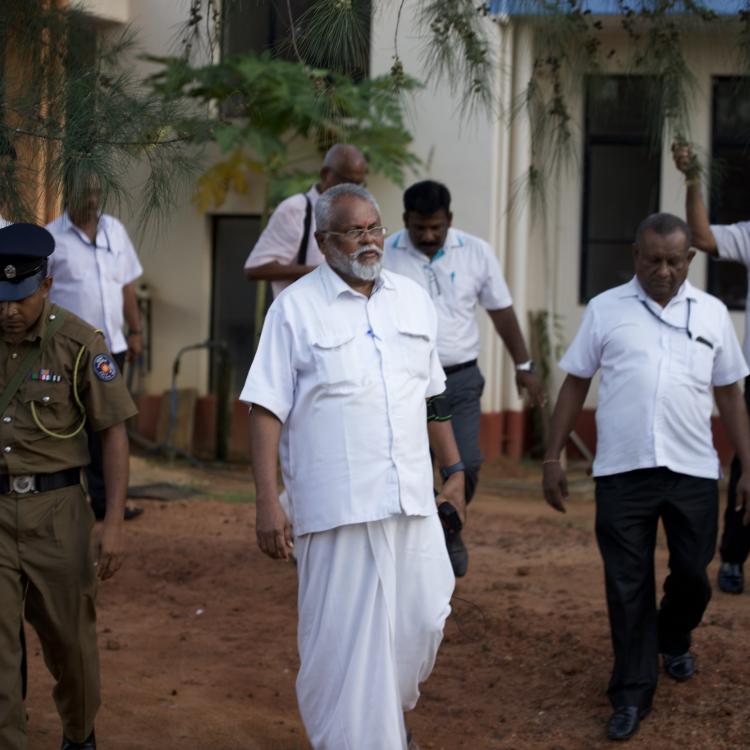

Former Sri Lankan minister and leader of the paramilitary Eelam People’s Democratic Party (EPDP) Douglas Devananda has once again come under scrutiny after being granted bail by the Gampaha Magistrate’s Court, following his remand in connection with an investigation into the alleged transfer of a military-issued firearm to an organised criminal.
Devananda’s career spans decades of Sri Lanka’s genocide against Tamils, marked by close alignment with the state and repeated ministerial appointments, as he was shielded from accountability for grave human rights violations.
From militant to minister
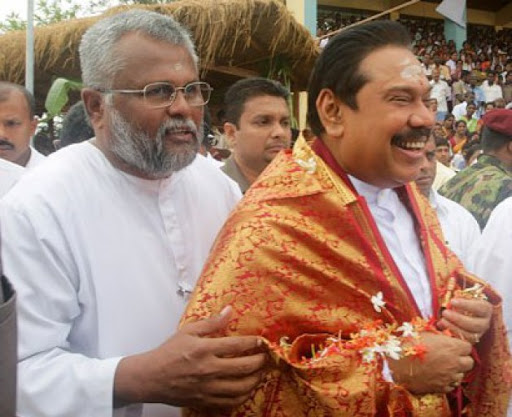
Devananda heads the notorious Eelam People’s Democratic Party (EPDP), a paramilitary organisation that was particularly close to the Rajapaksa regime.
He was elected to parliament in 1994 and aligned himself firmly with the government as it launched successive military offensives in the Tamil homeland.
Over the years, he has been rewarded with numerous ministerial portfolios, including Minister of Social Services and Social Welfare, Minister of Agriculture and Marketing Development, Minister of Hindu Religious Affairs, and currently Minister of Fisheries. In 2012, the Sri Lankan government included him in its official delegation to the UN Human Rights Council in Geneva.
Despite these positions, Devananda has remained widely reviled among Tamils, who view him as a symbol of state-backed repression rather than political representation.
EPDP and state-backed paramilitarism
Throughout the armed conflict, the EPDP operated as one of several paramilitary groups used by the Sri Lankan state, alongside others such as the Karuna faction. These groups functioned with tacit and at times explicit support from the Sri Lankan Army.
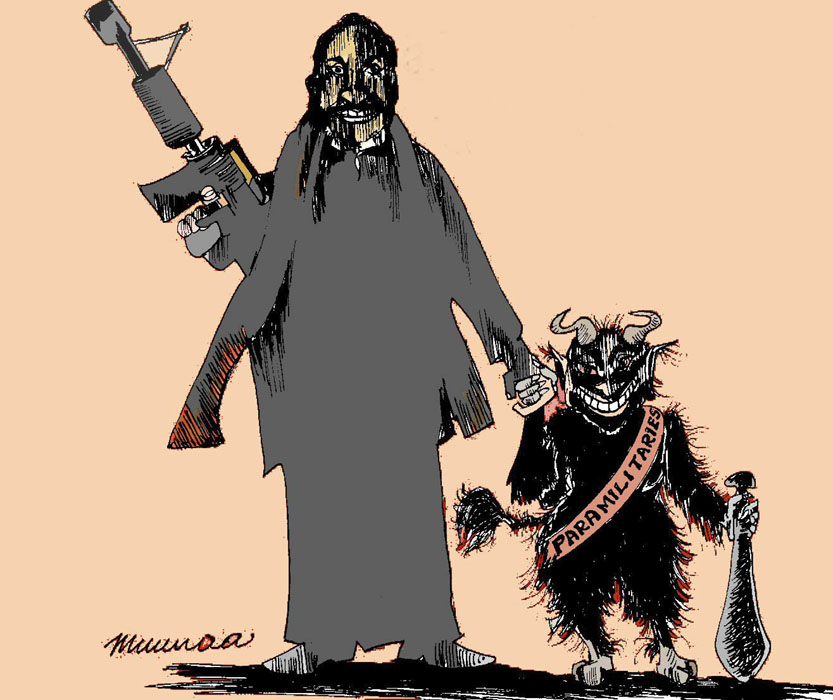
Extensive details regarding the EPDP's activities can be found in a secret US embassy cable from 2007, which was leaked to the public in 2010.
It outlines in detail how the US was well aware in 2007 of the extent of Sri Lanka’s active use of Tamil paramilitaries as an integral part of its war against the LTTE. At the time the US cable said “the EPDP remains a feared paramilitary group, wielding non-official power over parts of the Jaffna peninsula and especially the offshore islands with the tacit approval of the Sri Lanka Army”.
The cable went on to describe how this relationship enabled the EPDP to operate beyond the reach of the law.
Child trafficking and sexual violence
One of the most disturbing sets of allegations against the EPDP relates to child trafficking and sexual exploitation. According to the US embassy cable, Stephen Sunthararaj, then Coordinator of the Child Protection Unit of World Vision in Jaffna, told US officials that “the EPDP is operating child trafficking rings in Jaffna with a base on Delft island, which the EPDP ‘owns.’”
The cable continues,
“because of the large number of widows in Jaffna, men associated with the EPDP, often from neighboring villages, are used to seduce women with children, especially girls, with the promise of economic protection. After establishing a relationship, the men then take the children, sometimes by force and sometimes with the promise that they will be provided a better life.
The children are sold into slavery, usually boys to work camps and girls to prostitution rings, through EPDP's networks in India and Malaysia.”
Sunthararaj goes on to add, “children are often smuggled out of the country with the help of a corrupt Customs and Immigration official at Bandaranaike International Airport in Colombo”.
The US states that Sunthararaj was “partially verified” by Government Agent Ganesh who said “the EPDP works in concert with the Sri Lanka Army (SLA) to operate Tamil prostitution rings for the soldiers”.
Ganesh added;
“young women were taken and forced to have sex with between five and ten soldiers a night. Sometimes they are paid approximately a dollar for each "service."”
“The young women's parents are unable to complain to authorities for fear of retribution and because doing so would ruin the girls' reputation, making it impossible for them ever to marry. Families have begun arranging marriages for their daughters at a very young age in the hopes that the EPDP and soldiers will be less likely to take them.”
Also see: Former EPDP member sentenced to death for rape and murder of 12-year-old
Abductions and enforced disappearances
The EPDP has long been accused of working alongside state forces to carry out abductions and enforced disappearances. A particularly striking case is that of Stephen Sunthararaj himself, who documented abuses by the EPDP.
After facing threats in the North-East, Sunthararaj moved to Colombo in 2007. On 12 February 2009, he was detained by Sri Lanka’s Special Task Force and held without charge under the Prevention of Terrorism Act. During his detention, his wife received threats warning that he would be abducted again or tortured unless a ransom was paid.
After nearly three months, Sunthararaj was released on 7 May 2009. He was forcibly disappeared the same day. His fate remains unknown. His wife is still searching for answers.
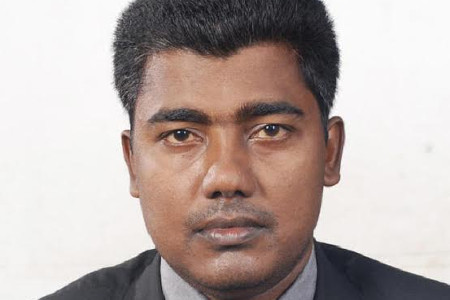
Read more in our feature: Still searching for Stephen Sunthararaj
US State Department reporting from as early as 1994 noted that government forces and Tamil militias, including the EPDP, were operating “a parallel system of secret detention” in Colombo, with court cases filed against EPDP leadership alleging abduction and torture.
In 2015, Father Elil Rajendran delivered a speech at the BMICH, stating, "paramilitary groups especially EPDP in Jaffna after the capture of the Jaffna peninsula in 1996 and the Karuna group after 2004 in the East, carried out enforced disappearances in collusion with the state".
Read more: EPDP admits Batticaloa 'abductions'
Murders linked to EPDP operations
The EPDP stands accused of several murders throughout the years.
The 2007 US embassy cable elaborates,
“Working in concert with SLA soldiers stationed in the Jaffna peninsula, the EPDP is able to conduct extortion, abductions, extra-judicial killings and other criminal acts without fear of consequences, according to numerous sources.”
Amongst the most high-profile murders is that of Tamil journalist Mylvaganam Nimalarajan.
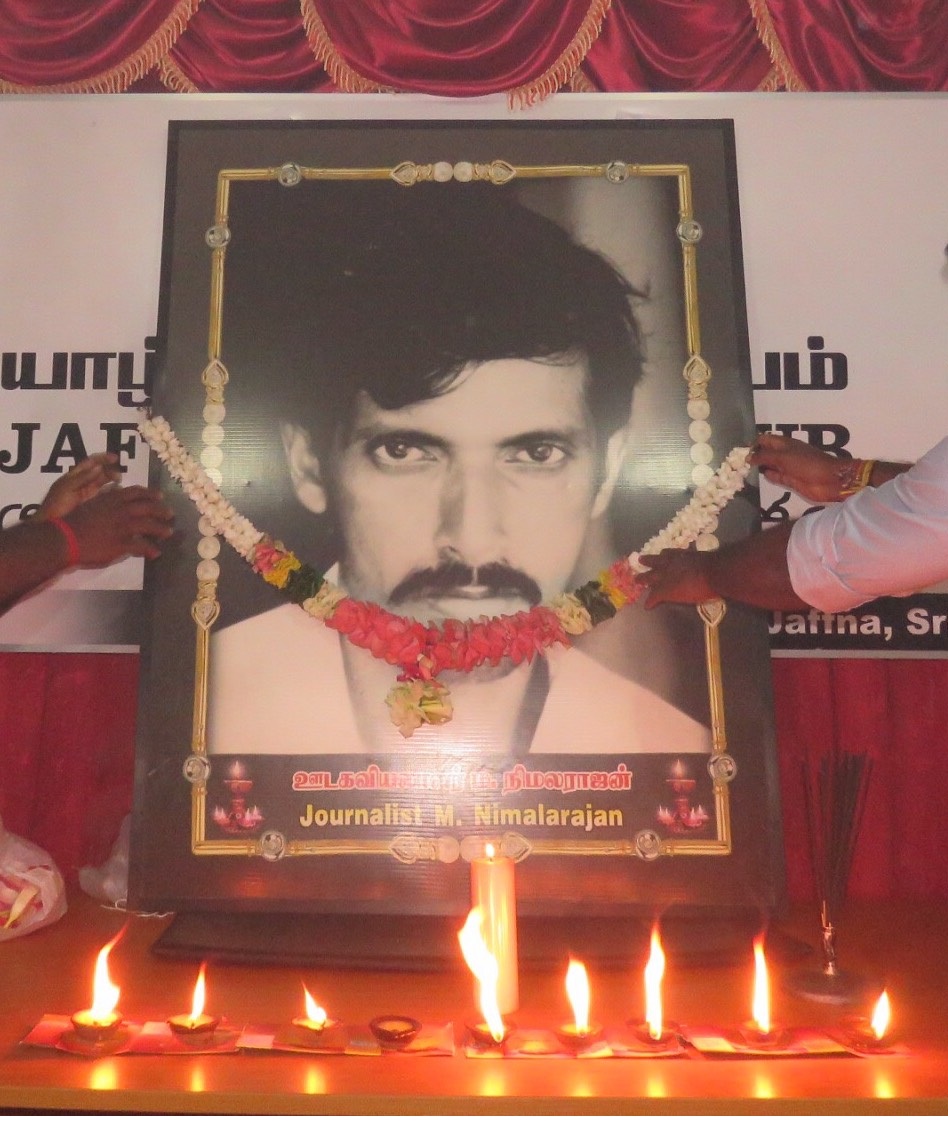
Nimalarajan, a senior journalist who contributed to the BBC Tamil and Sinhala services, the Tamil daily Virakesari and Sinhala weekly Ravaya, was murdered in his Jaffna home on October 19th 2000.
Earlier last year, the Sri Lankan Attorney General's department ordered the release of the suspects involved in the murder case. At least two other suspects were thought to have been abroad.
In March 2022, the Metropolitan Police’s War Crimes Team arrested a 48-year-old man in Britain over the murder of Nimalarajan.
In 2008, Thiyagarajah Maheswaran, a Tamil parliamentarian from the main opposition United National Party (UNP), was assassinated by gunmen at the Ponnambala Vaaneasvarar temple at Kochchikkadai in Colombo on New Year’s day.
The shooting, which also claimed the life of the MP’s bodyguard, came a few hours after Maheswaran announced on a popular television show that he would reveal details on how abductions and killings in Jaffna are managed by the Sri Lankan establishment through the EPDP.
Another notable killing was that of Atputharajah Nadarajah in Colombo in 1999.
Nadarajah edited the EPDP’s newspaper, the Thinamurusu. Despite his party position, he reportedly took an increasingly pro-LTTE line, to such an extent that the Thinamurusu became one of the most vocal critics of the the ruling veornment and then president Chandrika Kumaratunge.
Nadarajah was shot dead in November 1999. The British Refugee Council said in January 2000: “the killing of EPDP MP Atputharajah Nadarajah in November and [separately] All Ceylon Tamil Congress leader Kumar Ponnambalam in January have heightened fears. The police have stated that they would not investigate the murder of Mr Nadarajah whose writings in the Tamil journal Thinamurasu led to accusations that he supported the LTTE despite being a member of government ally, the EPDP. … Two other EPDP MPs who voted in Parliament against the extension of Emergency have fled the country and sought asylum in Britain.”
The EPDP has also been accused in a host of other murders, including the 2001 killing or wounding of several TNA candidates and supporters in Jaffna.
See also: Jaffna protests Uthayan killings
Land occupation, business contracts and extortion
Beyond violence, the EPDP has been accused of systematic land occupation and economic exploitation. In 2018, the owners of the ‘Sridhar Cinema’ building in Jaffna town filed a case against Devananda, in a bid to recover their property, which is currently illegally occupied by the EPDP and houses the party headquarters.
The Sridhar Cinema was built by the family which owns the land, on Stanley Road, in 1974 but was closed down around 1990 due to the war, when the landowners also fled Jaffna. The family wanted to reopen the cinema in 1997, when civil administration returned to Jaffna, but became aware that around December 1996, Devananda and his party “had, without their knowledge, leave, or consent, unlawfully and forcibly taken possession” of the premises.
The party had been in “illegal and unlawful occupation” of the premises ever since, the landowners lawyer said. The theatre continues to be occupied.
In addition to the occupation of land, several business contracts continue to be controlled by the EPDP.
For example, in 2011 the Sri Lankan cabinet approved an application by Devananda to restore and commence salt manufacturing at the Elephant Pass saltern, in the Jaffna peninsula.
Another EPDP run company the ‘Maheswari Foundation’ is already involved in the illegal excavation of sand Vadamaraadchi, also in Jaffna.
Also see:
The LTTE reportedly attempted to assassinate Devananda on several occasions.
Public revulsion and continued power
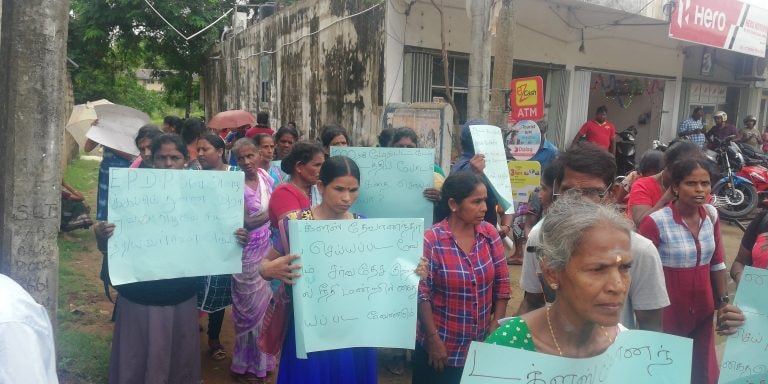
Families of the disappeared protest against the EPDP in 2020.
In recent years, Tamil families of the disappeared have protested against the EPDP calling for the arrest of Devananda.
In 2012, Indian singer Unnikrishnan publicly apologised after accepting an honour from Devananda, saying he had not known Douglas was “the leader of a paramilitary group responsible for killing scores of Tamils”. In 2017 however, a concert set to take place in Jaffna featuring Unnikrishnan was cancelled after threats from EPDP supporters. Unnikrishnan had said "Devananda is despised by Tamil people in their entirety".
For the Tamil people, Douglas Devananda’s career is a stark illustration of how Sri Lanka has rewarded paramilitary violence, shielded perpetrators, and entrenched a system where those accused of some of the gravest abuses continue to wield power.