
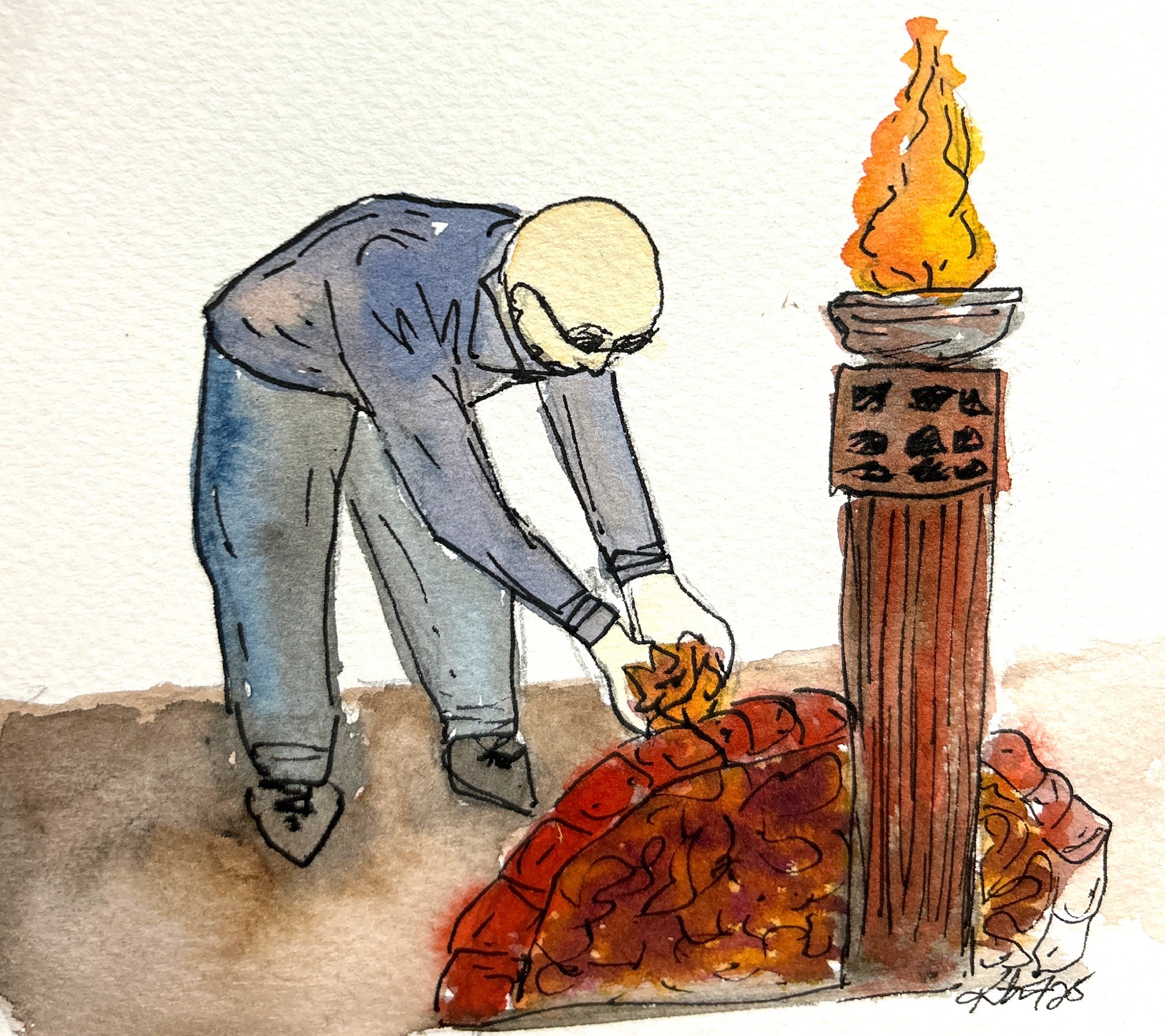
United Nations High Commissioner for Human Rights Volker Türk concluded a highly anticipated trip to the island last week. His visit to Trincomalee and Jaffna brought him face-to-face with protesting families of the disappeared and the scars of Sri Lanka’s atrocities, as he visited a mass grave site and laid flowers at a nearby vigil. While the symbolism of his visit cannot be denied, in the face of a deep-rooted and decades-long crisis of impunity, that alone is not enough. As he returns to Geneva, the visit must serve as a reminder to his office and to the international community that action, not words, must now follow.
From the moment his trip was announced, Tamils across the North-East mobilised. Protests were arranged, banners were unfurled, and countless memoranda prepared. The hope was that this High Commissioner would do more than pose for photographs or issue sanitised statements. That he would be forced to confront the most pressing issues at hand. That he would listen, see, and act.
He did listen. He did see. But will he act?
Standing at the Chemmani mass grave, where the remains of children continue to be unearthed, Türk spoke of how “the haunting past becomes so visible” at the site. It was a gesture towards acknowledging what Tamils have long known and what the world has long ignored. Sri Lanka’s atrocities cannot simply be covered up or buried. They lie just beneath the surface.
He met with grieving families who continue to search for their loved ones. He heard their pleas for accountability. And in Colombo, he acknowledged the repeated failure of Sri Lanka’s domestic mechanisms, stating plainly that this is why Tamils have “looked outside for justice.”
Yet for all this, Türk’s language on returning to the Sri Lankan capital remained cautious. There was no outright naming of genocide, no direct condemnation of Sri Lanka’s entrenched impunity, and no declaration of concrete international steps. Instead, his remarks were laced with caveats and hopeful aspirations from the regime in power. For the Tamil people, who have heard these words before, year after year, from global leaders and previous High Commissioners alike, it was a painful repetition of a familiar script.
His failure to visit Mullivaikkal, the site of Sri Lanka’s deadliest massacres where tens of thousands of Tamils were slaughtered by state forces in May 2009, was also striking. Survivors, families and human rights groups had explicitly requested that the High Commissioner go there. He did not. For an official who heads the global human rights body, avoiding the epicentre of Sri Lanka’s genocidal war and the central issue that has driven more than a decade of resolutions at the UN Human Rights Council, is indefensible. It was a missed opportunity, and a shame.
For all the sincerity that his visit held however, the same questions linger. What happens next?
For years, various global actors have acknowledged how international accountability is vital for the island to truly move forward. Yet, the international community has yet to deliver even a fraction of justice to the Tamil people. Instead, states have watched resolution after resolution pass in Geneva, only for Sri Lanka to sidestep implementation, refuse any investigations, and reinforce its occupation of the North-East. No senior military commander has been prosecuted. No answers delivered to the protesting mothers of the disappeared. No meaningful demilitarisation or even devolution to the Tamil people. Instead, what Tamils have received is surveillance, denial, and whitewashed commissions.
Türk did speak of international involvement in any accountability mechanism, and on how his office has been gathering and preserving evidence. But preservation without prosecution is not justice. International criminal proceedings, either through universal jurisdiction or a dedicated international tribunal, have yet to be seriously pursued. That must change. UN agencies must also press states to impose targeted sanctions on those credibly accused of war crimes. And the High Commissioner himself must recognise the limits of the UN Human Rights Council, and start to look beyond it.
The human rights chief echoed demands for the repeal of the draconian Prevention of Terrorism Act, for the release of political prisoners, and for an end to the military’s occupation of Tamil land - such as the more than 2,400 acres in Valikamam North that protestors have been highlighting this week. He also warned against the continued surveillance of human rights defenders, a practice that remains widespread and suffocating across the Tamil homeland.
Acknowledgment, however, has to be followed by enforcement. Indeed, his predecessor Zeid Al Hussein made strikingly similar observations during his 2016 visit to the island, speaking of Sri Lanka’s history is “littered with judicial failures” and calling the military occupation of land in the North-East a “lingering sore”. Still, no progress has been made.
If Zeid’s visit in 2016 marked a test of Sri Lanka’s willingness to reform, then Türk’s visit nine years later must be taken as a final verdict on its failure.
Volker Türk may have said many of the right things. But the time for careful language and gentle encouragement has long passed. The legacy of his visit, like those of his predecessors, will be judged not by words spoken in Colombo, but by what is done after he leaves. Tamils across the North-East, who turned out in force to ensure the High Commissioner heard their voices, have been loud and clear. The ball is now squarely in the court of the international community. If this moment is to mean anything, it must be matched with action – in Geneva, in courts across the world, and in the policies of states that claim to uphold human rights.
_____
Illustration by Keera Ratnam.