
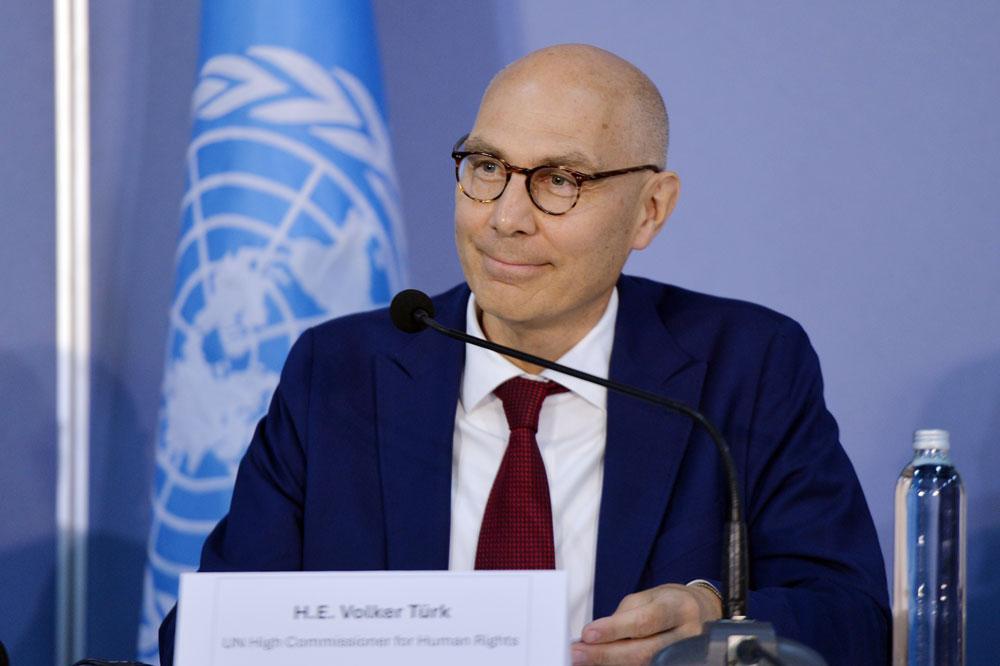
United Nations High Commissioner for Human Rights Volker Türk concluded his three-day visit to on Thursday with a statement reiterating key concerns long raised by Tamil victims and civil society groups, including the need for an internationally backed accountability mechanism, the repeal of the Prevention of Terrorism Act (PTA), an end to surveillance of human rights defenders, and the release of military-occupied land.
Speaking from Colombo at the conclusion of his mission, Türk acknowledged the deep trauma that persists, particularly in the North-East, and reflected on his visit to the Chemmani mass grave in Jaffna. “My visit yesterday to the recently re-opened mass grave at Chemmani was a compelling reminder that the past haunts the lives of many in Sri Lanka,” he said.
At Chemmani, where 19 skeletal remains were recently uncovered, including those of children, Türk met families still searching for loved ones disappeared during the armed conflict. “Like thousands of others, they want closure after 30 years of not knowing,” he remarked.
While acknowledging “a growing space for memorialisation,” Türk expressed concern over the continuing “patterns of surveillance of human rights defenders,” warning that this undermines progress. “Civil society members are partners and allies in nation-building,” he said, noting that “surveillance must end” to create an enabling environment for truth and justice.
On the central issue of accountability, Türk stressed that Sri Lanka’s domestic mechanisms have failed to earn the trust of victims, necessitating international involvement. “Sri Lanka has struggled to move forward with domestic accountability mechanisms that are credible and have the trust and confidence of victims. This is why Sri Lankans have looked outside for justice,” he stated. His office, he added, remains committed to supporting accountability efforts and has already established a dedicated project to preserve evidence and analyse violations.
“Ultimately it is the State’s responsibility and it is important that this process is nationally owned – and it can be complemented and supported by international means,” he said. “My own Office has been mandated to gather and preserve information and analyse violations and abuses and has established a dedicated project for this purpose. I hope that it can support future accountability efforts, both here in Sri Lanka and internationally.”
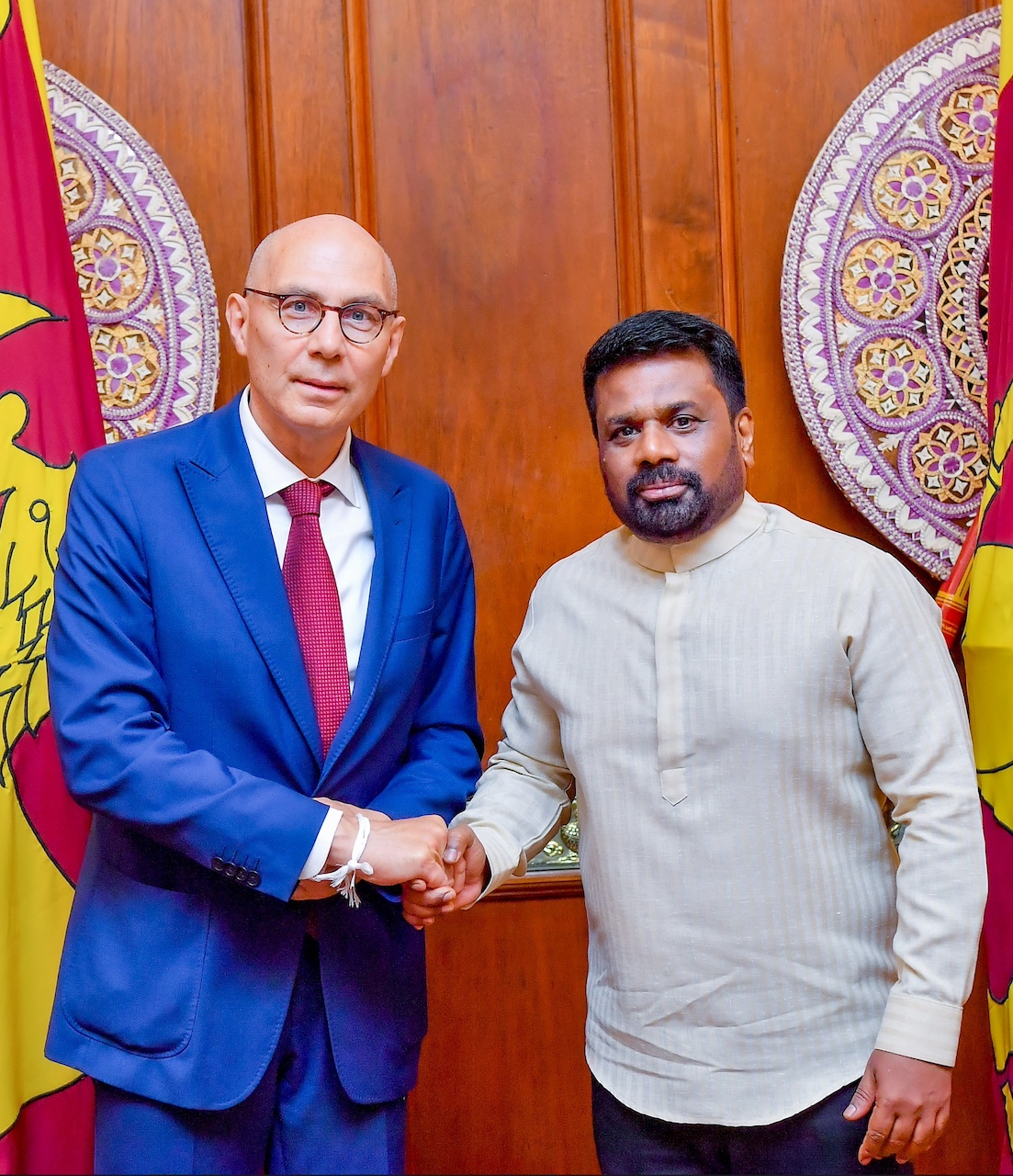
His remarks came after a meeting with Sri Lankan president Anura Kumara Dissanayake in Colombo.
Addressing systemic abuses, Türk noted that torture and sexual violence “featured prominently during the conflict and are still reported today.” Despite the criminalisation of torture in Sri Lankan law, he said, “complaints continue to be received… across the country.” He stressed the need for urgent reform of the security and police sectors, describing them as “critical” to ending the “systemic problem” of torture.
In a firm statement echoing long-standing Tamil and international human rights demands, Türk urged the repeal of the draconian PTA and a moratorium on its use, alongside an “expedited review and release of long-term PTA detainees.” He also called for the repeal of the recently enacted Online Safety Act, which critics have warned severely curtails freedom of expression.
The High Commissioner also touched on the lingering issue of military land occupation in the North-East. “I stressed the importance of releasing lands still occupied and used economically by the military,” he said, calling for disputes involving archaeological, religious, and conservation claims to be resolved “in consultation with communities.”
While acknowledging recent government statements on inclusivity, Türk noted that “quick wins and confidence-building measures are key to enhancing trust and reconciliation.”
His remarks come following a visit to Trincomalee and Jaffna earlier in the week, which included meetings with families of the disappeared, human rights lawyers, and protestors at the “Unextinguished Flame” vigil, many of whom handed him letters and a copper plaque outlining detailed demands for international oversight and justice.
As he concluded his remarks in Colombo, Türk said he departed the island with “strong hope” and noted the opportunity to build “a new social contract” grounded in human rights and accountability. “In a world where wars, economic uncertainty and human rights violations are sadly becoming the norm,” he said, “my wish is that Sri Lanka can become a story of hope.”
However, for Tamils, that hope now rests on whether the words of the High Commissioner will be met with concrete action.