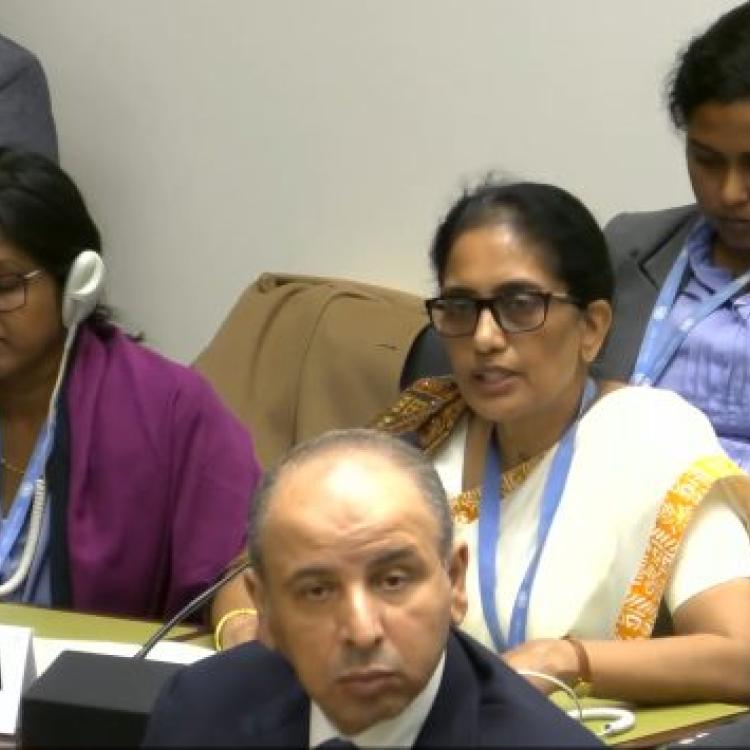
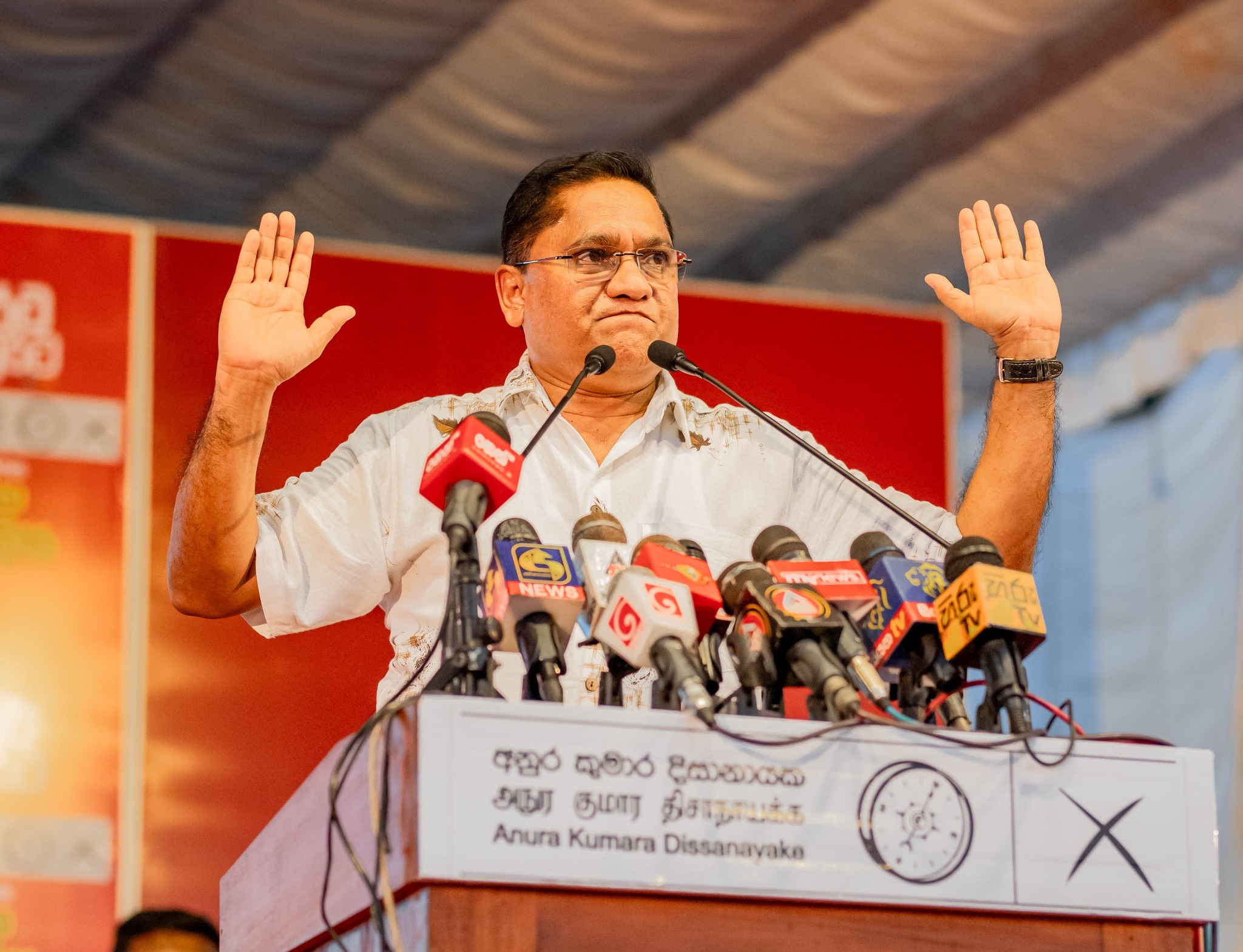
Sri Lanka’s Foreign Minister Vijitha Herath has defended the government’s decision not to call for a vote at the United Nations Human Rights Council (UNHRC) on the latest resolution concerning the island, while reiterating Colombo’s rejection of international accountability measures long demanded by Tamils.
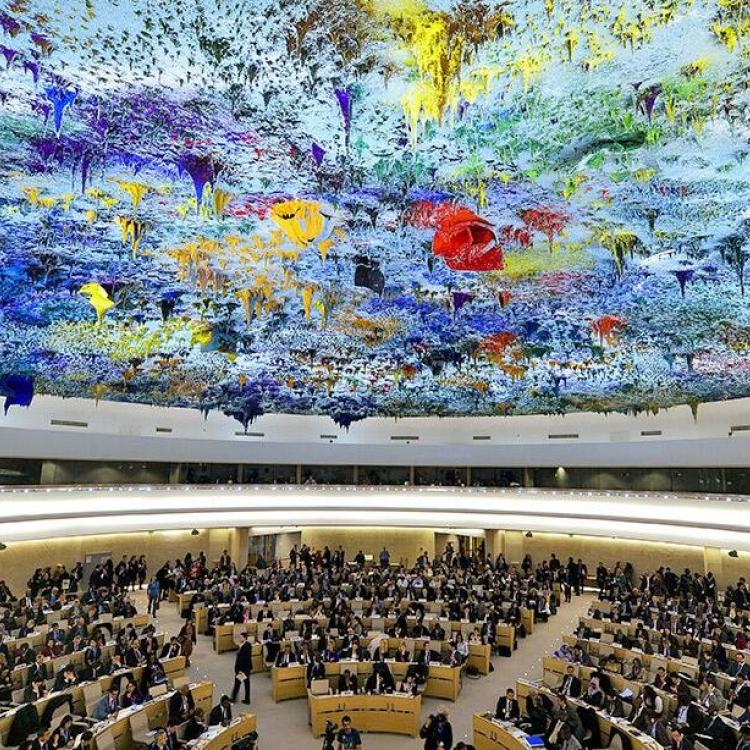
Addressing Parliament this week, Herath briefed MPs on his recent visit to Geneva for the 60th session of the UNHRC, where the Council adopted a resolution on accountability in Sri Lanka. Colombo opposed the move but chose not to challenge through a formal vote.
Herath insisted that requesting a vote would have been a waste of public money, claiming that previous administrations had “politicised national issues” and staged “media circuses” over resolutions they knew would be defeated.
“Previous governments did this, fully aware that the vote will be defeated, wasting both public money and time. This is not our government’s policy,” he said. “Past governments using public funds and time, knowing that they will lose a vote, performed media circuses. That is not our policy.”
He argued that the composition of the Council made it “impossible for a country like Sri Lanka to win a vote,” noting that support for the island has declined steadily — from 15 votes in favour in 2012 to just 7 in 2022.
The minister went on to defend the government’s broader approach to international scrutiny, maintaining that “genuine, nationally owned processes” were best suited to address human rights issues. Herath reiterated that Sri Lanka does not recognise the mandate of the Office of the High Commissioner for Human Rights’ (OHCHR) Sri Lanka Accountability Project (SLAP), which collects and preserves evidence of wartime atrocities.
The government, he said, remains committed instead to so-called domestic reforms such as replacing the Prevention of Terrorism Act (PTA) with new legislation and establishing an independent public prosecutor’s office. “Safeguarding human rights remains a government priority and will not be politicised,” he added.
However, Tamil politicians and rights organisations have dismissed these claims as empty rhetoric, pointing out that no domestic mechanism has ever delivered justice for wartime atrocities. Tamils have continued to call for an international accountability process, including prosecutions under universal jurisdiction and referral of Sri Lanka to the International Criminal Court. Several administrations, including the current regime, have rejected moves towards international accountability.
Opposition MPs also criticised the government’s position during the parliamentary session. MP Ravi Karunanayake questioned why Sri Lanka had not called for a vote despite publicly welcoming its ambassador’s statement in Geneva. Ilankai Tamil Arasu Katchi (ITAK) MP Shanakiyan Rasamanickam accused Herath of “deceiving the international community” by failing to mention the stalled provincial council elections and the government’s ongoing militarisation of the North-East.
Ceylon Workers’ Congress MP Jeevan Thondaman queried the composition of the Office for Reparations, asking whether its membership consisted solely of ex-servicemen or if new appointments would be made.
Samagi Jana Balawegaya MP Harsha de Silva said Sri Lanka should not shy away from seeking international votes, citing the country’s earlier efforts to defend its GSP+ eligibility at the European Parliament. Chief Opposition Whip Gayantha Karunathilake proposed a full parliamentary debate on Herath’s Geneva statement, to which the minister agreed.
The UNHRC resolution, adopted without a vote, extends the OHCHR’s mandate on Sri Lanka for another two years, maintaining international oversight of the island’s human rights record and accountability for wartime abuses.
Colombo’s rejection of the resolution underscores its continued resistance to international mechanisms, despite mounting Tamil demands for global action to end impunity for war crimes, crimes against humanity, and genocide committed during the final phase of the armed conflict.