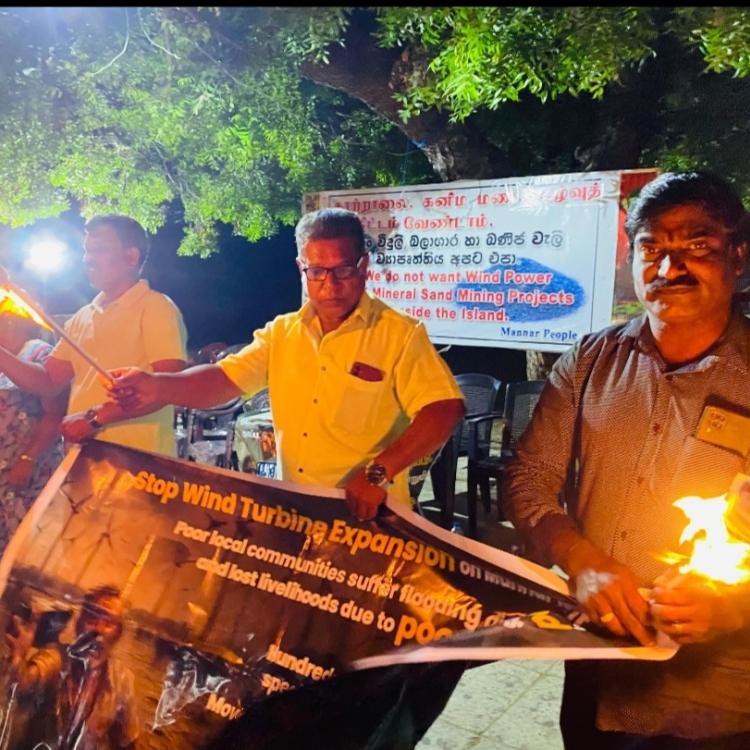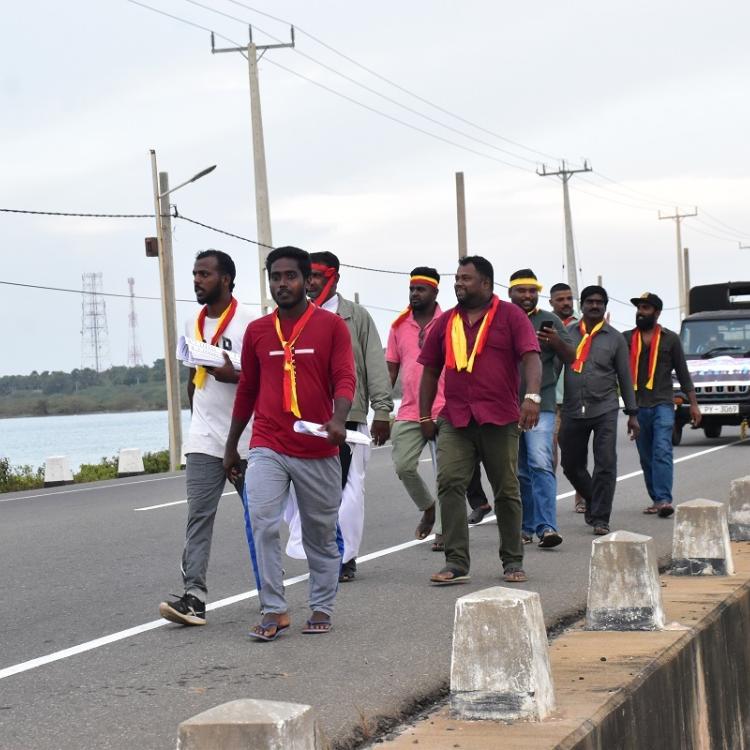

Sri Lankan police launched a violent assault on peaceful protesters in Mannar on Friday night, leaving priests, women and men hospitalised, in a fresh escalation of tensions over the controversial wind power project.
From around 10 p.m. on September 26, demonstrators gathered to block convoys transporting wind turbine components into Mannar, in continuation of a protest that has now lasted more than 55 days.

It came after a one-month halt on wind power projects, announced by Sri Lankan president Anura Kumara Dissanayake safter pressure from the protests, lapsed that very night.
Despite their peaceful resistance, Sri Lankan police and Special Task Force (STF) personnel stormed the gathering, beating protesters with batons, threatening them at gunpoint, and trampling women underfoot as they cleared the way for the lorries.
Several protesters were rushed to Mannar General Hospital with serious injuries. Witnesses said priests attempting to shield parishioners were also struck, in scenes described as both violent and sacrilegious.
The crackdown unfolded just weeks after President Anura Kumara Dissanayake had pledged that “no project would be carried out against the will of the people” and promised a committee to gather public opinion. Yet on Thursday, the president instructed that the wind project must go ahead, dismissing the concerns of Mannar’s fishing and farming communities.
Mannar under siege
For over 55 days, Mannar’s fisherfolk, farmers, women, children and clergy had carried out a round-the-clock satyagraha, reciting hymns and holding placards demanding dialogue. Their opposition is rooted in fears that the massive wind farm will devastate fishing grounds, seize farmland, and destroy fragile ecosystems along the island’s most important migratory bird route.
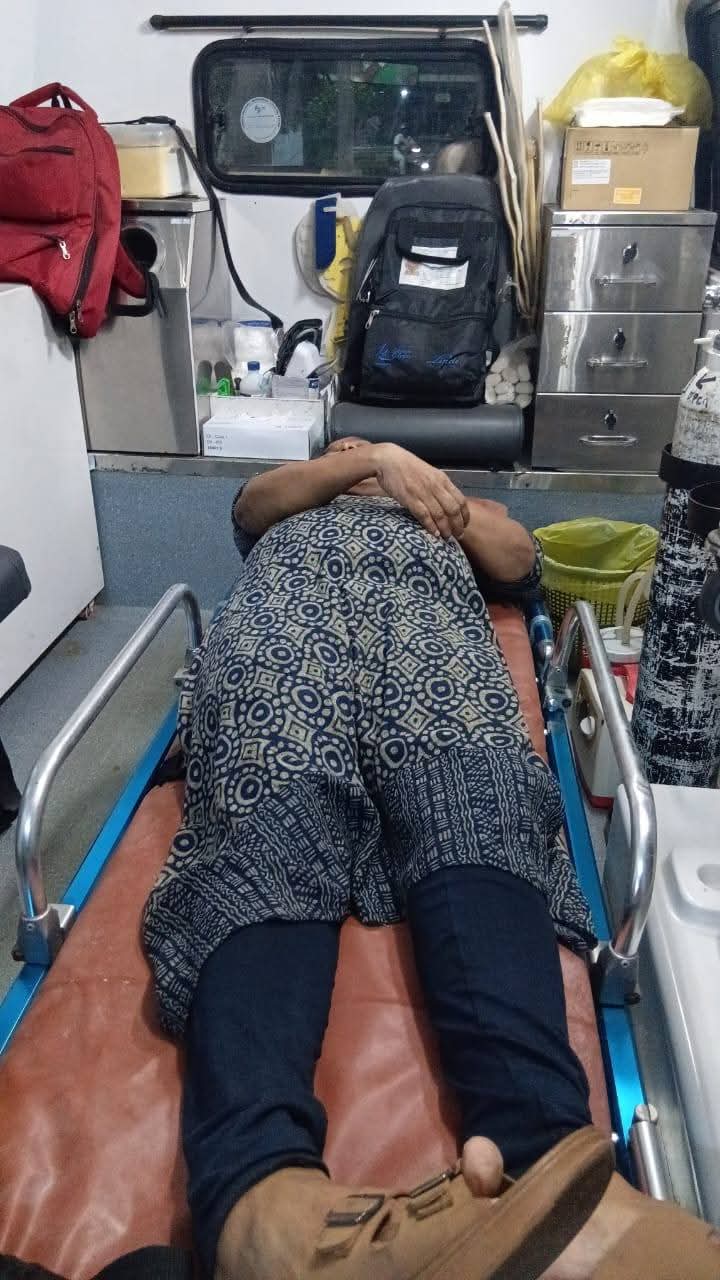
Environmentalists have warned that the project, rolled out without transparent Environmental Impact Assessments, could decimate biodiversity, undermine coastal livelihoods and scar one of Sri Lanka’s most pristine landscapes.
For Tamils, the development is not simply about renewable energy but about dignity, land rights and survival.