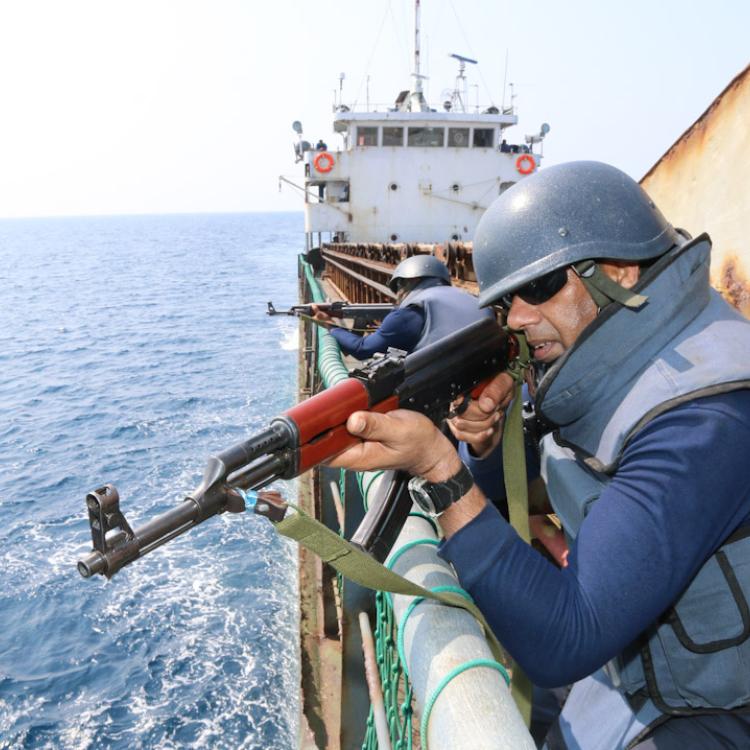

Avant Maritime's employees. Source: Avant Maritime
The Sri Lankan government has vested fresh powers in the navy to run a maritime security operation project, reviving a role once mired in controversy and corruption under Avant Garde Maritime Services (Pvt).
A gazette issued on 13 August by Anura Kumara Dissanayake, acting in his capacity as Minister of Defence, authorises the navy to store firearms, ammunition and other equipment belonging to foreign private maritime security companies in its armouries, and to provide services during the embarkation and disembarkation of merchant vessels. The project, approved by Cabinet last month, allows the navy to collect revenue from foreign maritime firms operating in Sri Lankan waters.
The move comes despite the International Maritime Organisation removing the Red Sea, the Gulf of Aden, and the Somali Sea from its list of High Risk Zones in January 2023. Nonetheless, commercial shipping companies continue to employ armed security details while transiting the region, creating a lucrative market for maritime protection.
Navy spokesperson Commander Buddhika Sampath confirmed the decision, declaring, “As a professional naval force, the Navy will provide services to those foreign security companies during the embarkation and disembarkation process of ships represented by them.”
In 2012, then Defence Secretary Gotabaya Rajapaksa controversially awarded Avant Garde Maritime Services a licence to operate a floating armoury, wresting control of the lucrative sea security business from the navy. The deal proved immensely profitable for the private firm.
Sri Lanka’s Commission to Investigate Allegations of Bribery or Corruption later charged that the arrangement caused losses of Rs. 11.4 billion to the state. In 2015, authorities discovered 813 firearms and more than 200,000 rounds of live ammunition aboard the company’s MV Avant Garde vessel.
Legal proceedings followed, with Avant Garde Chairman Nissanka Senadhipathi, Rakna Lanka Chairman Victor Samaraweera, and several others indicted. However, in 2021, the Colombo High Court acquitted all accused, ruling that prosecutors had failed to prove the licence issued by Rajapaksa was forged.
Subsequently, in 2023, all charges against Rajapaksa himself in connection with the Avant Garde case were dropped, cementing widespread perceptions of entrenched impunity for high-level corruption and the close nexus between Sri Lanka’s military establishment and private profiteering.
By shifting control of maritime security operations back to the navy, the government has effectively formalised a major revenue stream for the armed forces, which already command an outsized budget and presence on the island. Critics note that the navy, like other branches of Sri Lanka’s military, has been repeatedly implicated in crimes ranging from extrajudicial killings to rights abuses against Tamils.
The decision to expand its commercial role raises further concerns about militarisation under the guise of “professional services.” The project, which enables the storage and transport of foreign weaponry on Sri Lankan soil, risks repeating the same opaque practices and security risks that marred the Avant Garde saga.
The return of such operations under direct state military control will also do little to reassure those who have long called for demilitarisation and accountability.