
Sri Lanka's acting head of archaeology has claimed that no evidence exists of a Hindu temple ever having stood at Kurunthur Malai in Mullaitivu, and refused permission for the Tamil shrine at the site to be rebuilt, in the latest move in a years-long state-backed effort to seize the hilltop for Sinhala Buddhism.
The hill is home to the Athi Aiyanar temple, where Tamil families have for generations worshipped Adi Sivan Aiyanar, a local Siva deity, gathering each year for Pongal observances and other rites. Over the past several years the site has been the target of a sustained appropriation effort, in which Sinhala Buddhist monks, backed by the Department of Archaeology and the Sri Lankan military, constructed a Buddhist vihara on the hilltop and consecrated a Buddha statue there, in defiance of a Mullaitivu Magistrate's Court injunction barring any new construction.
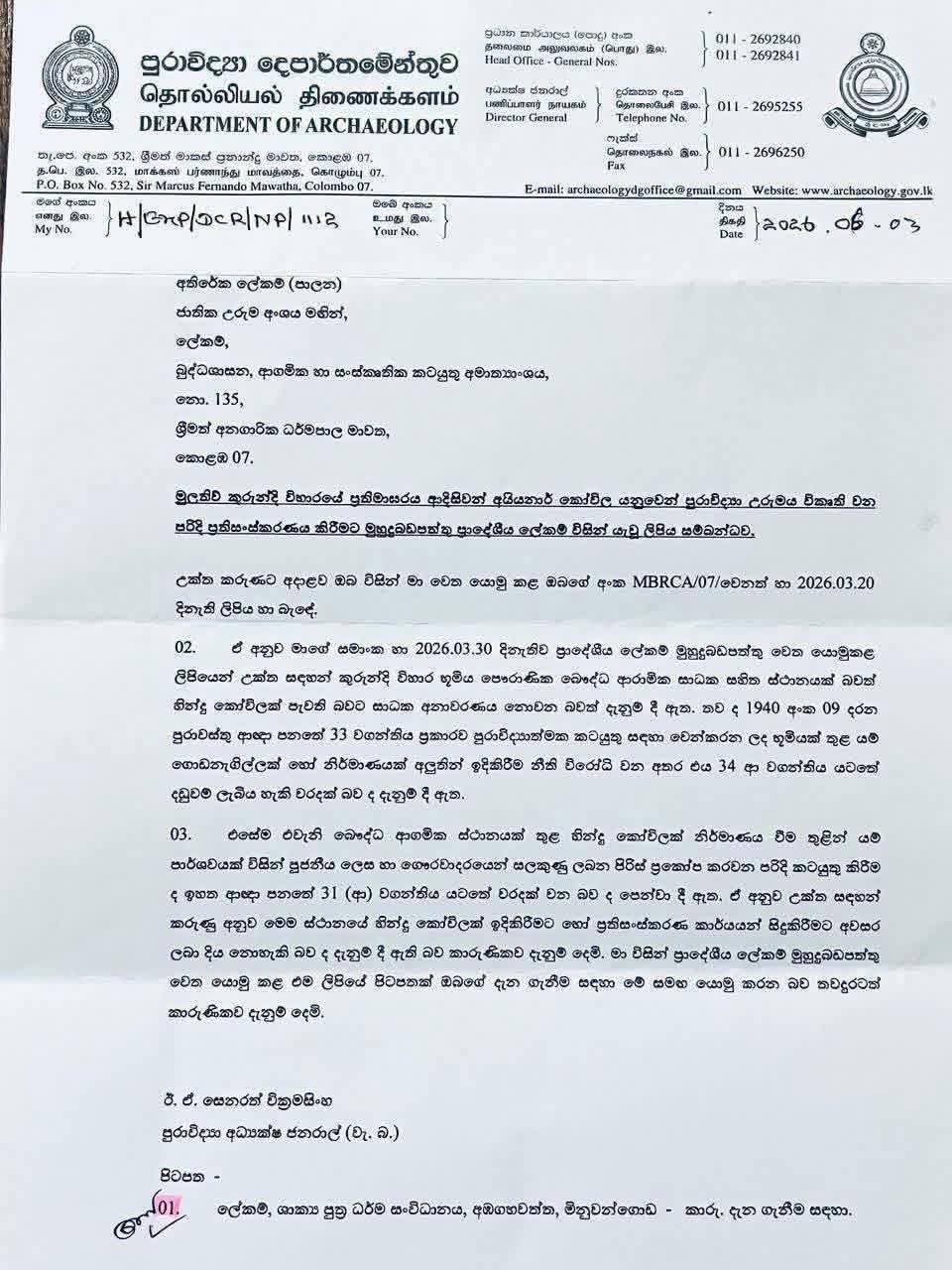
The denial that any Hindu temple existed was set out in a letter from the Acting Director General of Archaeology, Senarath Wickramasinghe, issued through the Additional Secretary (Administration) of the National Heritage Division to the Secretary of the Ministry of Buddhasasana, with a copy sent to the Deputy Secretary of the Sakya Putra Dharma Organisation, the Buddhist body pressing the claim over the site.
The letter responded to correspondence from the Karaithuraipattu (Maritimepattu) Divisional Secretary, which had raised the destruction of the Aiyanar temple under what it described as the guise of restoring the Kurunthur Malai Vihara. Referring to correspondence dated 20 March 2026 and a subsequent letter sent to the Mullaitivu Divisional Secretary on 30 March 2026, Wickramasinghe asserted that the land was a site containing historically important Buddhist archaeological remains, and that no evidence had been uncovered of a Hindu temple at the location.
The communication cited Sections 33 and 34 of Sri Lanka's Antiquities Ordinance No. 9 of 1940, stating that erecting any new building or structure on land reserved for archaeological activity was unlawful and a punishable offence. It went further, arguing that constructing a Hindu temple within what it termed the "Buddhist" religious site could amount to a crime under Section 31 of the Ordinance, on the grounds that it might provoke a group that regards the site as sacred. On that basis, the Acting Director General informed the authorities that permission could not be granted either for a Hindu temple or for any reconstruction work at the site.
The controversy at Kurunthur Malai sharpened in 2018, when a Buddhist monk, accompanied by Sri Lankan soldiers, sought to install a Buddha statue on the hill, prompting protests from local residents who objected to the attempt to alter the religious character of the area. The dispute entered the courts and has remained a matter of legal and political contention ever since.
Tamil civil society organisations and activists have repeatedly accused Sri Lankan state institutions, the Department of Archaeology foremost among them, of driving the Buddhicisation of historically Tamil and Hindu areas across the North-East, using archaeological claims, land administration and military occupation to plant or expand Buddhist sites in places with longstanding Hindu ties. They regard it as part of a wider effort to erase the Tamil character of the homeland and weaken Tamil claims to ancestral land. Sri Lankan authorities reject the accusations and maintain that their actions are intended to protect archaeological heritage. Tamil politicians have nonetheless accused the department of fabricating historical narratives at the site, erecting boards rebranding the hill the "Kurundi Archaeological Site" and tying it to the Mahavamsa, the Sinhala Buddhist chronicle frequently invoked to legitimise the colonisation of Tamil areas.
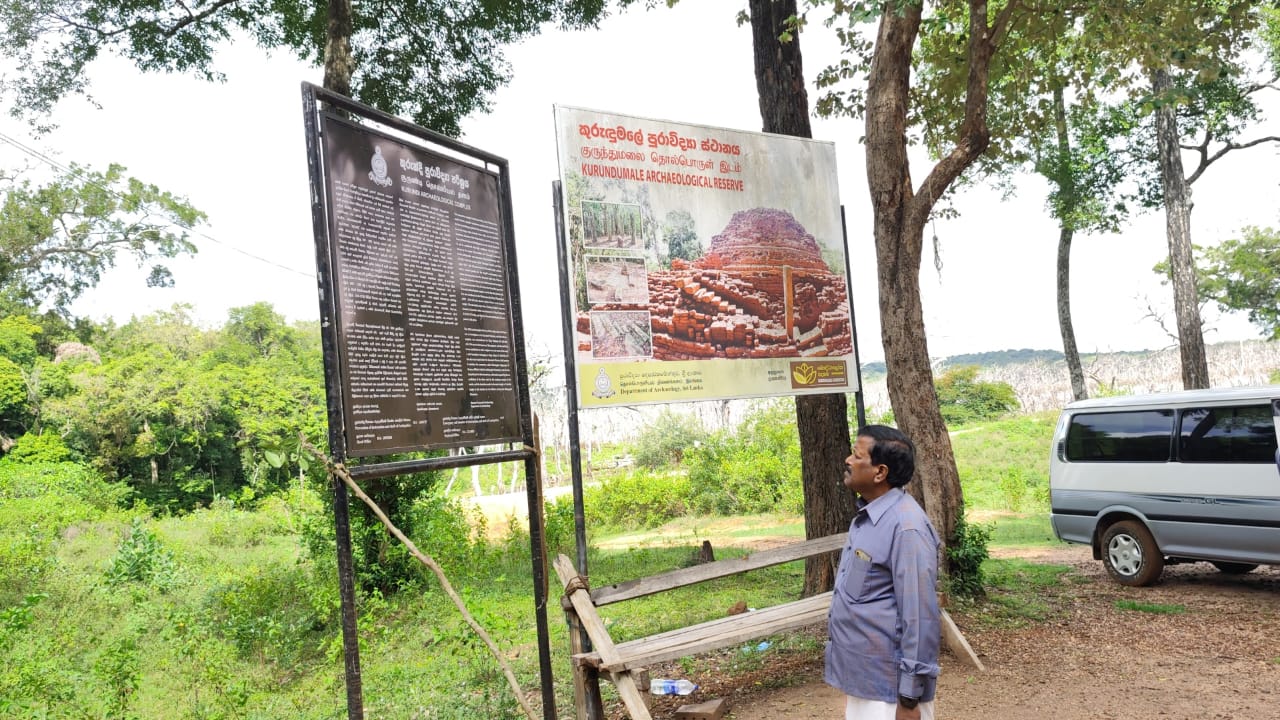
Kurunthur Malai is far from the only such case. Similar disputes have arisen over Buddhist structures raised in Tamil areas, including at Thaiyiddy and Navatkuli in Jaffna, while critics point to the contrasting treatment of major Hindu sites, among them the historic Thirukoneswaram temple in the East, where the state has shown no comparable urgency in protecting Tamil heritage.
The Mullaitivu Magistrate's Court has repeatedly ruled against the takeover, ordering the removal of the illegally built Buddhist shrine and any new idols from the hill, and finding that the archaeology department had abused its power in allowing Buddhist monks to operate there, while affirming that Tamil devotees were free to worship at the existing Hindu temple.