
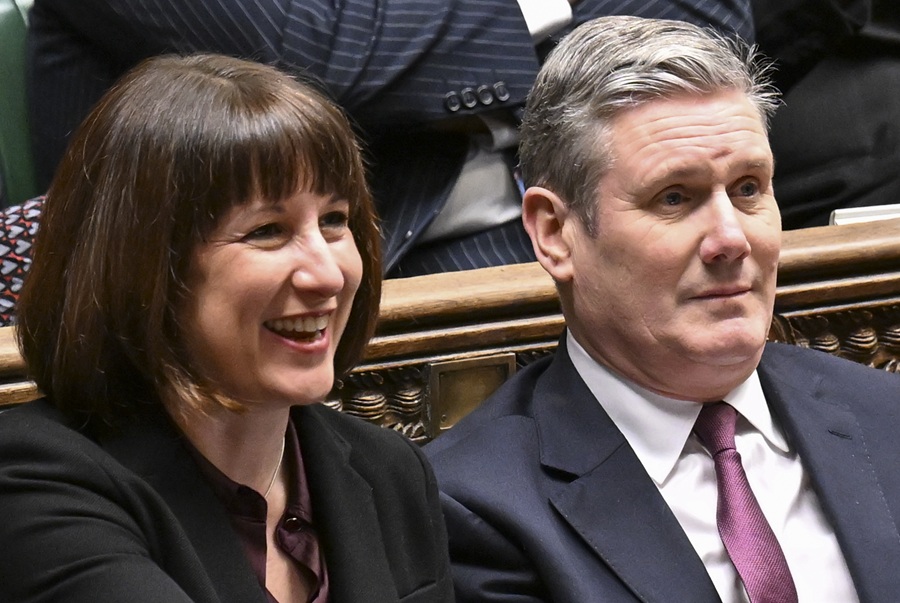
A second Scottish independence referendum will not be permitted even if the Scottish National Party (SNP) wins a majority at next year’s Holyrood election, UK Chancellor Rachel Reeves has insisted, provoking sharp criticism from senior Scottish ministers.
Speaking to BBC Radio Scotland, Reeves stated unequivocally that “there won’t be another referendum,” arguing that the 2014 vote was intended to be a “once-in-a-generation” event. When asked to define a generation, she replied: “Certainly not 12 years.”
Her comments come despite First Minister John Swinney’s strategy to treat a majority of seats at the May election as a mandate to demand a fresh vote, replicating the approach that secured the 2014 referendum after the SNP’s 2011 majority.
Scottish Finance Secretary Shona Robison condemned Reeves’ intervention, calling it “an astonishing display of arrogance.”
“This is a Labour government that is now one of the most unpopular we have seen in history and they are telling the Scottish people that they cannot decide their own future,” she said. “That will drive Labour’s poll numbers even further down. Their position cannot hold if the SNP wins a majority of seats.”
Reeves defended the refusal to grant a vote, arguing that the Scottish Government should prioritise issues such as NHS waiting lists, educational standards and infrastructure investment, rather than pursuing a renewed push for independence.
UK Prime Minister Keir Starmer has previously said he “could not imagine” a second referendum taking place during his time in Downing Street, cementing Westminster’s cross-party opposition to another ballot.
The clash comes weeks after the Scottish Government published A Fresh Start with Independence, a detailed policy prospectus setting out its proposals for an independent Scotland.
In his foreword to the paper, Swinney argued that the UK economic model was failing Scotland, citing stagnant living standards, austerity and Brexit - all of which Scotland did not vote for.
“Westminster is not working for Scotland,” he wrote. “But Scotland does well when we take our own decisions.”
He noted key achievements since devolution in 1999, including free university tuition, expanded childcare, free NHS prescriptions and the Scottish Child Payment, which he said had “enabled Scotland to take a different course” from the UK. Swinney argued that independence is now “urgent, necessary and possible.”
“It is urgent because of the path the UK is on. It is necessary because only with the full powers of independence can the transformational economic change we need be achieved. And it is possible because of our existing strong foundations and immense natural resources.”
The paper highlights Scotland’s strengths in renewable energy, technology, food and drink, and skilled labour, stating that comparable European nations with fewer advantages are already “fairer, more dynamic and more prosperous than the UK.”