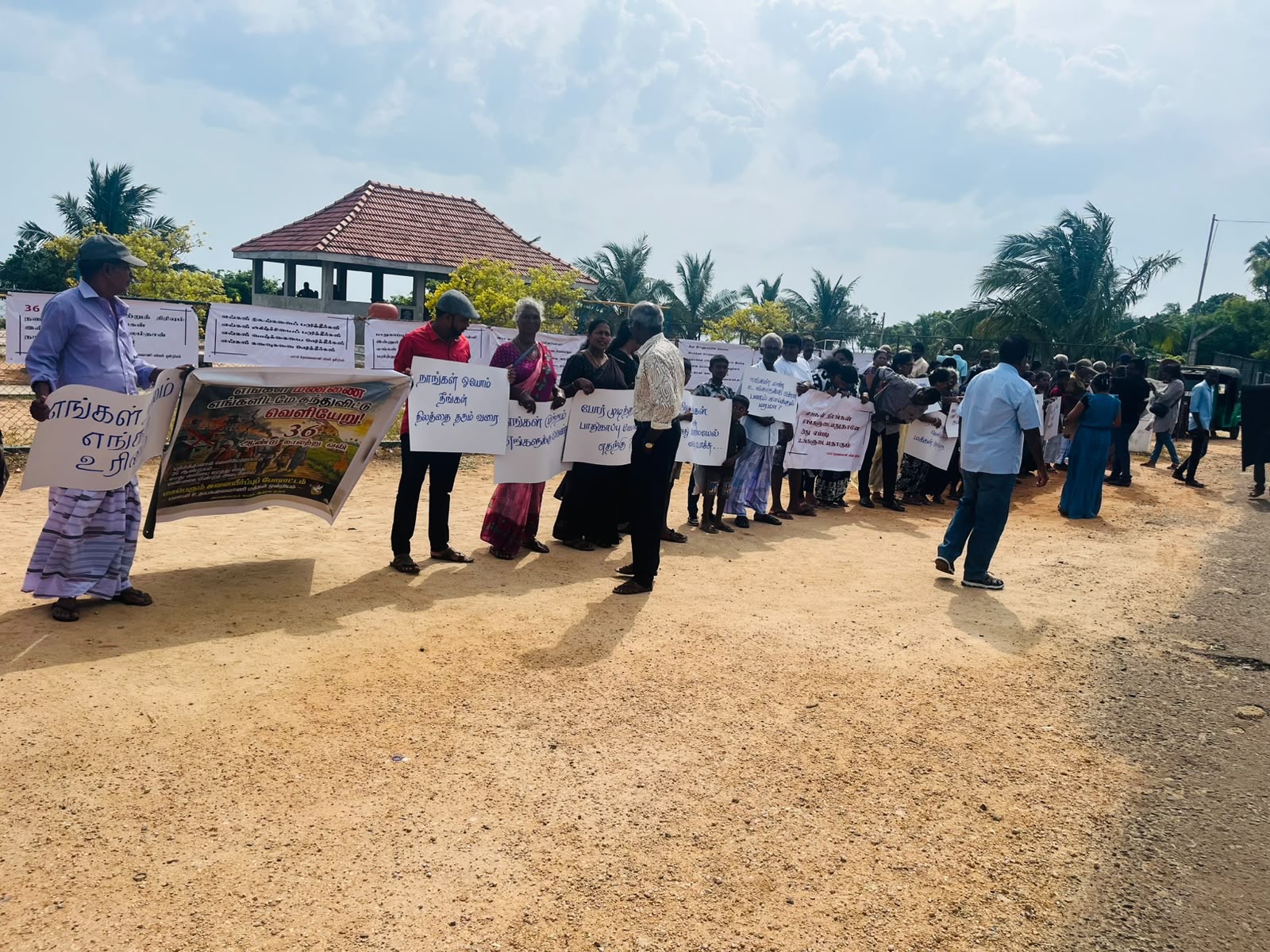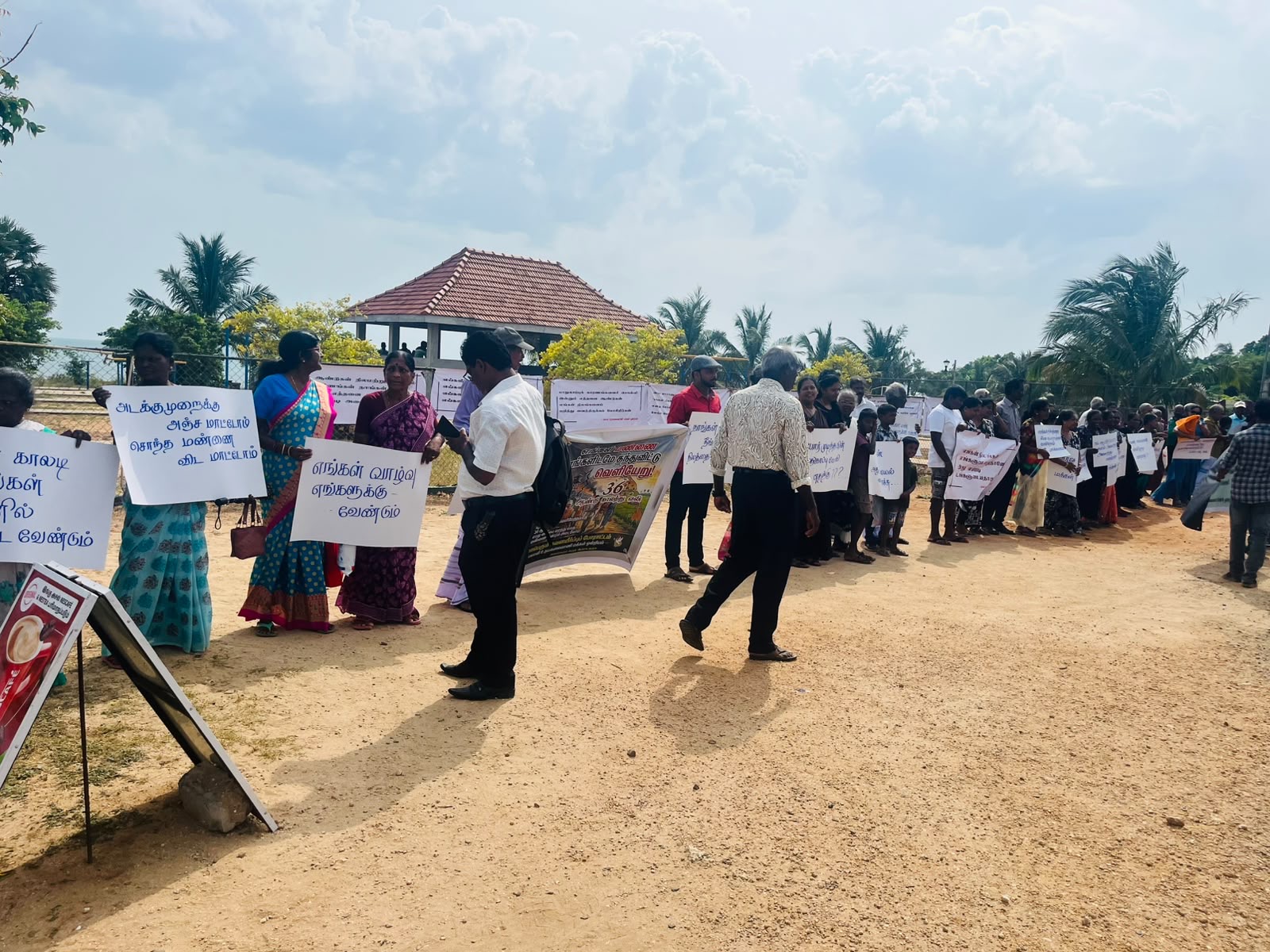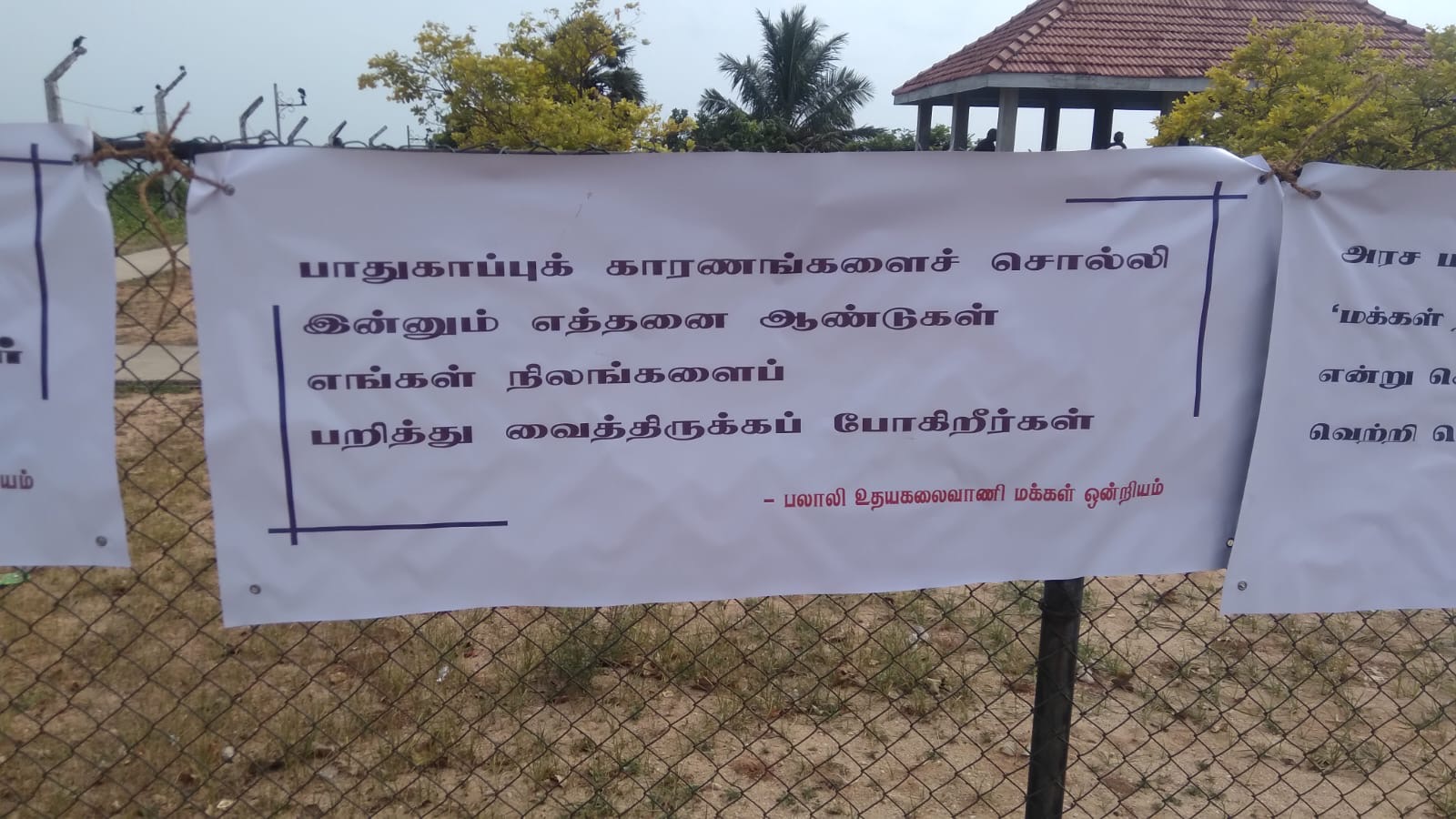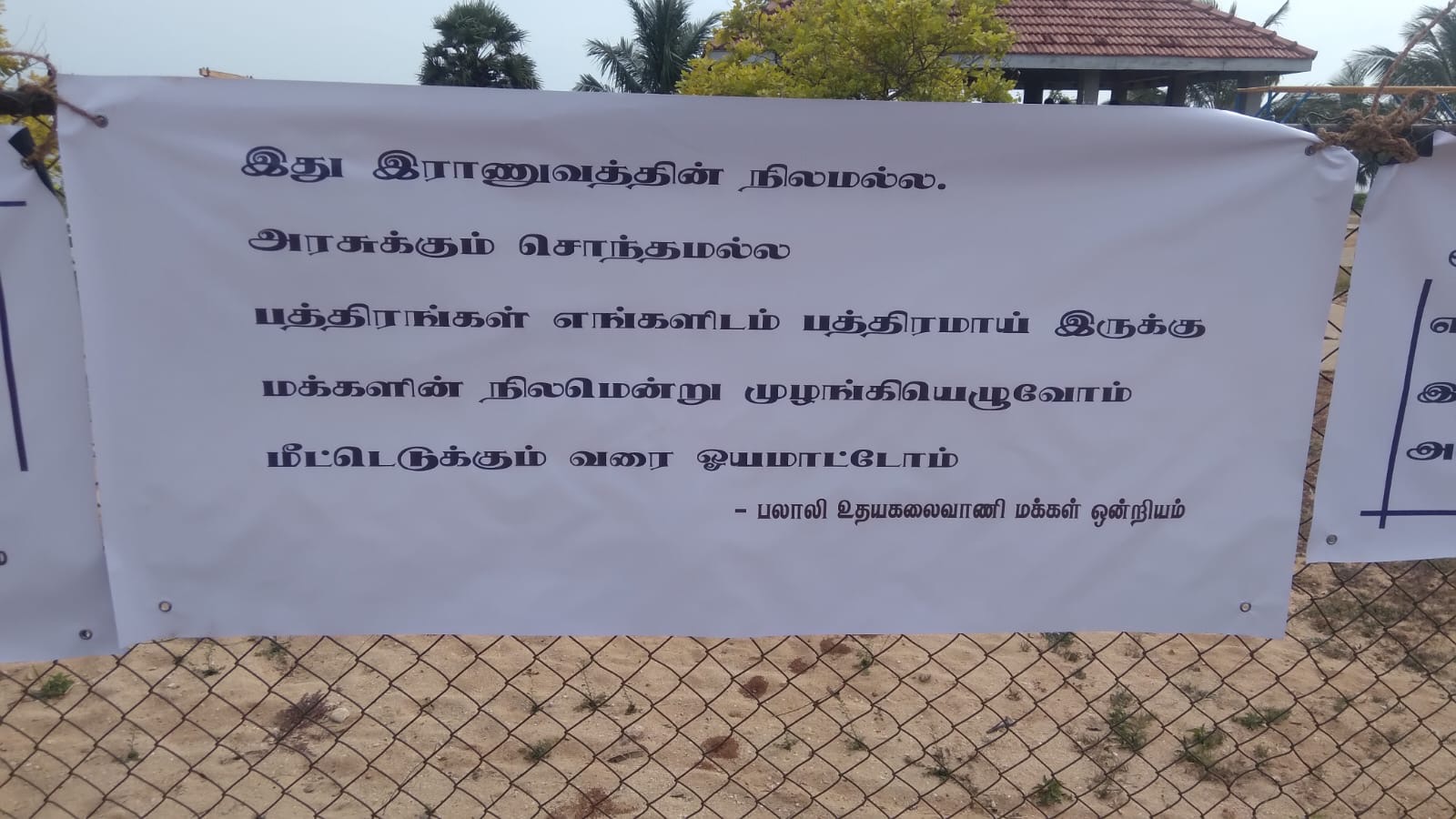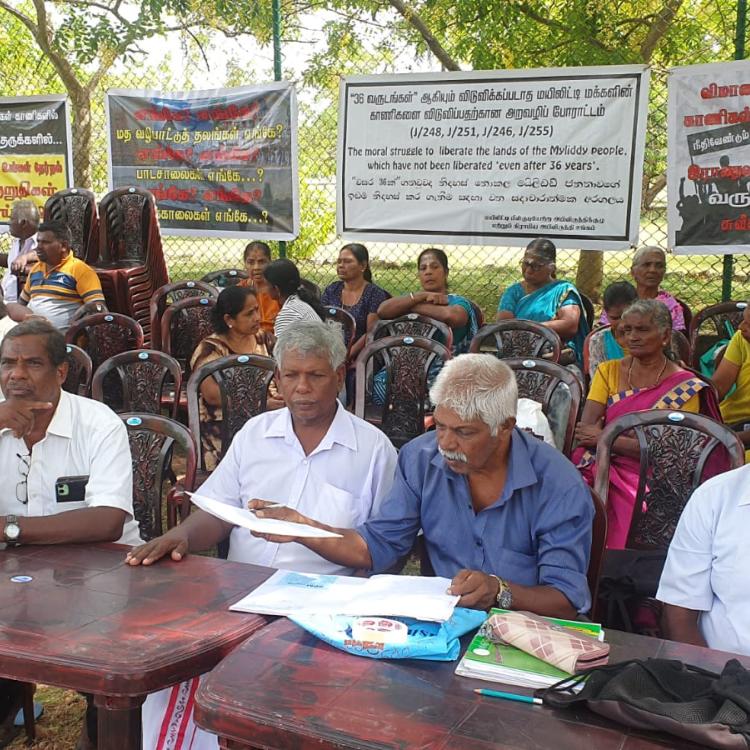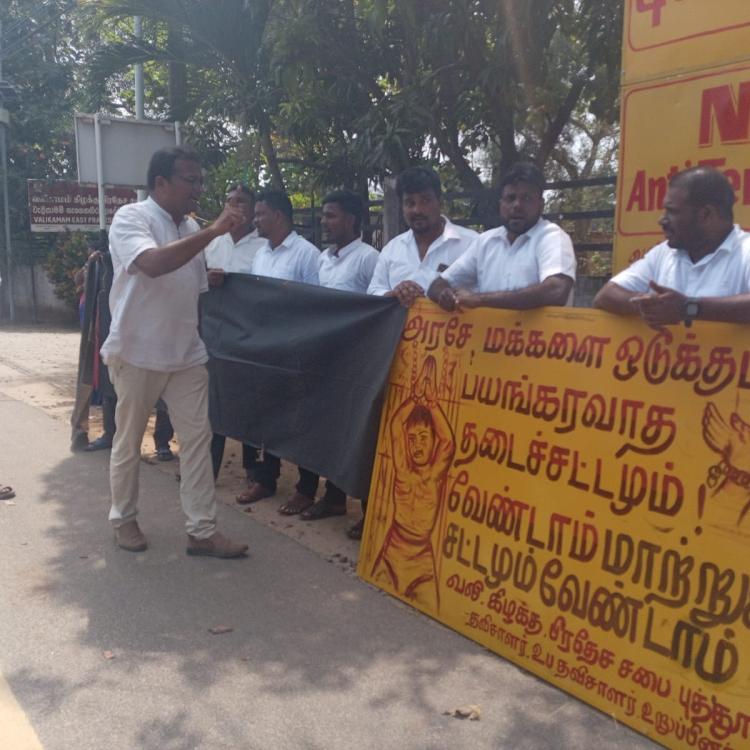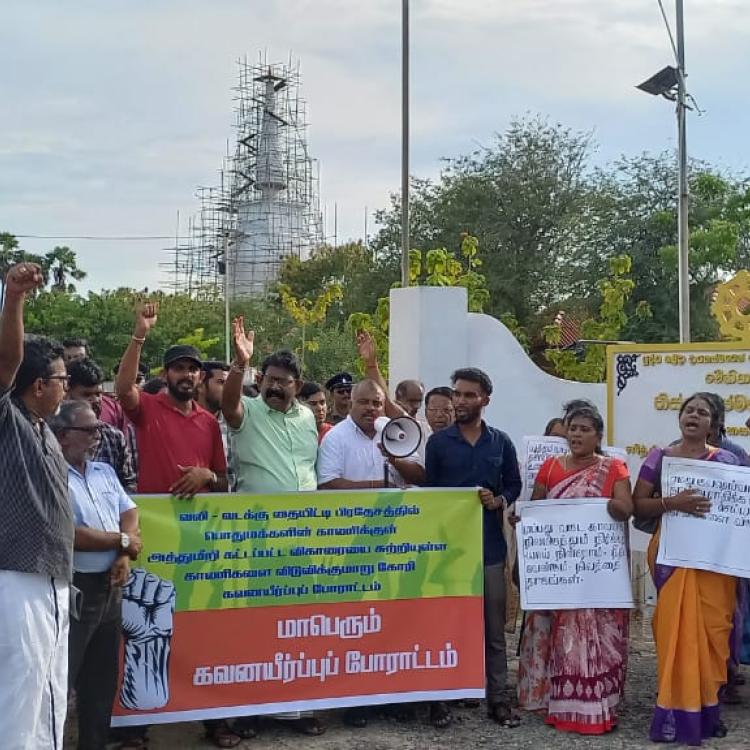
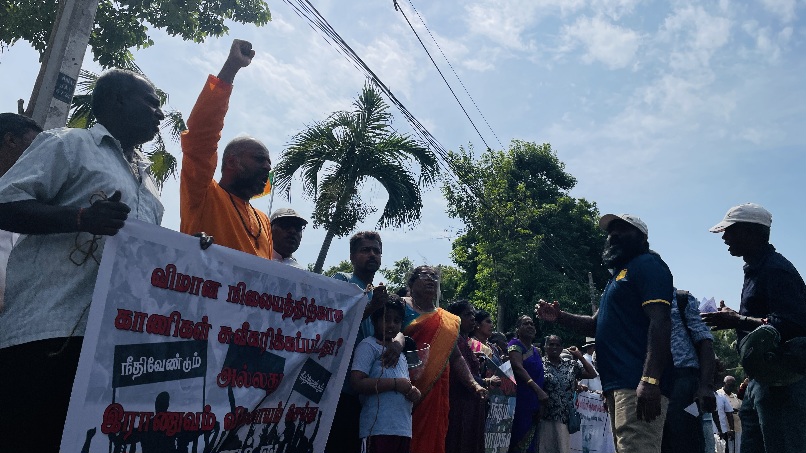
Displaced residents of the Valikamam North region of Jaffna held protests on Monday, in front of the Jaffna District Secretariat and near Palaly Junction, marking 36 years since their forced displacement and demanding the right to return and resettle in their lands.
The people of Valikamam North were displaced from their homeland on 15 June 1990 by the Sri Lankan military. Thirty-six years on, and despite seventeen years having passed since the end of the armed conflict, the affected residents have still not been permitted to return, while the Sri Lankan military continues to occupy land belonging to local civilians.
The demonstrators called for the withdrawal of the military from their lands and for the right to return to their ancestral homes. The protests drew landowners, politicians, social activists and representatives from across society.
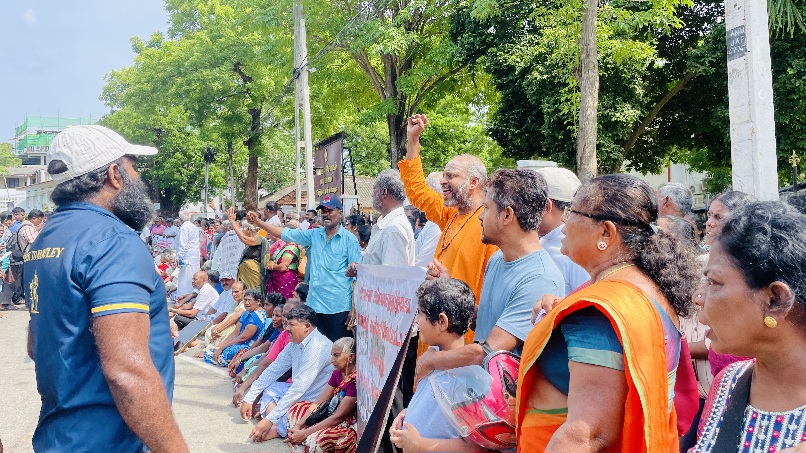
The anniversary protests follow eight consecutive weeks of Friday demonstrations by Valikamam North landowners in front of the Sri Lankan military's Commando bungalow, demanding the release of land that remains designated as a High Security Zone. Organisers had announced the larger anniversary demonstration at the Jaffna District Secretariat during last week's protest.
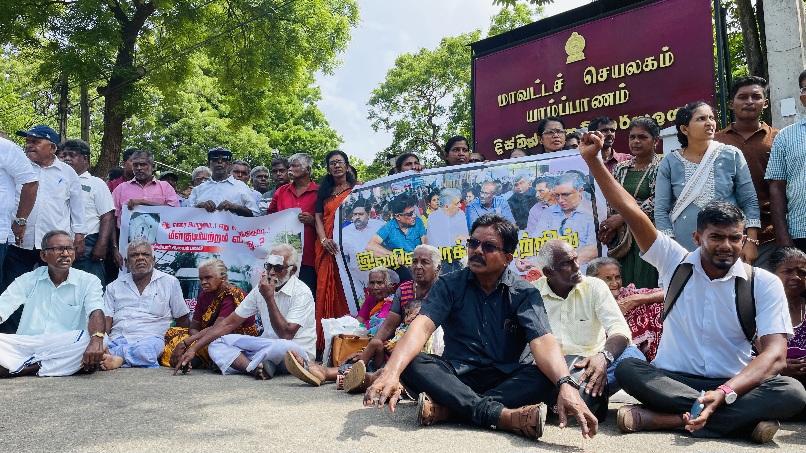
The scale of the dispossession remains vast. More than 6,000 families from Valikamam North remain displaced, with over 2,700 acres still held by the Sri Lankan military under the High Security Zone designation.
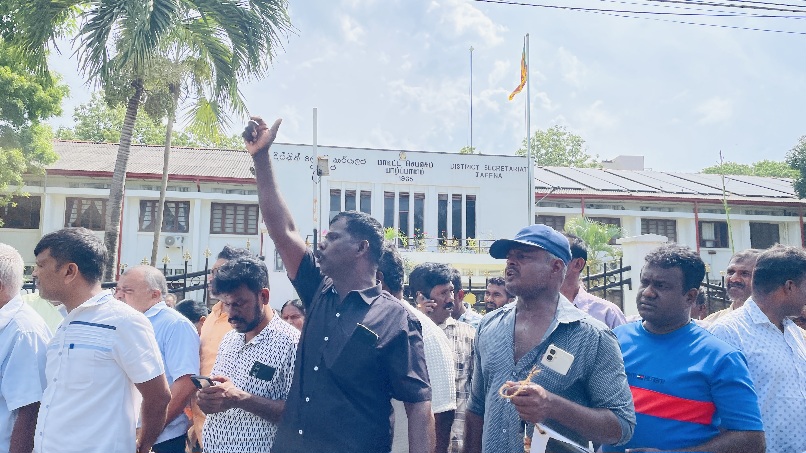
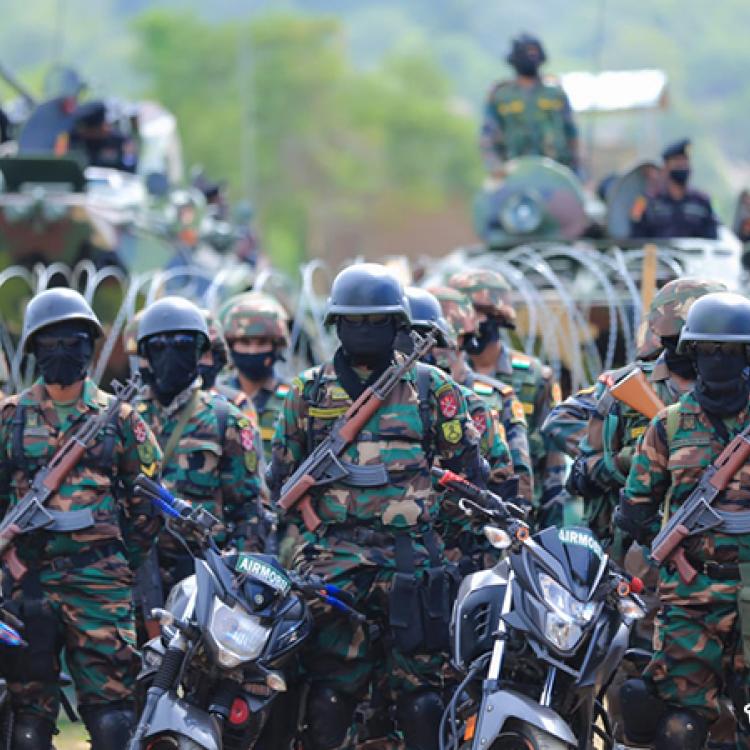
The seized lands include homes, temples, schools, churches and agricultural fields, and the military has continued to build permanent structures on them, including camps, hotels and farms. Days before the anniversary, the Valikamam North Pradeshiya Sabha issued a legal notice demanding the suspension of construction of a Sri Lankan military hospital on privately owned civilian land in Vasavilan, built just outside the existing High Security Zone boundary.
Successive Sri Lankan governments have promised the return of the land and failed to deliver. Sri Lankan president Anura Kumara Dissanayake and the National People's Power campaigned on commitments to release lands held under the High Security Zone designation, and Fisheries Minister Ramalingam Chandrasekar announced a phased release programme earlier this year, citing "extraordinary circumstances" during the war as justification for retaining private land.
The vast majority of the land remains under military control.
See more photographs from Palaly below.
Palaly