Illustration: Namal Amarasinghe
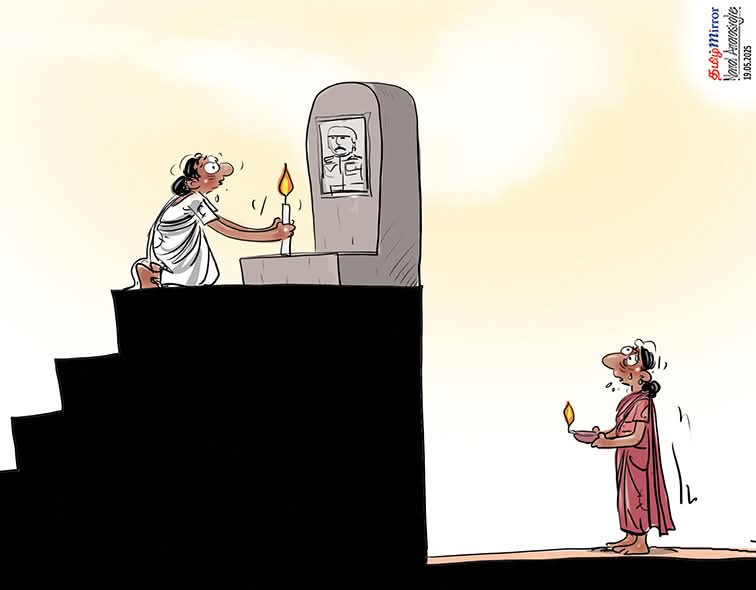
The 18th and 19th of May once again reminded the island of Sri Lanka that two peoples inhabit it. On the 18th, the Tamil people remembered a genocide; on the 19th, the Sinhalese people celebrated a war victory.
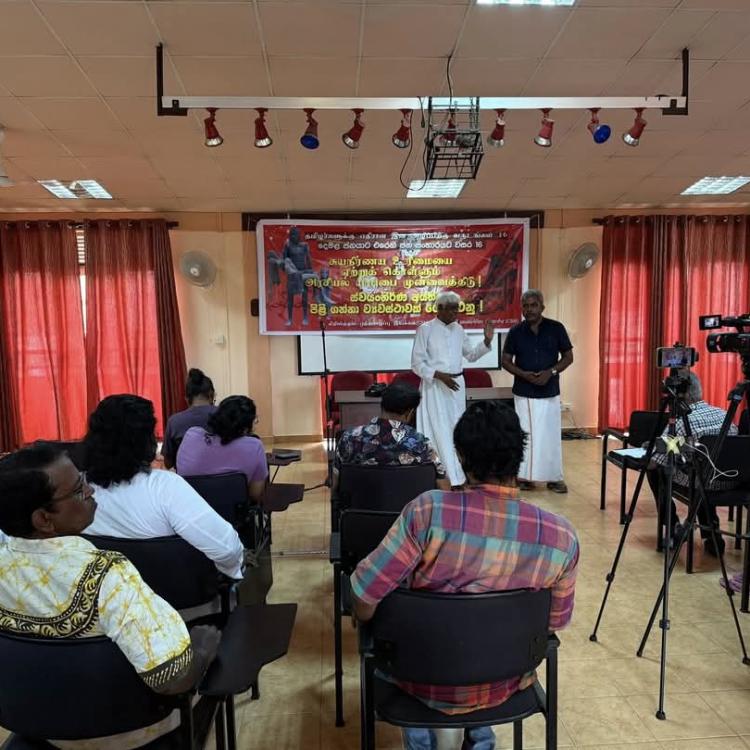
In the week leading up to the 18th, Tamils across the land, from village to village, from street corner to street corner, boiled kanji - a rice porridge - in remembrance. On the 18th, they gathered by the thousands at the Mullivaikkal grounds, where they wept and grieved, their hearts melting in sorrow.
The following day, in Colombo, the Sri Lankan government marked the war victory. At dawn, the Head of State visited camps where Sri Lankan soldiers who had lost their limbs live, to congratulate them. Later, flanked by military commanders, he paid homage at a monument dedicated to the victors of the conflict.
While one part of the island immersed itself in mourning, the very next day the capital witnessed jubilation. The Sinhalese people, along with their leaders, commemorated triumph.
As a journalist from Kilinochchi wrote poignantly, “May 18 is the day of the slain; May 19, the day of the slayers.”
On May 18, the majority of Tamil political activists had gathered at Mullivaikkal. On May 19, most Sinhalese leaders issued statements lauding their war heroes.
On May 18th, Tamils marked the anniversary of the Mullivaikkal massacre by sharing kanji in memory of a war where starvation was used as a weapon. Mourners laid flowers at the Mullivaikkal memorial, paying tribute to the tens of thousands who perished. That same day, in stark contrast, a woman activist from the Sinhala nationalist group “Pivithuru Hela Urumaya” presented a single rose to a member of the elite Special Task Force at a victory monument.
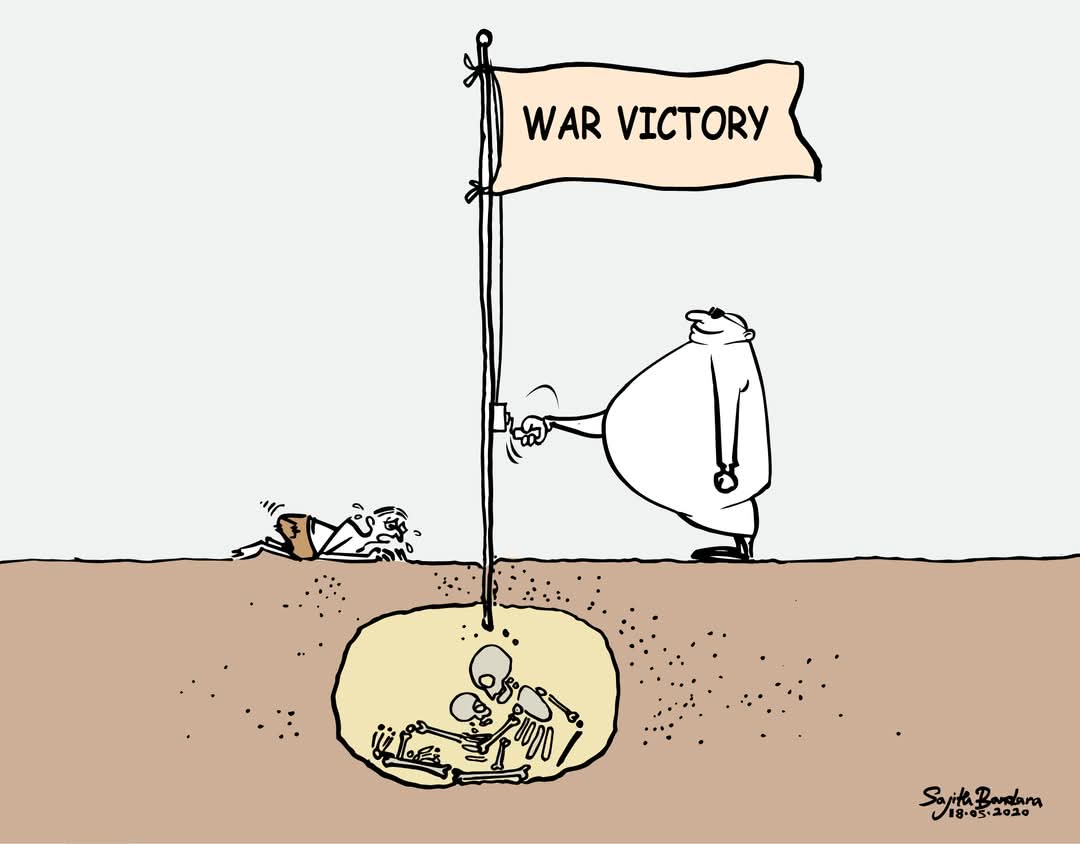
At Mullivaikkal on the 18th, collective grief surged forth - shared wounds, shared losses, shared shame, all welling up and overflowing as tears. On the 19th, collective victory was celebrated in Colombo and other southern Sinhala-majority cities.
On May 18, Tamil politicians gave voice to their people’s shared sorrow. On that day and the next, Sinhala politicians gave form to a their nation’s pride in war’s cruel triumph.
In his statement, former president Mahinda Rajapaksa framed the war as part of a long tradition of patriotic struggle. “Fighting is not something alien to us,” he asserted, emphasizing a national identity rooted in military resilience. He described the Sri Lankan people as a nation of restraint on the battlefield, fully aware of the nature and targets of war. Rajapaksa invoked historical figures such as Dutugemunu, Valagamba, Dhatu Sena, and Vijayabahu - ancient kings celebrated for repelling 'foreign' invasions - as well as anti-colonial fighters like Veera Puran Appu and Keppetipola, and Buddhist monks who resisted European domination. He positioned the end of the war as a continuation of this legacy, praising the thousands of soldiers who, in his view, sacrificed their lives to protect the country’s sovereignty and bring an end to three decades of conflict.
All the examples he cites are of wars fought against foreign invaders. It implies, then, that he sees the Tamils too as foreigners?
Opposition Leader Sajith Premadasa, in his message, stated “we pay tribute to the heroes who liberated the motherland from the terrorists.”
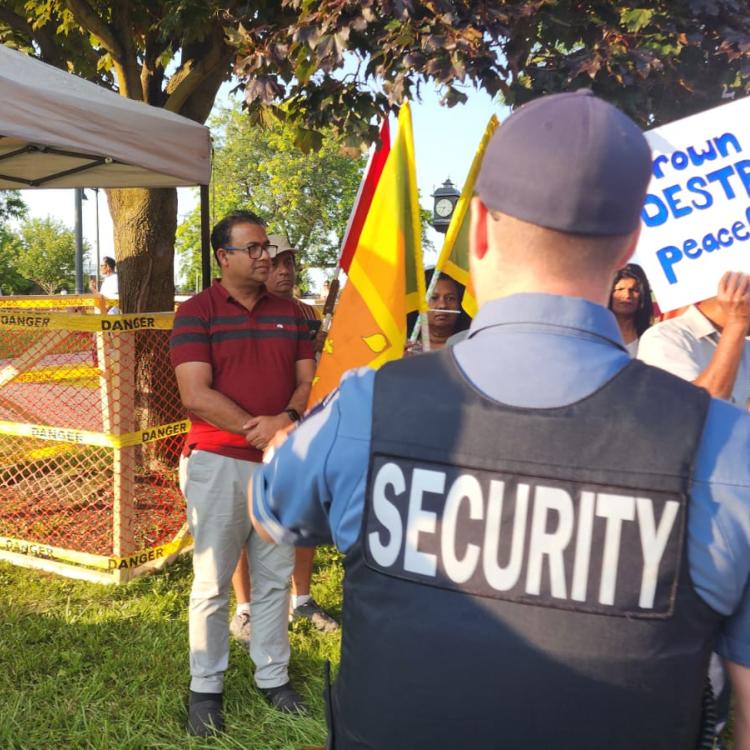
Among the Tamil diaspora - viewed as both an extension and an exile of the homeland - a genocide memorial was recently inaugurated in Canada. Outside of Jaffna, Canada is home to the largest population of Tamils.
At the opening ceremony of this memorial, the Mayor of Brampton delivered a striking message - “those who deny that a genocide occurred should go back to Colombo.”
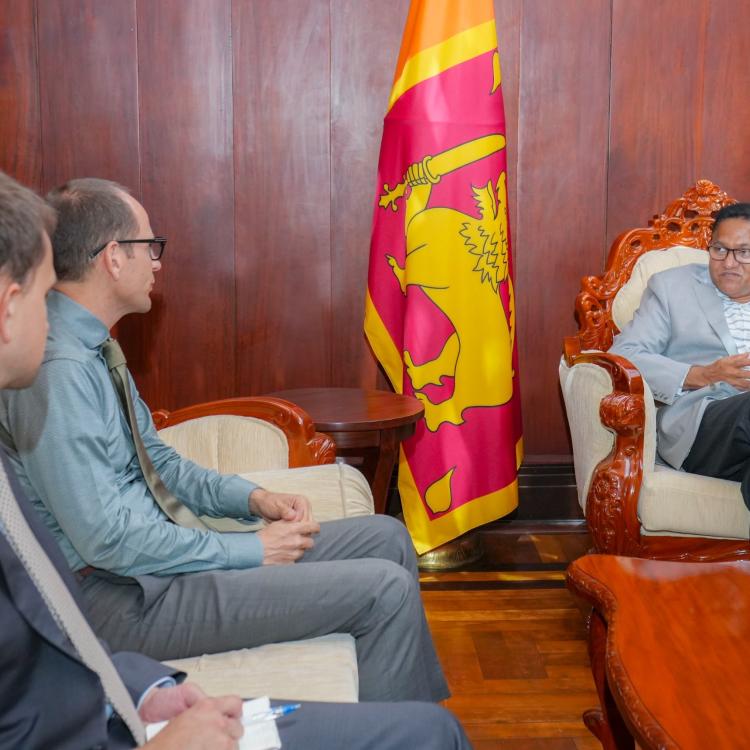
But voices from Colombo quickly pushed back. Namal Rajapaksa rejected the statement and Sri Lankan Foreign Minister Vijitha Herath claimed there was no genocide in Sri Lanka.
Yet thousands who gathered at Mullivaikkal say what happened was genocide. So do Tamils across Canada and other nations where they live in exile. Canadian Prime Minister Mark Carney, in his official message, affirmed “Canada continues to support independent international efforts to pursue accountability, truth, and justice”. Notably, he used the word genocide in his statement.
The leader of Canada’s Conservative Party also declared: “what occurred in Sri Lanka was genocide. The war crimes of the Rajapaksa government must never be forgotten.”
In other words, Tamil people - and the elected representatives in countries where Tamils live in the diaspora - say it was genocide. The Sri Lankan government and its supporters insist it was not. Sri Lanka’s Foreign Minister, VIjitha Herath, even warned that legal action could be taken against those who describe it as genocide.
When we take stock of all this, what becomes clear is this: on this small island, there exist two kinds of memorials. Two peoples. Two opposing political visions. Two nations, each holding mutually contradictory aspirations and political positions.
Yet, Sri Lankan President Anura, standing before the monument to the victors of war, declared:
“Standing before this memorial and paying due respects to our heroes is also a pledge, that we will not allow conflict to arise again; that we are committed to building a society not filled with hatred, but rooted in brotherhood, love, and reconciliation.”
But the monument itself contradicts that very notion of reconciliation. It commemorates the victory of one people. The island remains divided - between victors and the vanquished.
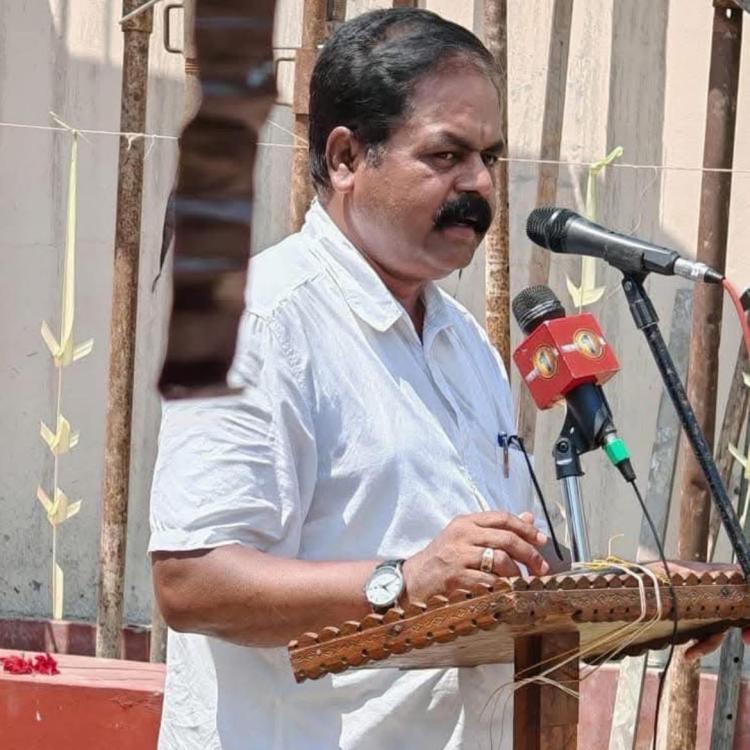
In the North, at Mullivaikkal, stands another monument. Not a single member of the ruling party, elected to Parliament with Tamil votes during the last general election, came to that memorial. Not one placed a single flower there.
During the last presidential election, Sumanthiran urged Tamils to vote for Sajith Premadasa. Yet neither Sajith nor any senior member of his party visited the Mullivaikkal memorial. Not a single flower was laid. And while Sumanthiran marked May 18 in Colombo, Sajith issued a statement glorifying the war victory.
Sinhalese leaders are always clear. They remain true to their voters. But how many Tamil politicians can say the same?
In both the parliamentary and local government elections, Anura received the votes of Tamil people. On the 19th of May, in his official statement, he declared:
“We are not complete victors. Only by establishing peace in the country can we truly become complete victors. Therefore, we are prepared to take every possible step, without fear, in the pursuit of peace. The end of the war did not bring complete freedom to our motherland.”
He is the first Head of Sri Lanka in the past sixteen years to acknowledge this profound truth. He admits that the victory claimed in May 2009 was not absolute. He concedes that even after the military triumph, peace has not been realised in the country.
That is the truth.
If there is no peace for the Tamil people, then there is no peace for the Sinhalese either. Nor is there peace for this region.
Sixteen years on, the island of Sri Lanka remains divided, between the victors and the vanquished.
_____
This is the English translation of an article by Nillanthan, published on Nillanthan.com on 24 May 2025. The author is a prominent Tamil political commentator, journalist and poet.