
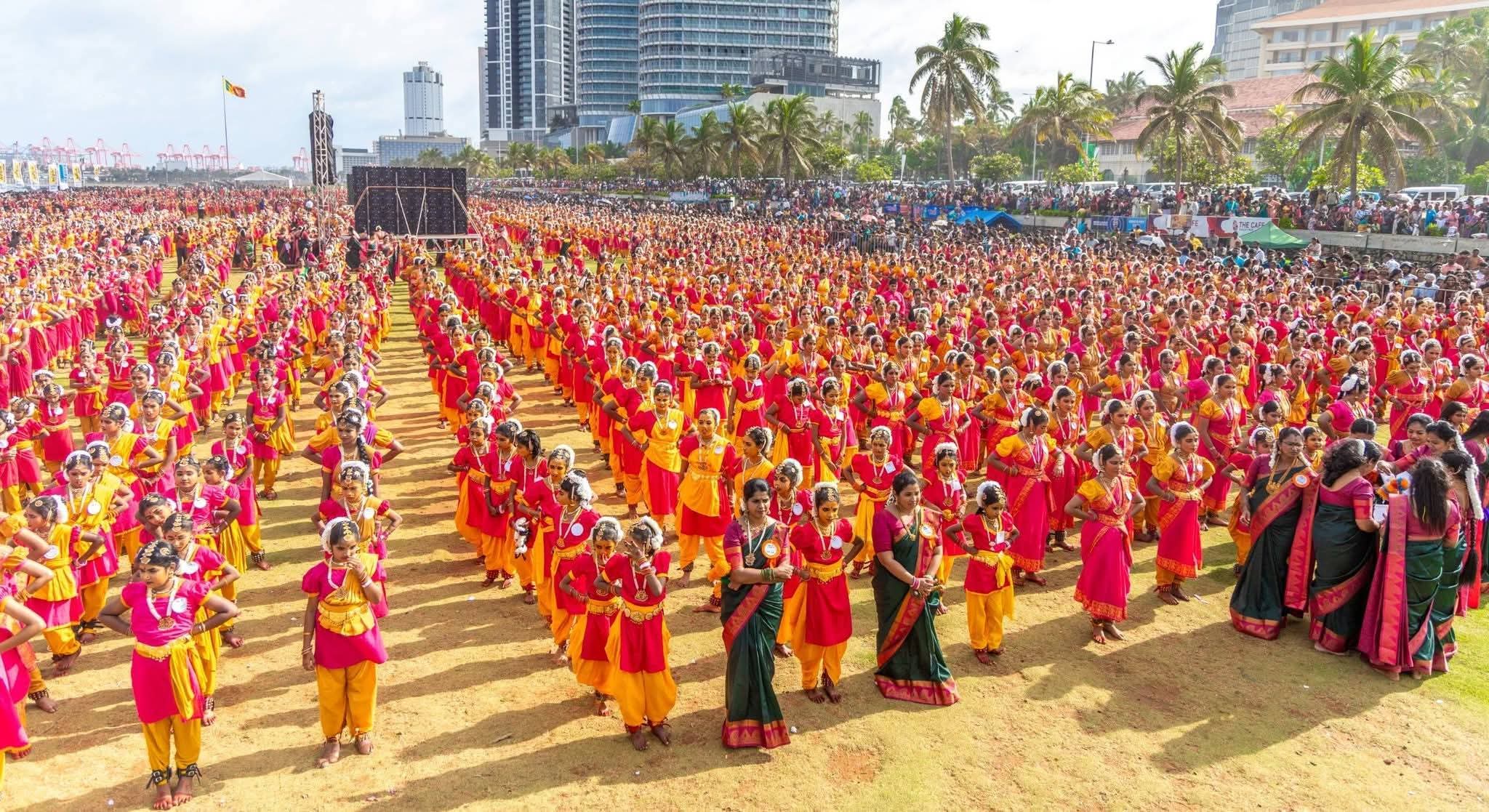
A Guinness World Record set by nearly 5,000 Bharatanatyam dancers at Galle Face in Colombo has sparked controversy, after activists questioned why the official recognition was awarded to organisers and an overseas instructor rather than the thousands of performers who paid to take part.
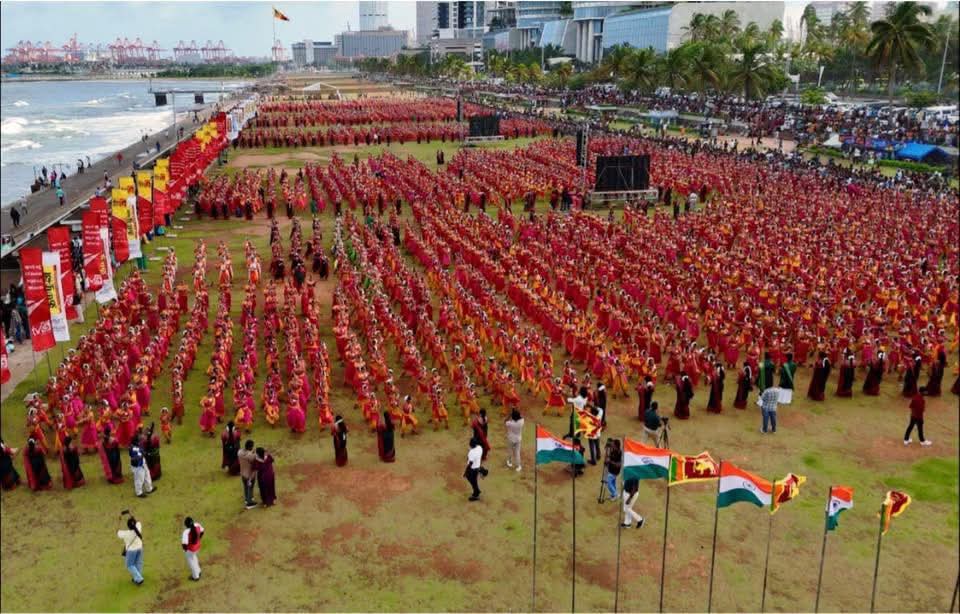
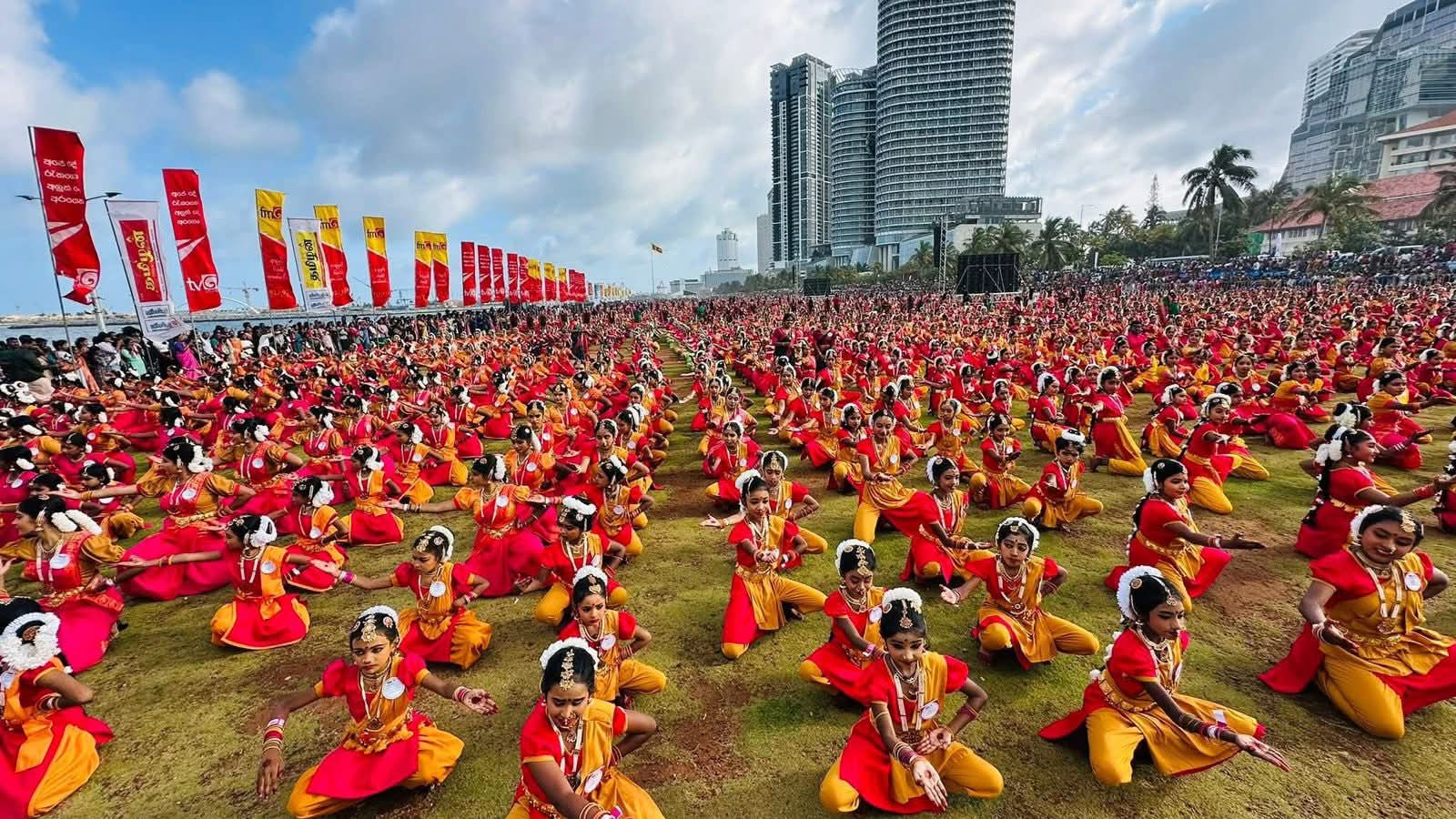
The SANGAMAM-2026 event, held on 14 June, saw 4,988 dancers successfully set a new Guinness World Record for the Largest Bharatanatyam Dance Lesson.
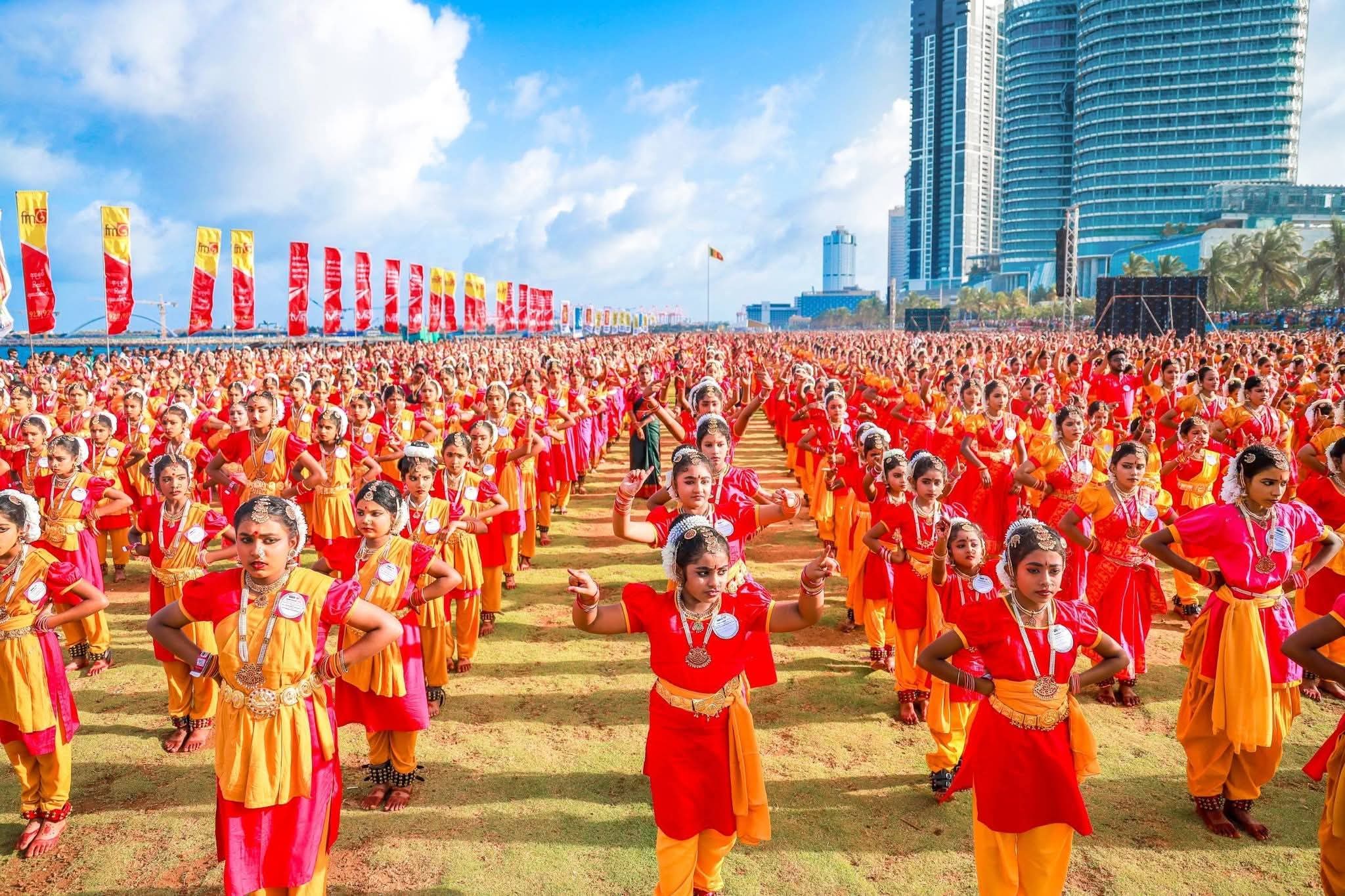
The event was organised by Sangamizh Liya Holidays in collaboration with Sangamam Global Academy and brought together nearly 5,000 participants in an official attempt to surpass the previous Guinness World Record of 416 participants.
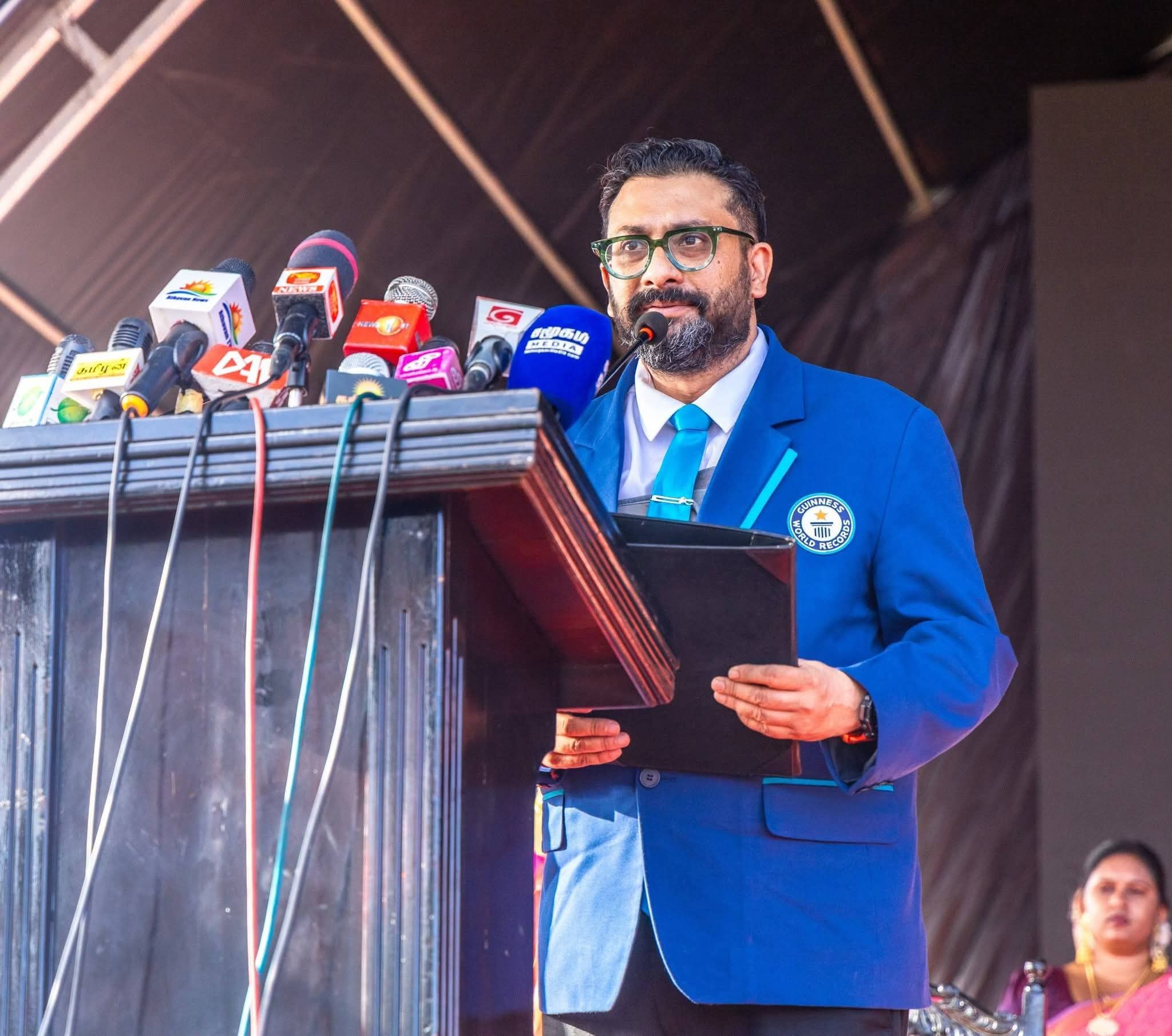
The attempt was officially monitored by Guinness World Records adjudicator Rishi Nath.
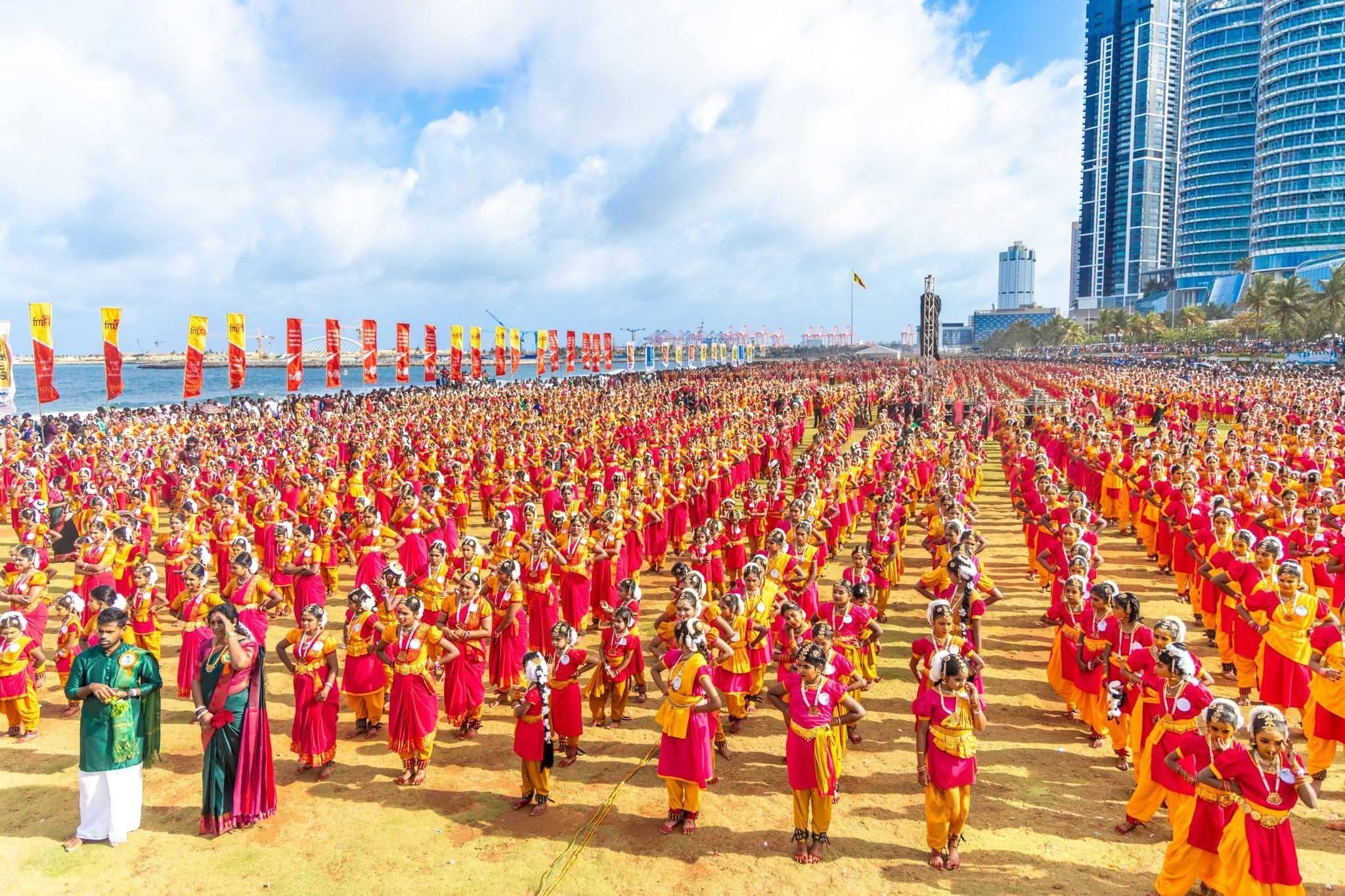
Following the verification process, Rishi Nath confirmed that 4,988 participants had successfully completed the requirements, establishing a new Guinness World Record for the Largest Bharatanatyam Dance Lesson.
Organisers described the event as a celebration of Bharatanatyam’s cultural heritage and artistic tradition, bringing thousands of dancers together in a collective performance.
The event was conducted under the theme, “One Stage • One Culture • One Historic Record”.
However, the achievement has since drawn criticism from social activists and members of the public over the way the record was attributed and the financial burden placed on participants.
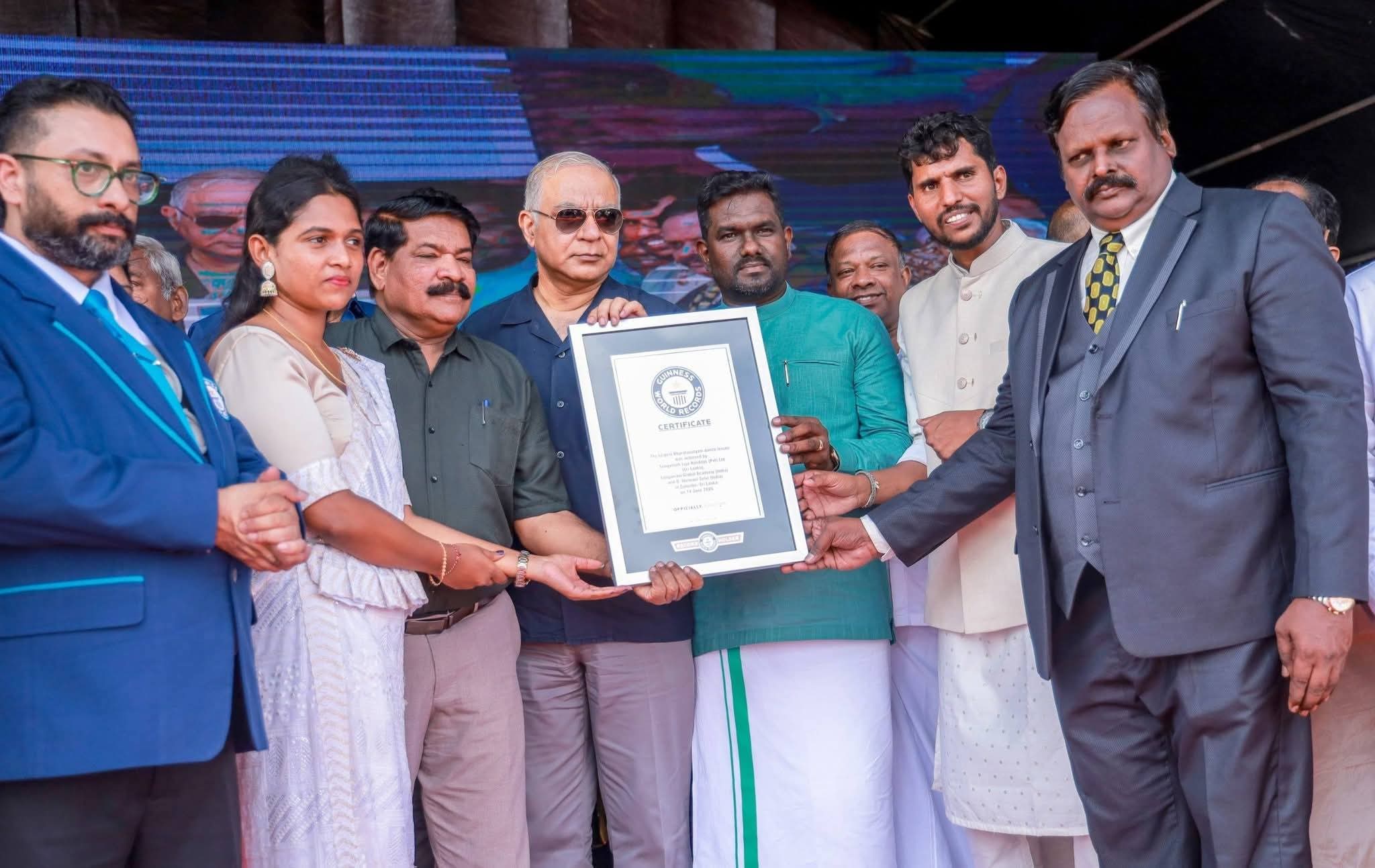
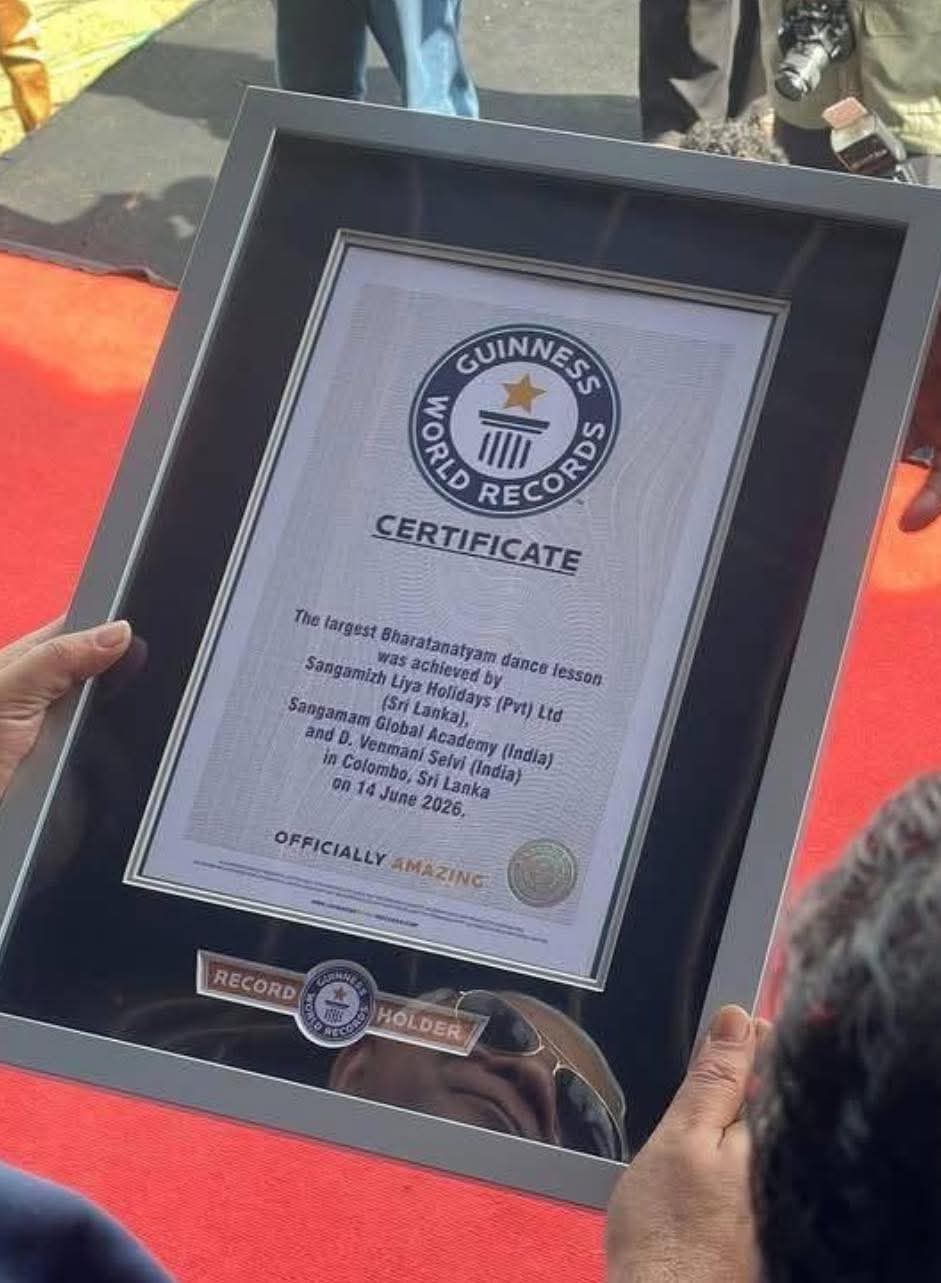
According to the official Guinness World Records certificate, the title for the Largest Bharatanatyam Dance Lesson was awarded to Sangamizh Liya Holidays (Pvt) Ltd of Sri Lanka, Sangamam Global Academy of India and Bharatanatyam teacher D. Venmani Selvi of India for the event held in Colombo.
Critics have questioned why the record was registered under the names of the organising bodies and instructor, rather than being framed around the thousands of dancers who performed and made the record possible.
Concerns have also been raised over the cost imposed on participants, many of whom were children and young women.
Participants were reportedly required to pay an entry fee of Rs. 4,500, while some reports suggest higher amounts may have been charged. In addition, dancers were expected to bear the cost of costumes, travel, accommodation and other expenses linked to attending the event in Colombo.
Activists have claimed that the total cost for some participants may have reached at least Rs. 50,000.
Social activist Rajkumar Rajeevkanth was among those who criticised the arrangement, arguing that the achievement belonged primarily to the performers themselves.
In a statement shared on Facebook, Rajkumar said the participants had contributed their own money, costumes, training, effort and talent, and therefore should be recognised as the true owners of the achievement.
Activists including Rajkumar argued that if a record was established through the efforts of thousands of artists, it should have been recognised in a way that directly reflected their contribution.
They questioned why the title had been registered under the names of a private company, an Indian organisation and an Indian instructor, rather than the dancers who performed in the event.
The involvement of Sri Lankan ministers of Indian origin from the National People’s Power government has also become part of the public debate surrounding the record attempt.
Critics have questioned the government’s role in facilitating or supporting an event that ultimately resulted in a Guinness World Record being awarded to private organisations and an overseas instructor, despite the mass participation and financial contribution of thousands of dancers in Sri Lanka.
The controversy has raised broader questions over the commercialisation of cultural events, the treatment of young performers and the use of Tamil and South Asian art forms in state-backed public spectacles.
While the scale of the event marked a major achievement for Bharatanatyam performers, the backlash has shifted attention to who benefits from such recognition, who carries the financial cost and whether the artists at the centre of the performance received the acknowledgement they deserved.