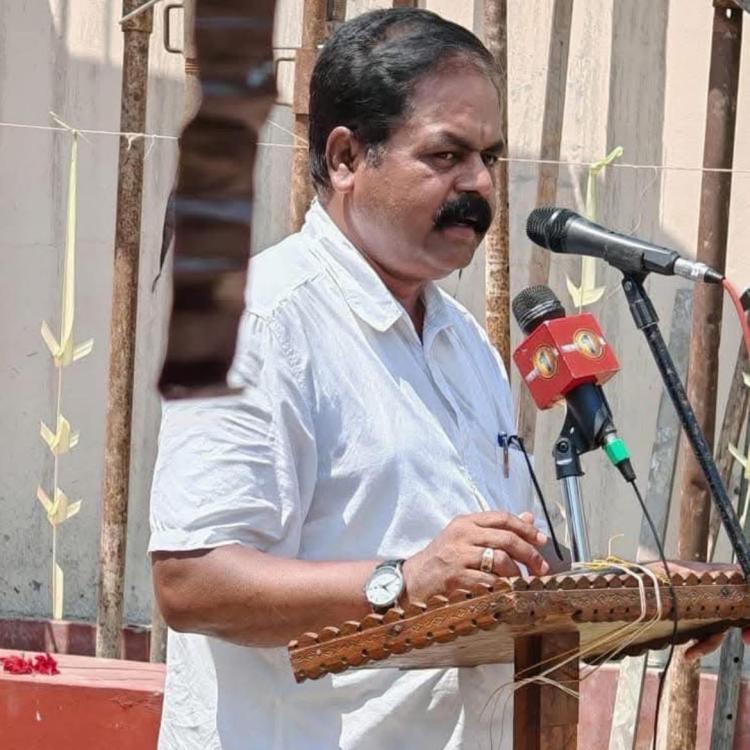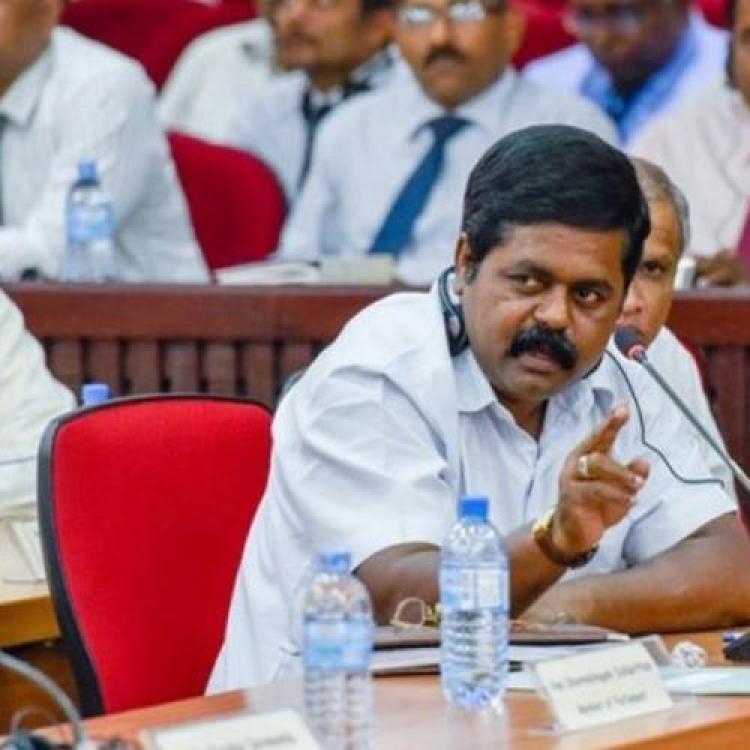
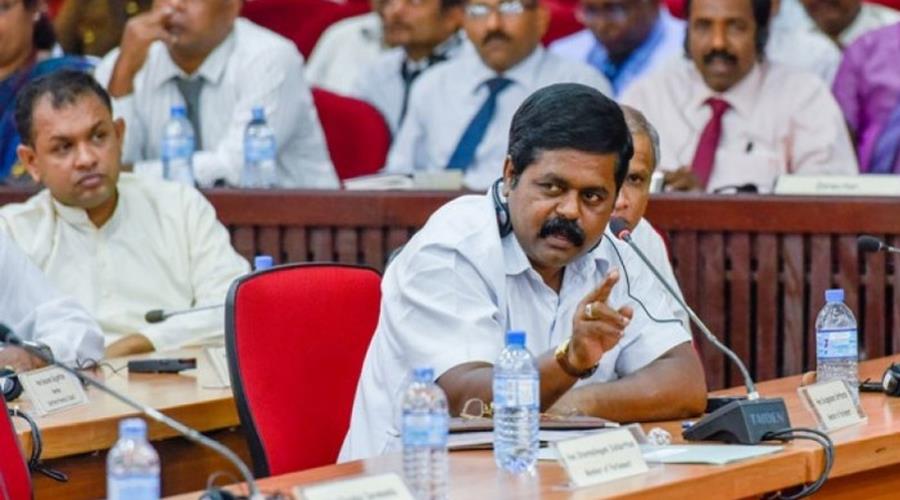
Ilankai Tamil Arasu Kachchi (ITAK) parliamentarian Sivagnanam Shritharan condemned the Sri Lankan government’s handling of the illegal Buddha statue installation in Trincomalee, warning that Sinhala-Buddhist encroachment in the district had reached an unprecedented level with political backing from both the government and the opposition.
சஜித் பிரேமதாசா தமிழ் மக்களிடம் பகிரங்க மன்னிப்பு கேட்க வேண்டும்#Shritharan #சிறீதரன் #parliament pic.twitter.com/SYZwxFGz6y
— Shritharan Sivagnanam (@ImShritharan) November 19, 2025
Speaking in parliament, Shritharan said the Tamil people were “deeply outraged” by the illegal placement of the statue, which stands in an area historically inhabited by Eelam Tamils. He added that “no Tamil from Trincomalee has ever been appointed or elected as the head of government offices,” reflecting institutional discrimination embedded across the district.
Shritharan argued that the current Sri Lankan regime led by Anura Kumara Dissanayake had adopted the same political formula once used by J. R. Jayewardene, where Sinhala Buddhist monks were deployed as agents of colonisation. “That strategy is now being repeated,” he warned, adding that the approach posed a direct threat to Tamil interests across the North-East.
Criticism of Premadasa
Shritharan expressed shock at the position taken by opposition leader Sajith Premadasa, who urged that the statue be reinstalled and described the matter as a “national issue”.
“Tamils supported Premadasa believing he may one day become President. For him to endorse the reinstallation of an illegal statue is unacceptable,” Shritharan told parliament, calling on Premadasa to withdraw his remarks and offer a public apology to the Tamil people.
State-backed Sinhalisation across Trincomalee
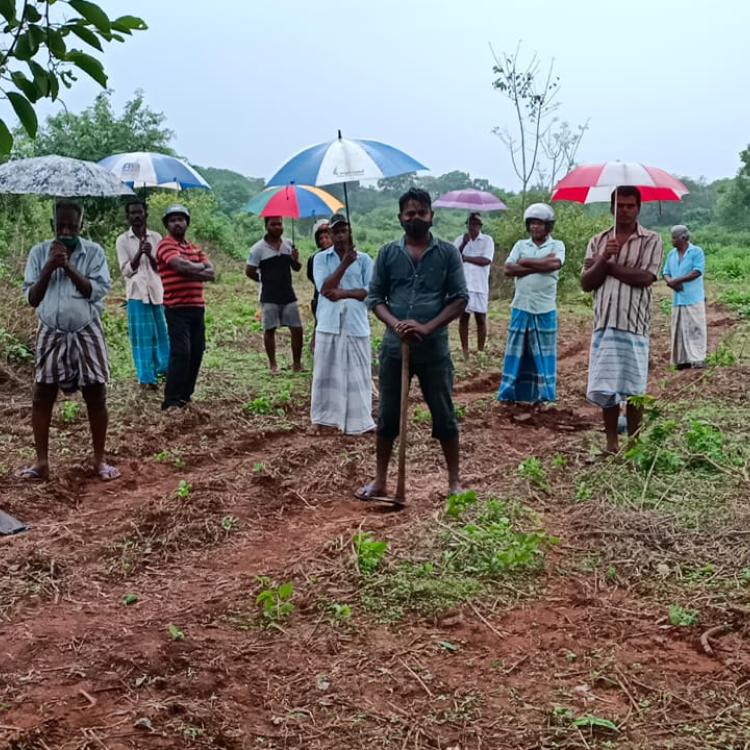
The MP said the island’s ethnic crisis stemmed from the systematic use of religion as a political tool. In the Trincomalee District, he noted, Sinhala Buddhist expansion was being aggressively advanced with military involvement.
“In Kuchchaveli alone, around thirty viharas are under construction with military assistance,” he said. He added that in Thiriyaai, a vihara was being built despite the presence of only two Sinhala families. These developments, he warned, were designed to erase the Tamil character of the region and reshape the demographic landscape.
Shritharan also raised the longstanding case of the illegal Thaiyiddy Vihara, saying that while the Sri Lankan president had given verbal assurances when Tamil representatives met him, “justice has still not been delivered”.
Decades of ignored administrative demands
Shritharan turned to long-neglected administrative grievances in the North-East, highlighting that Tamil-majority localities had been repeatedly denied proper administrative structures.
He noted that the residents of Kodikamam in the Chavakachcheri division had demanded for more than twenty years that their area be recognised as a separate administrative division. He further pointed out that the stretch between Navatkuzhi and Ezhuthumadduval — comprising 72 Grama Niladhari divisions — had long sought recognition as an independent Pradeshiya Sabha.
“Successive governments have ignored these demands,” he said.