
Recent weeks have brought to light a deep rot within Sri Lanka that for decades, the South has sought to cover up. The explosive revelation that one of the island’s most senior Sinhala Buddhist monks stands accused of repeatedly raping a child has laid bare a culture of impunity that has protected powerful members of the clergy for decades. It is shameful and symptomatic of a powerful political class that for too long has lived by its own rules. It cannot be allowed to continue.
Pallegama Hemarathana is the chief prelate of one of Sinhala Buddhism's holiest sites. This month he was arrested on suspicion of rape, reportedly carried out undisturbed for years. Even after Sri Lanka's child protection authority had alerted the police there were unconscionable delays. After weeks of international attention, he has been released on bail.
The controversy shed light on a slew of other cases, where Sri Lankan monks have been directly implicated in the sexual abuse of minors. Nearly 300 monks have been accused of abusing children in the last three years alone, according to Sri Lanka's National Child Protection Authority. The scale of the problem points to an institution that is insulated from meaningful scrutiny and accountability. The rot, as Hemarathana's case makes clear, goes all the way to the top.
The response of the Sri Lankan authorities has been both inexcusable and instructive. Sri Lankan president Anura Kumara Dissanayake's proposed separate court for Buddhist monks will only legislate what everyone on the island has long understood — that whether inciting communal violence, smuggling drugs or abusing children, members of the Sinhala Buddhist clergy are held to a different law, or to no law at all.
Dissanayake's push to set up this parallel justice system is emblematic of his wider deference to and appeasement of the clergy. Prior to being elected he pledged that the divine protection Buddhism has in Sri Lanka's constitution would not be amended. In recent months he has moved further still into the clergy's embrace. During a visit to Batticaloa this month, he met openly with racist monk Ampitiye Sumanarathana, a figure infamous for years of anti-Tamil rhetoric and intimidation. This is a monk who has threatened that "every single Tamil person will be cut into pieces... The Sinhalese will massacre them." Sumanarathana was full of praise for Dissanayake, pledging his full support and abandoning the hardline Rajapaksas to back the incumbent president. That endorsement alone speaks volumes about the direction this government is travelling.
The sluggish police response and the cautious media coverage that followed Hemarathana’s arrest reflect the extraordinary influence the Sinhala Buddhist clergy continues to wield. Sri Lanka's Buddhist monks are not simply religious figures. Their influence extends far beyond the temple, reaching deep into every level of the Sri Lankan state, moulding it into a pseudo-theocracy. For decades, monks have helped dictate legislation, influence elections and mobilise majoritarian sentiment. They hold a central role within the island's political order. Hemarathana himself has met repeatedly with the Sinhala establishment's highest-ranking officials. He has even received Narendra Modi, the Prime Minister of India, who knelt before him.
The Tamil people have long understood the power these monks wield, having been on the receiving end of it for decades. Monks like Sumanarathana are not aberrations but simply the brashest political expression of a clergy that has spent decades espousing ethnic supremacy, endorsing state violence, protesting ceasefires, and asserting Sinhala dominance as religious duty. During the armed conflict, they were among the most vociferous opponents of any negotiated settlement. In the years since the Mullivaikkal genocide, they have continued to support militarisation, land grabs, and Sinhala colonisation across the Tamil homeland. Their influence has left them untouchable.
Though the current wave of child abuse allegations does not directly implicate the clergy in crimes against Tamils, the Tamil response has been one of solidarity. Protests demanding justice have taken place — a meaningful demonstration of empathy from a people who have suffered their own long experience of impunity. They showcase how Tamils have long been clear that justice must apply equally, regardless of ethnicity, rank or religious office. It is also a reminder, for those who have recently spoken of solidarity in other contexts, of what the word actually requires.
But the current scandal has scratched the surface of something much deeper. It demonstrates how the clergy has operated with impunity, shielded by the state, enshrined in the constitution, and now courted afresh by a president who presents himself as a reformer.
Sri Lanka's current trajectory offers little confidence that will change. A regime that proposes separate courts for monks rather than equal ones, that meets openly with those who have threatened genocide against Tamils, and that continues to celebrate a military responsible for massacres, is not a government engaged in the project of accountability. It is a government engaged in the project of managing appearances while the structures of impunity remain intact.
The monks are not above the law by accident. They are above it by a design that runs through the very foundations of the Sri Lankan state.
______
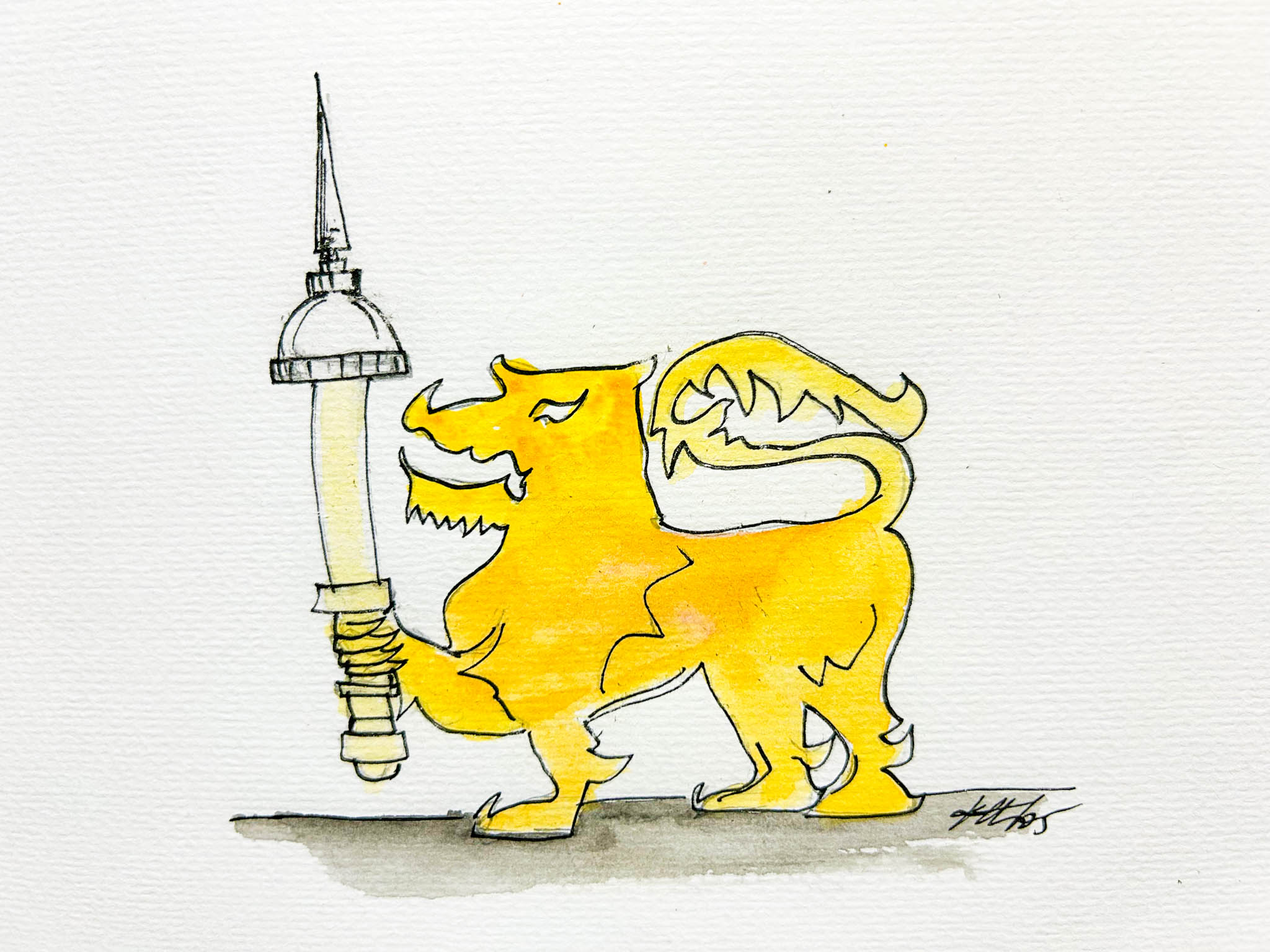
Illustration by Keera Ratnam.