
The tech giant Microsoft announced last week that it had cut off a set of cloud and AI services to a division of Israel's Ministry of Defence, after discovering their tools had been used to spy on the Palestinians. The decision was made official by Brad Smith, the company’s president and vice chair, after weeks of scrutiny following reports that the Israeli military was heavily reliant on Microsoft's Azure technology to monitor and store millions of Palestinian communications.
Israel’s intelligence unit, Unit 8200, has been accused of extensive surveillance operations across Palestine. The Guardian, +972 Magazine, and Local Call partnered to investigate and found that the unit had stored and analysed millions of recorded phone conversations made by Palestinians in Microsoft's Azure data centres in the Netherlands. Various sources had stated that up to 8,000 terabytes of data were analysed - a new level of interception that targeted not only soldiers but the entire population of Gaza. Human rights organisations condemned the process as mass surveillance, describing it as a violation of international law and a fundamental assault on Palestinians’ rights.
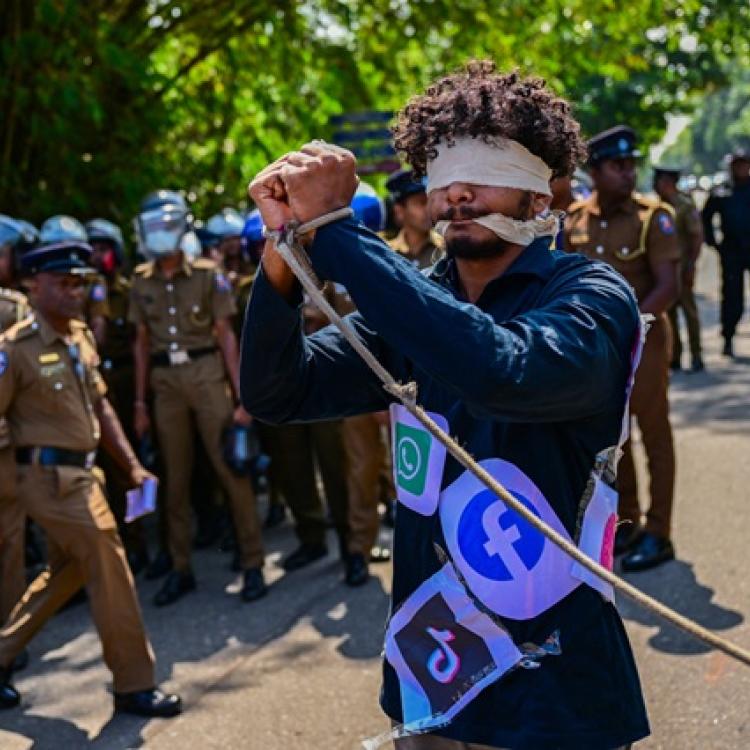
Such revelations resonate deeply for Tamils on the island of Sri Lanka. Surveillance and monitoring remain part of daily life in the North-East, where the Sri Lankan government continues to maintain a heavy military presence. The government has also sought to expand its powers through legislation such as the Online Safety Bill, which rights groups have warned will be used to target dissent and monitor activists. Tamil diaspora communities abroad have also faced persistent digital scrutiny, underscoring how surveillance is deployed not simply for “security,” but to control and silence entire populations.
In response to these allegations, Microsoft launched an investigation in August to determine whether its service had been misused. Brad Smith later confirmed that the inquiry found "evidence supporting elements" of the accusation, verifying that Israeli defence officials had accessed the cloud storage and AI tools via Azure. On September 25, Microsoft stated that it had “ceased and disabled” several services connected to the Ministry of Defence, highlighting restrictions on the use of its technology for mass surveillance of civilians. However, the company emphasised that its decision was limited. Microsoft continues to maintain broader business ties with Israel, offering cybersecurity assistance and other contracts.
The Israeli authorities dismissed the suspension, stating that it would not affect their military operations. Rights groups stressed that partial measures do little to dismantle the surveillance infrastructure that underpins occupation.