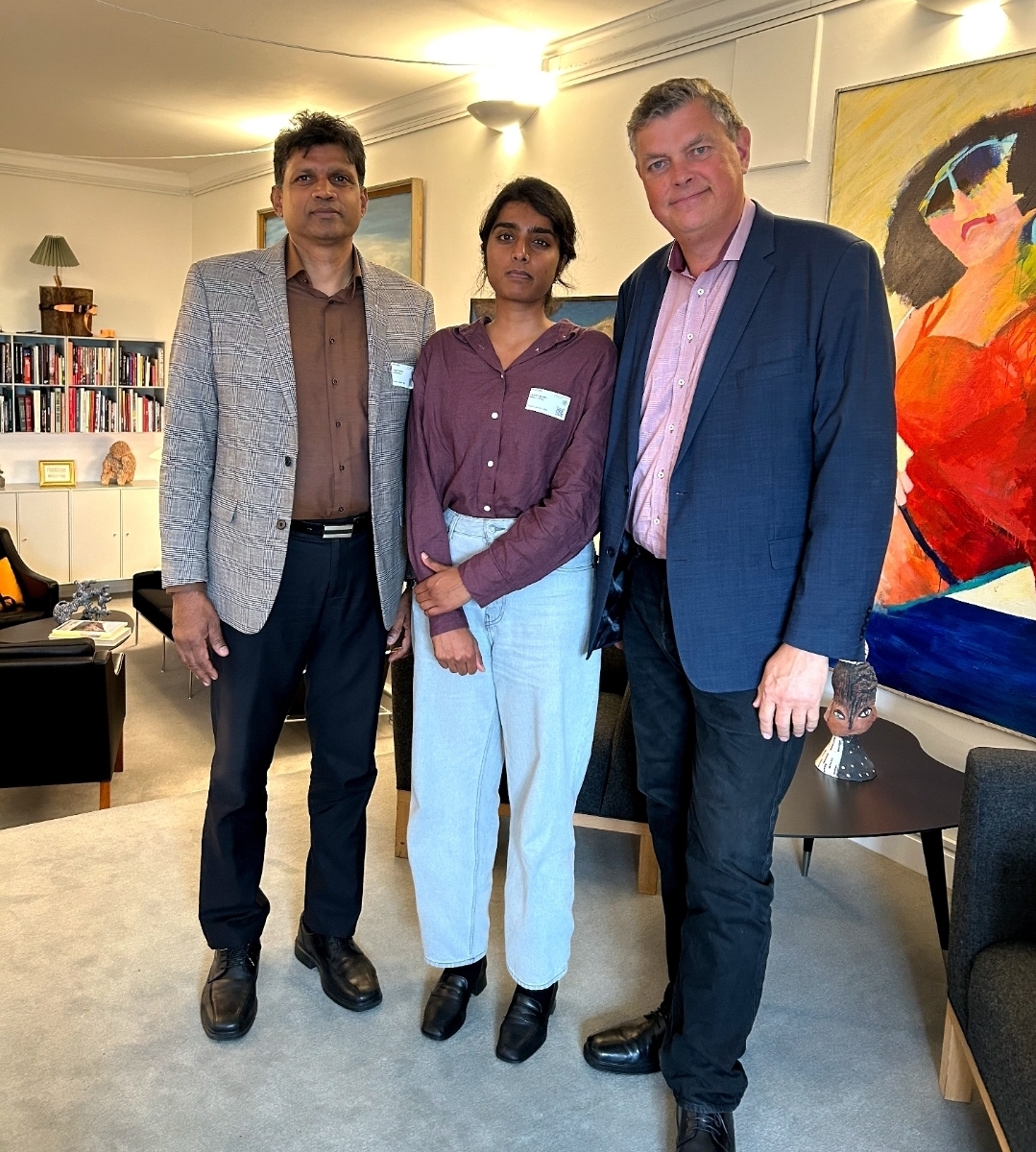
Representatives of the Union of Danish Tamil Organisations have raised the detention of Tamil rapper Ganeshkumar Sangeethsan with newly elected Danish parliamentarians, as international concern continues to grow over Sri Lanka’s use of the Prevention of Terrorism Act (PTA) against Tamil artistic and political expression.
At a political meeting with Danish lawmakers, Tamil representatives highlighted the continued use of the PTA against Eelam Tamils, more than seventeen years after the Mullivaikkal genocide in May 2009.
The arrest of Sangeethsan, a 24-year-old rapper from Udayanagar in Kilinochchi known as HipHop Sangee, was raised in the discussions.
Sangeethsan was arrested on 2 June after Sri Lankan authorities alleged that videos uploaded to social media following a temple festival performance in Navatkuli, Chavakachcheri, promoted the Liberation Tigers of Tamil Eelam. He has since been remanded until 17 June.
The meeting heard that the case reflected a wider denial of freedom of expression to Eelam Tamils, including artists, musicians and cultural figures who express the historical suffering, political memory and lived experiences of the Tamil nation. A fundamental rights petition is expected to be filed before Sri Lanka’s Supreme Court on Sangeethsan’s behalf. His detention has already sparked protests across the Tamil homeland, including in Kilinochchi, Vavuniya, Valvettithurai, Mannar and Colombo, with demonstrators demanding his immediate release and the repeal of the PTA.
Tamil political representatives, civil society groups, artists and international human rights organisations have also condemned the arrest. Amnesty International has called for Sangeethsan’s release unless he is promptly charged with an internationally recognisable offence in proceedings consistent with international fair trial standards.
The Danish meeting also addressed wider concerns over Sri Lanka’s human rights record, including the continued denial of justice and accountability for atrocities committed against the Tamil nation.
Representatives raised the ongoing discoveries at mass graves such as Chemmani, where skeletal remains of Tamils continue to be unearthed in Jaffna. They stressed that internationally experienced forensic experts and independent investigative bodies from neutral countries must be allowed to conduct proper investigations before evidence is concealed, compromised or destroyed by the Sri Lankan state.
The Chemmani mass grave remains one of the most significant mass grave investigations in the Tamil homeland. The site first drew international attention in the late 1990s after a Sri Lankan soldier alleged that hundreds of Tamils who disappeared during military operations in Jaffna had been buried there. Ongoing excavations have renewed calls from families of the disappeared, Tamil political representatives and human rights advocates for international oversight and accountability.
The meeting included broader discussion on the political and human rights situation facing the Tamil people, including their right to justice, freedom of expression and protection from state repression.
Tamil representatives also asserted that, as a solution to the island’s conflict, an independent Tamil Eelam remains the only viable and just resolution.