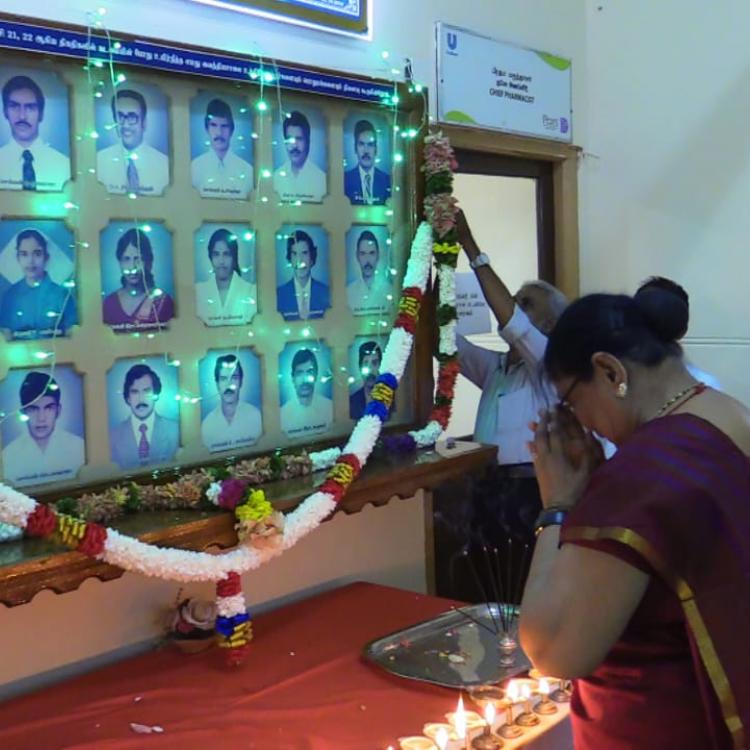
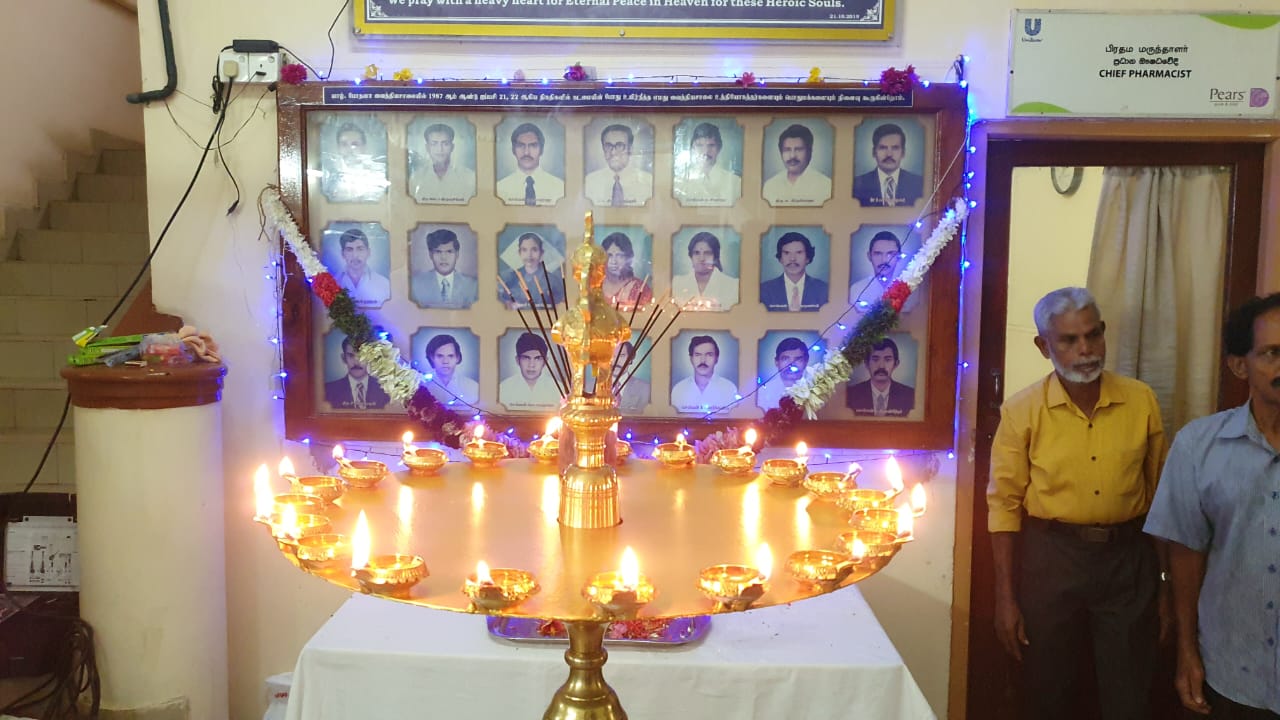
Commemorative events were held in Jaffna on Tuesday to mark the 38th anniversary of one of the most horrific massacres committed by the Indian Peace Keeping Force (IPKF) during its occupation of the Tamil homeland — the killing of 68 civilians, including doctors, nurses, and patients, in October 1987.
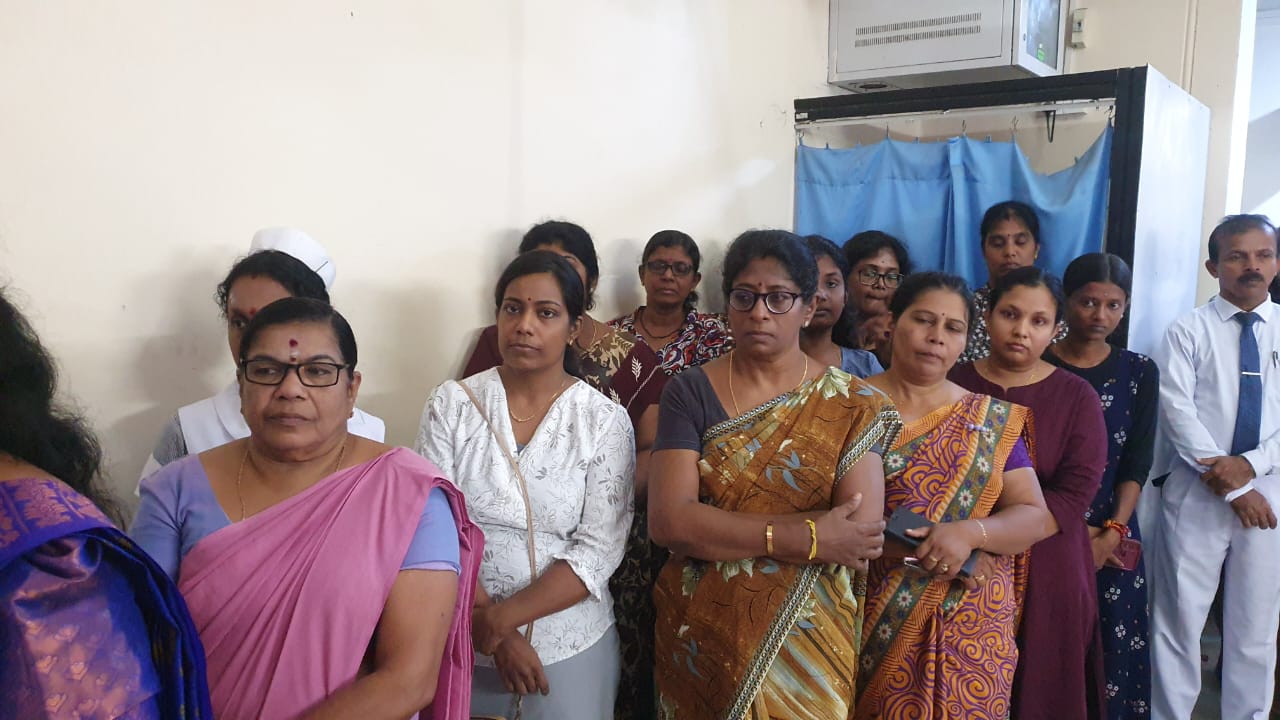
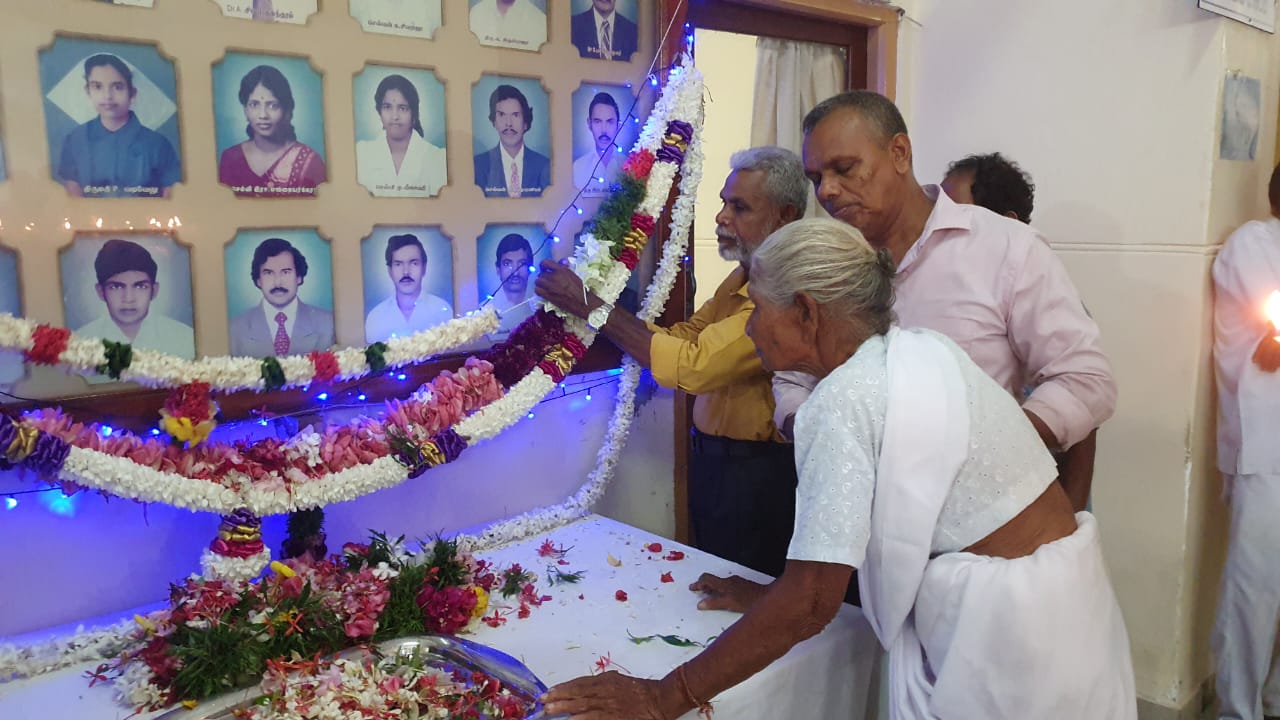
At least 68 civilians, including 21 medical personnel, were killed by Indian troops as they stormed the hospital building on the 21 and 22 October 1987, throwing grenades and firing indiscriminately at staff and patients.
The building had been shelled by artillery before the raid.
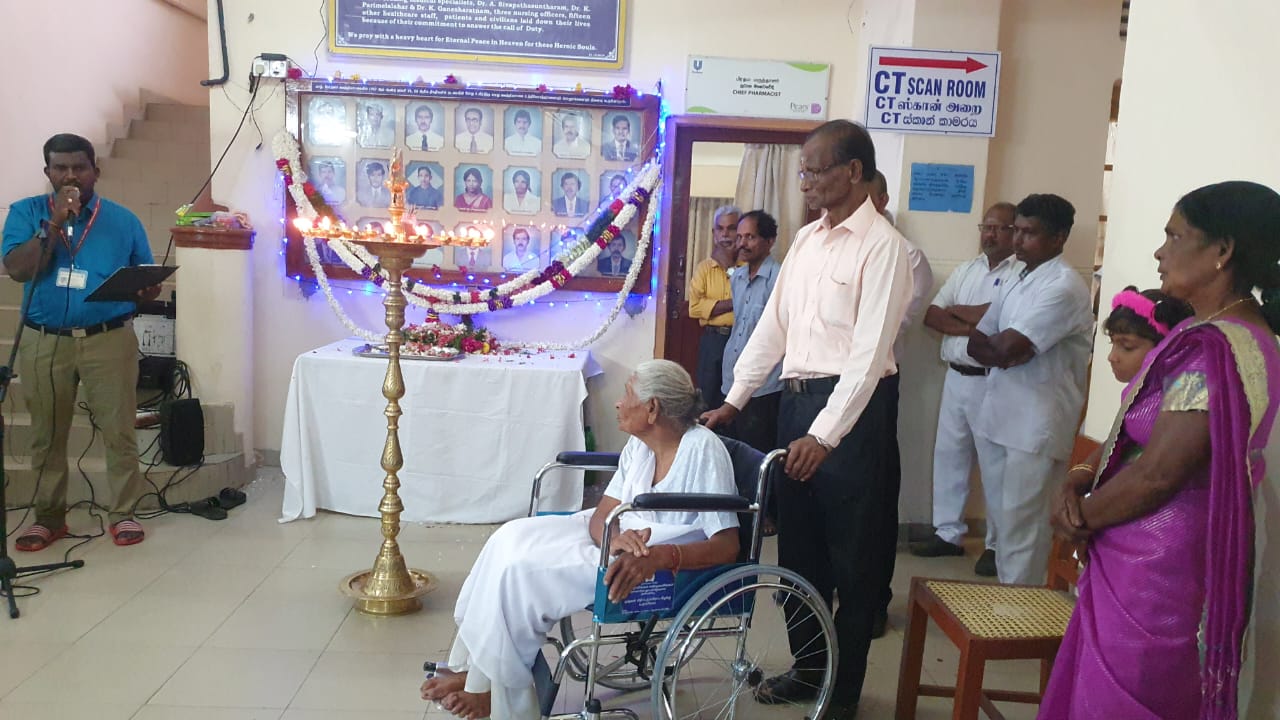
Among the 21 medical personnel, nurses and hospital staff who were massacred were two nurses, paramedics, a supervisor, three then leading medical specialists, Dr A Sivapathasuntharam, Dr K Parimelalahar and Dr K Ganesharatnan. Also killed were 47 patients receiving treatment.
Witnesses recall seeing Dr Sivapathasuntharam attempting to surrender with a group of fellow doctors and nurses. He was executed by Indian troops.
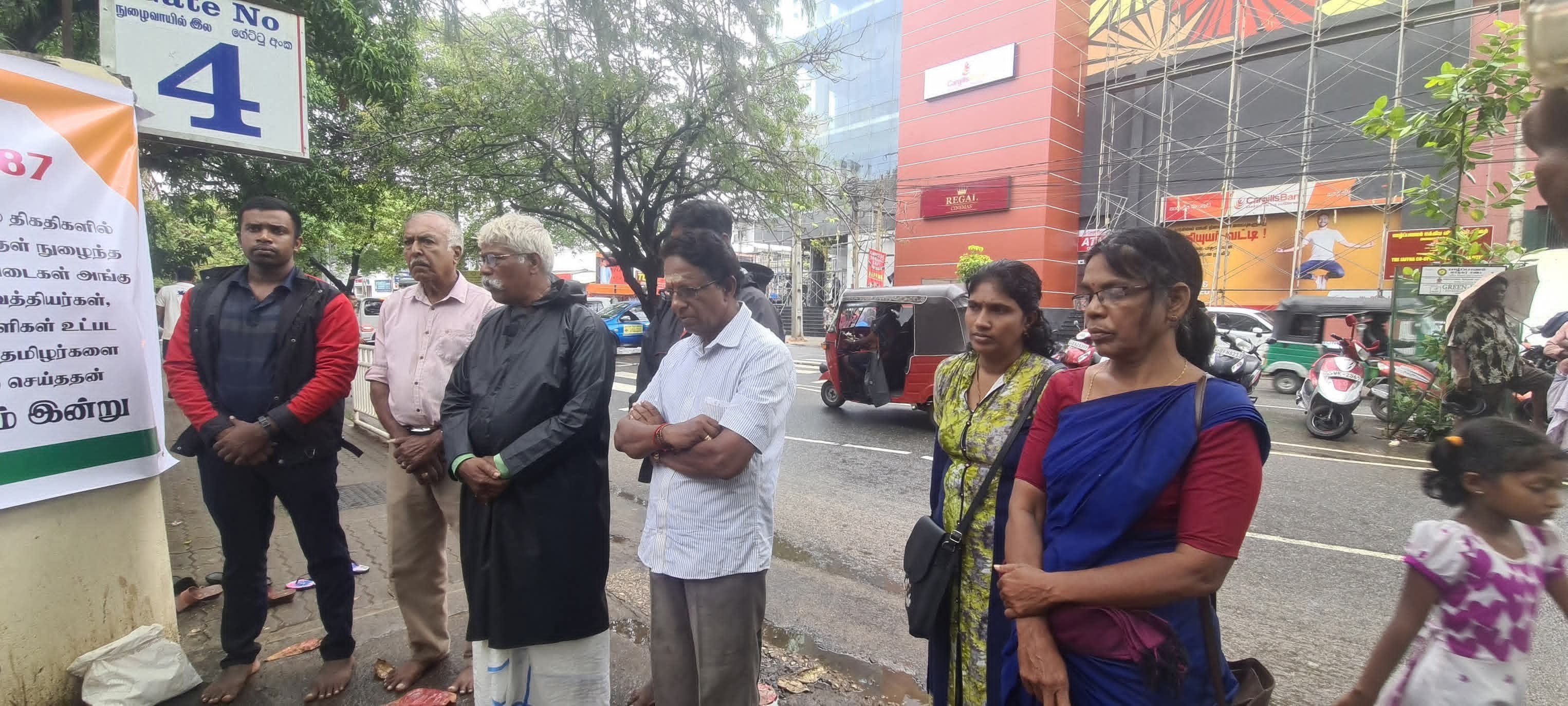
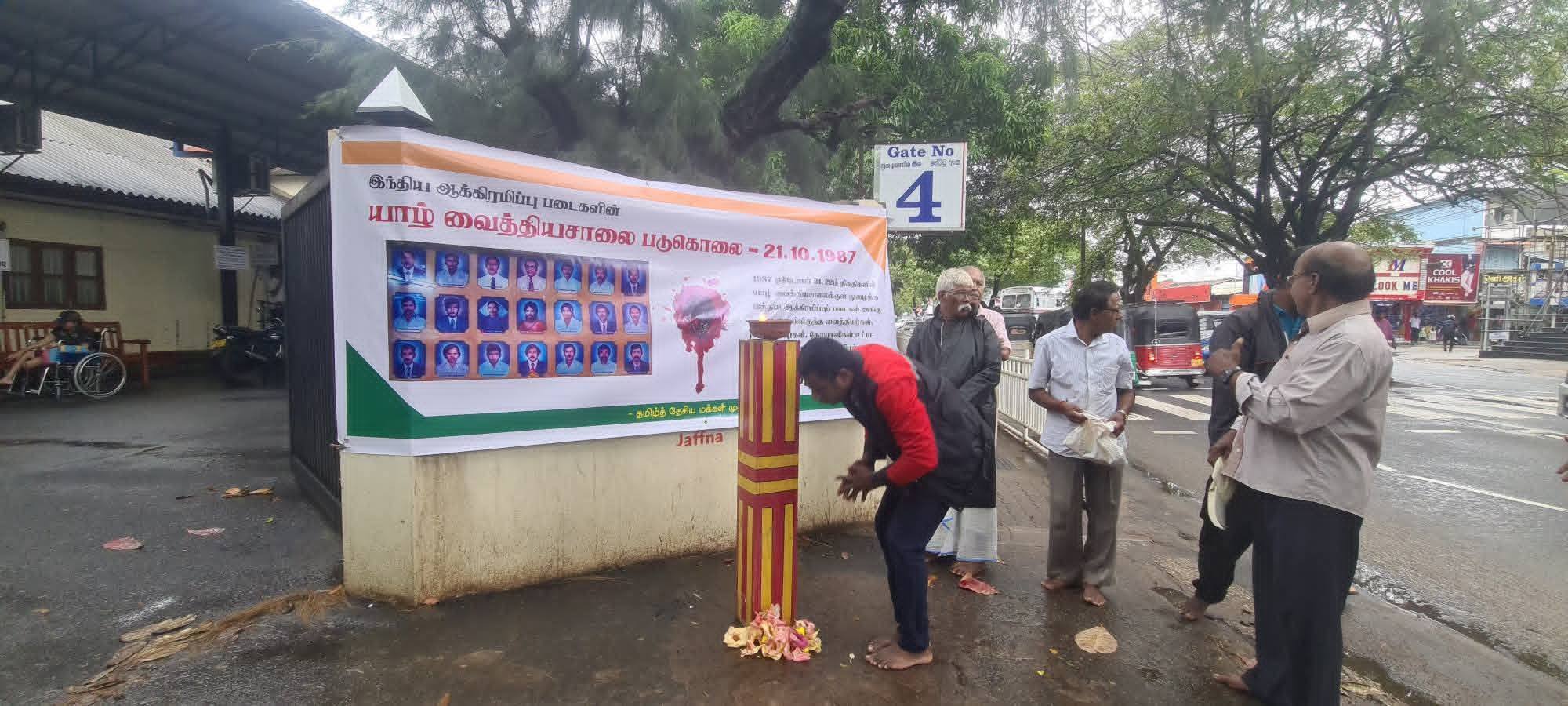
A separate event was also organised by the Tamil National People’s Front (TNPF) and held outside the hospital premises. Tributes were paid to the victims by lighting oil lamps and offering flowers in their memory.
In the 38 years since the massacre, no investigation has been carried out, no prosecutions have been made, and no compensation has been provided to the victims’ families.
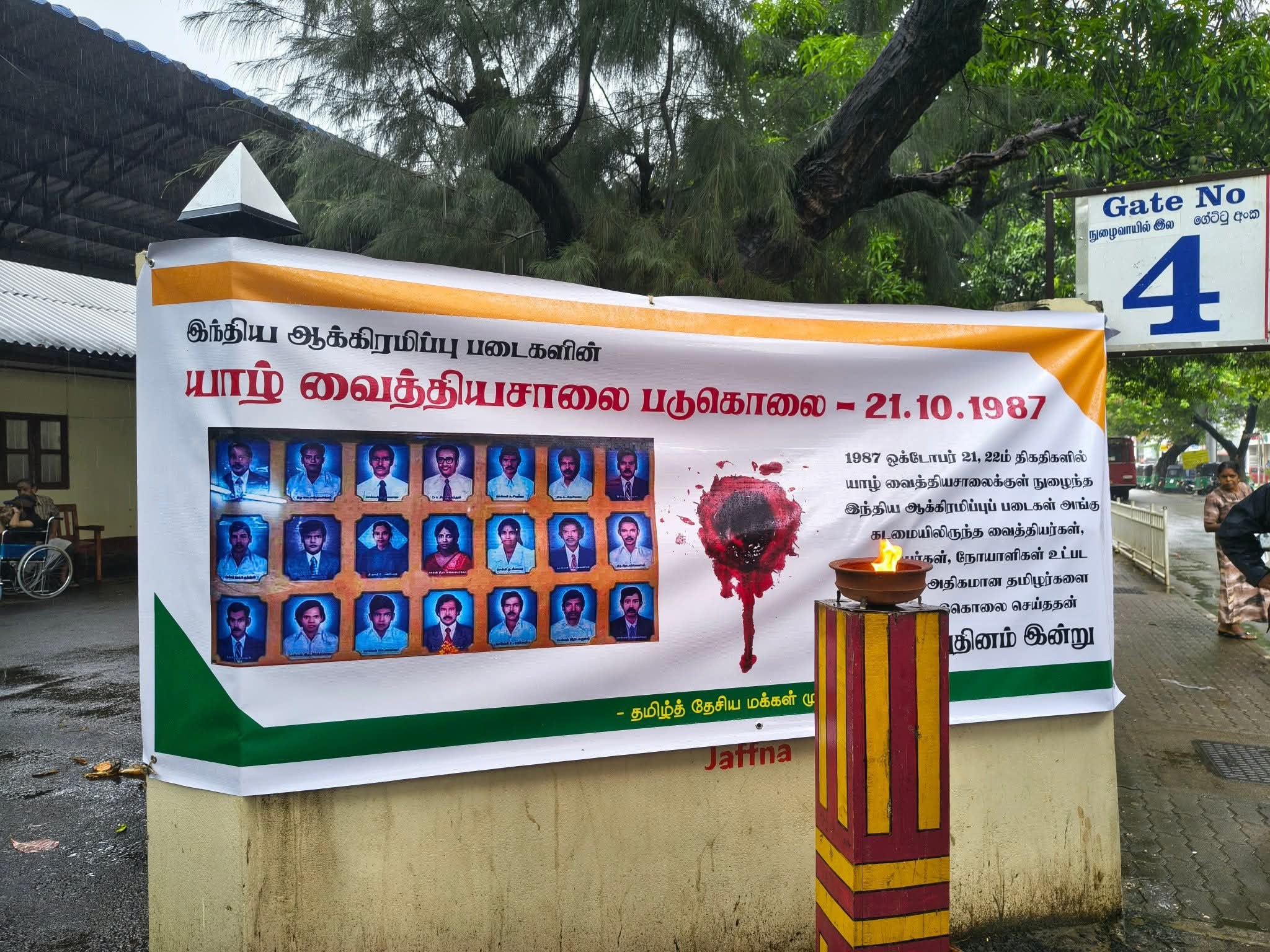
Read one account, as retold in The Broken Palmyrah, below:
"We were in the radiology block in the tea room at that time. The whole place was crammed with people including the patients from the evacuated ward 7 as well. We heard the noise of firing coming closer. But we were sure that even if the Indian Army entered, they would check us, and then explanations could be offered. Dr. Ganesharatnam who was with us went out of the room. Some of our colleagues were still in the wards. The noise of the firing was drawing very close. All around us was the noise of firing. We realised the danger and lay flat on the floor.
The Indian Army came firing into the Radiology Block and fired indiscriminately at this whole mass of people huddled together. We saw patients dying. We lay there without moving a finger pretending to be dead. We were wondering all the time whether we would be burnt or shot when the bodies of the dead were collected.
In the night we heard few bursts of fire. Most of the time we heard them moving on the floor above, where out quarters were situated. We were like this for almost 18 hours until 11:00 a.m. the next day.
Another eyewitness said:
All through the night as I lay awake I heard noises, voices, an occasional spray of shooting above our heads or a grenade thrown. I heard a child cry: "Amma (mother), tea, tea, tea."
Another baby screamed. I thought maybe the mother had died. Another woman said: "My legs are numb. They are cold. There is a corpse on it. Please remove it." Unable to bear her moans, I shouted: "Please anybody near her, can't you remove the corpse? Are you deaf?"
The woman continued to moan ... till in the morning I knew the reason for the silence. All those around and the woman herself were dead. One man was reciting the Hindu religious work, the Sivapuranam, and was calling out: "Long live Rajiv. Long live Indira Gandhi.
In the morning we found him the victim of a grenade blast."