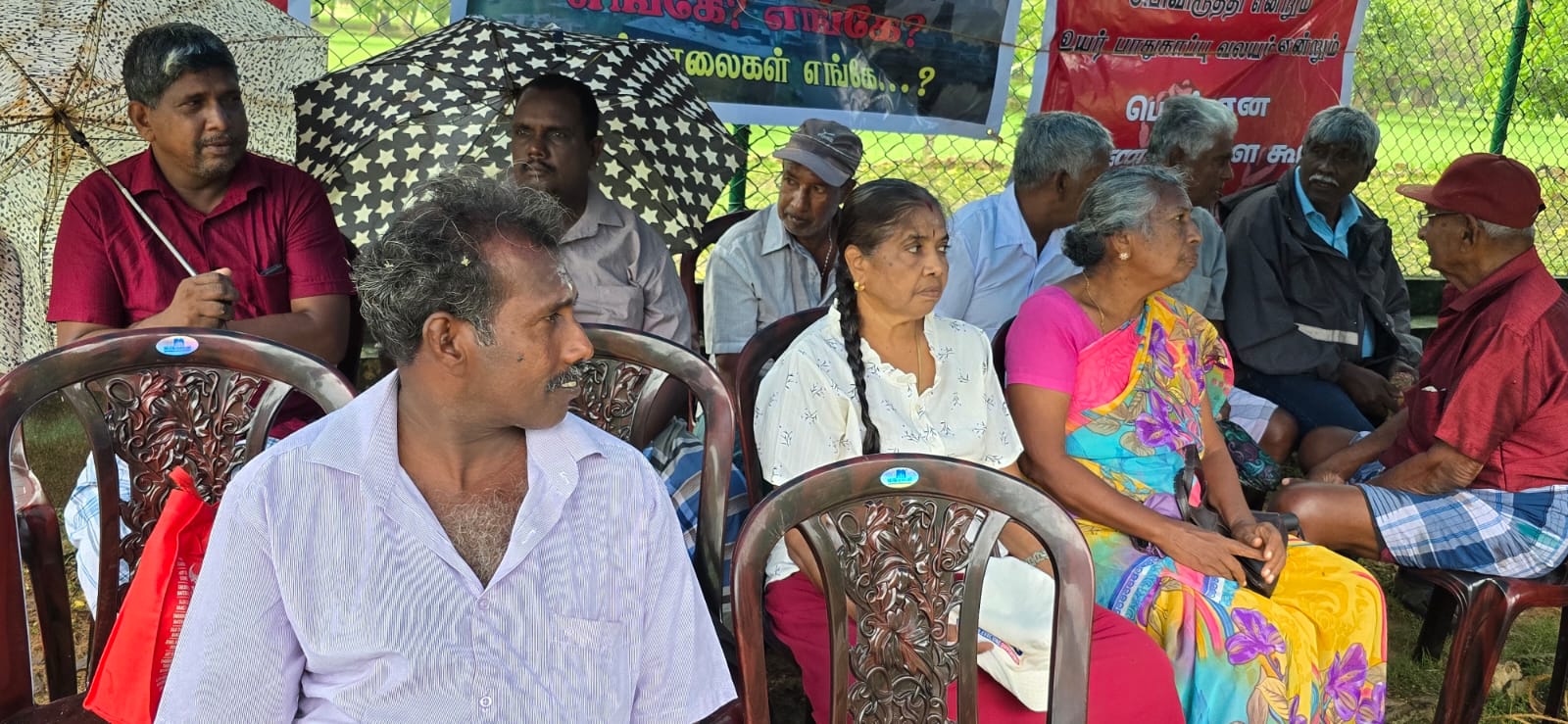
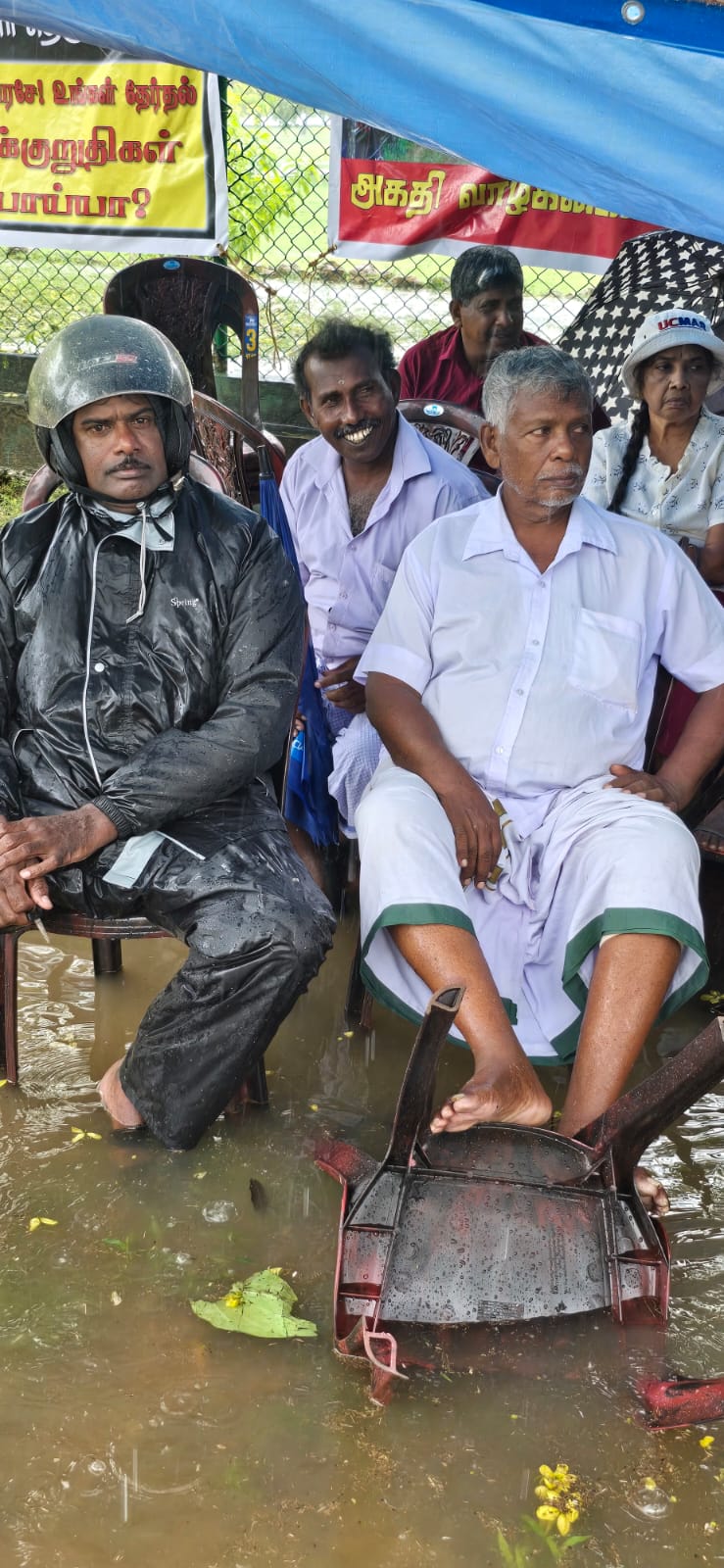
The Officer-in-Charge (OIC) of the Palaly police station threatened to arrest Tamil protesters, who were demanding the release of their occupied lands, for erecting a temporary rain shelter on the fence of a military Commander's bungalow during a protest on Friday (May 15).
The protest was held outside a luxury accommodation facility used by senior Sri Lankan military officers near Mayiliddy in Valikamam North, an area that continues to remain under heavy military control decades after residents were displaced.
Landowners from the region have been staging weekly protests every Friday, demanding the release of their lands situated within the High Security Zone (HSZ).
According to protesters, it started to rain heavily during the demonstration on May 15, prompting several participants to tie a tarpaulin sheet to the boundary fence of the military commander’s bungalow to shelter from the rain.
They stated that the OIC of the Palaly police station arrived at the location during the downpour and ordered them to immediately remove the tarpaulin, warning that those present would otherwise be arrested and legal action taken against them.
Protesters further alleged that when those present attempted to record the incident on their mobile phones, the police officer verbally confronted them before eventually leaving the scene.
Speaking to reporters, protesters said the lands located along the coastal stretch of the Keerimalai–Point Pedro road were neither active military camps nor areas used for national security purposes, yet the military continued to retain control over them without returning them to their rightful owners.
They further alleged that the military maintains luxury accommodation facilities for senior officers in the area and continues to occupy more than one kilometre of coastal land for the use of the armed forces and police.
Protesters also pointed to the continued militarisation of civilian spaces in Palaly, stating that although a market complex in the area had been nominally released for public use, roadside eateries and businesses in the vicinity remained dominated by the military, leaving little room for local private enterprise.
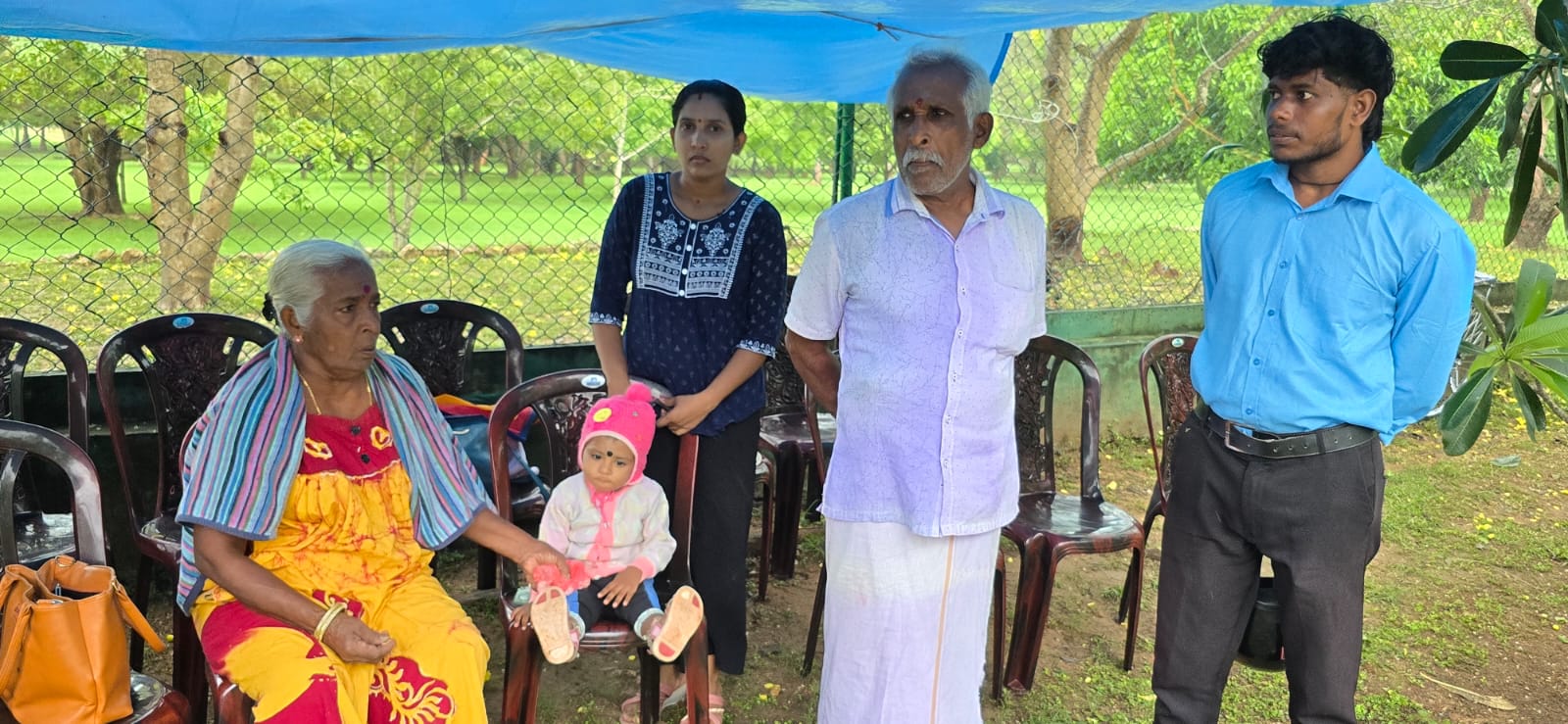
Fisherfolk from the area also complained that they had previously used the coastal stretch for fishing activities, but were now being prevented by the military from accessing the area and carrying out their livelihoods.
“The military continues to hold our private lands for its own use without returning them to the people,” protesters said.
“They are occupying civilian lands not for security reasons, but for their own leisure and comfort. They must leave our lands and allow us to resume our livelihoods.”
The protest comes despite recent statements by Sri Lankan authorities indicating that steps were being taken to release some privately-owned lands currently occupied by the military.
Tamil politicians and activists have long argued that the Sri Lankan military’s involvement in commercial activities in the occupied lands, is part of a structural domination of the Tamil homeland’s economy. Across the Jaffna peninsula, particularly along the northern coast in areas such as Kankesanthurai, Mayiliddy and even the Point Pedro jetty, the military operates “welfare” shops and businesses from within or near military-controlled zones, often situated at commercially strategic and tourist-frequented locations. The military has also continued agricultural activities within lands seized under High Security Zones (HSZs). While the Sri Lankan state frequently presents such ventures as productive economic initiatives, the ground reality is deeply concerning.
The revenue generated from tourism, agriculture and other commercial activities carried out by the Sri Lankan military and Police in these occupied areas is redirected towards the military establishment and the central state, rather than circulating within the local Tamil economy. Residents maintain that the release of occupied lands would allow local communities to revive businesses, fisheries and farming activities that could directly benefit the region’s war-affected population.