
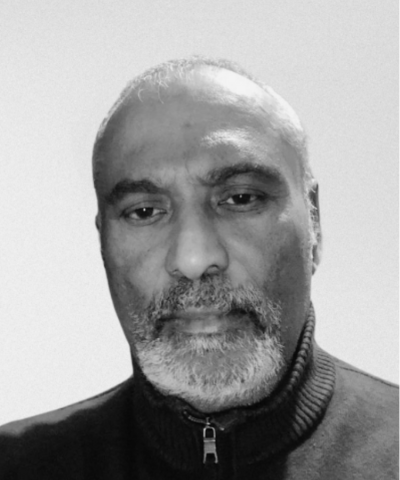
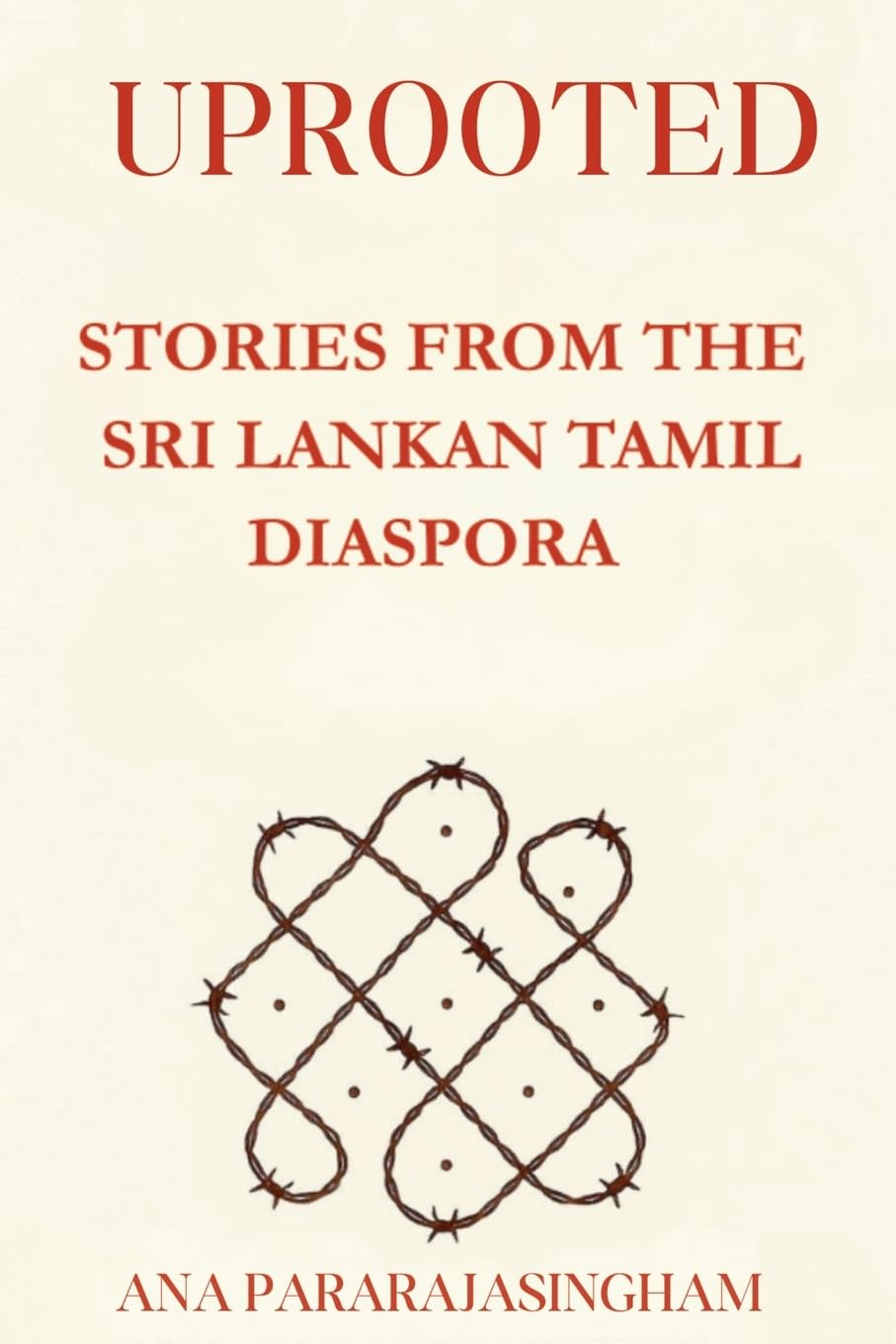
When Ana Pararajasingham set out to gather the stories of thirty-four Eelam Tamils scattered across the world, it was out of a worry that the history behind their displacement was already fading, even within the diaspora itself. His book, Uprooted: Stories from the Sri Lankan Tamil Diaspora, presents those lives not as isolated accounts of personal success but as the record of a people driven from their homeland who went on to rebuild elsewhere. He spoke to the Tamil Guardian about the process behind the book.
Published last year, the book profiles its subjects across nine categories, ranging from artists, writers and human rights defenders to politicians, educators, culinary champions and sporting heroes. Pararajasingham, an independent researcher and writer who has lived in Australia for more than forty years and once served as Director of Programmes at the Centre for Just Peace and Democracy, told the Tamil Guardian that almost a third of the Tamil population whose ancestral homeland lies in the North-East of Sri Lanka had been forced to leave, uprooted from their land, and that many in the diaspora understood little of that history.
"The younger generation knew very little about why they were where they were, or how their families had come to settle in these different countries," he said. He had watched the same pattern play out among other communities in Australia. "I saw this very clearly in Australia, where I have now lived for more than forty years, among Irish Australians and Australians of Greek and Italian backgrounds: second- and third-generation individuals who felt the need to reconnect with their origins and better understand where they came from."
Among Eelam Tamils, he concluded, "such a quest was inevitable among the second and third generations".
Often, he found, the story had simply gone unspoken at home. Parents "had not shared the story of their displacement with their children, sometimes perhaps because the memories were too painful, or because they wished simply to move on with their lives". Storytelling, he decided, was "perhaps one of the most effective ways of enabling people to understand our history of war, resistance, displacement, and uprooting in a human and accessible way".
Behind the project lay a sharper concern about who gets to narrate the Tamil past.
"If we, the displaced ourselves, did not tell our own stories, future generations would have little choice but to rely on the accounts of others in trying to understand their past," he said. "The Sri Lankan state narrative, for instance, is bound to frame these events very differently, often downplaying the reasons for the displacement and expulsion of our people. In the absence of strong counter-narratives from those who lived through these experiences, international audiences are naturally influenced by the more dominant versions available to them." Important academic work by Tamils existed, he noted, but was "often not accessible to the average reader".
A political displacement
Central to the book is his insistence that the uprooting of Tamils was political rather than economic. "I cannot stress enough that the displacement of Sri Lankan Tamils was fundamentally political, although the Sri Lankan state and others have often sought to portray it as largely economic migration," he said. "To acknowledge it as political is, in many ways, to acknowledge the state's role in creating the conditions that drove large numbers of Tamils out of the island."
Stripped of that context, he warned, the diaspora risked being misread.
"There is always the danger that we will simply be seen as economic migrants, while the deeper causes of the displacement are overlooked or forgotten." It was for this reason, he said, that the stories could not stand alone as accounts of achievement. "Their achievements become even more meaningful when understood against the backdrop of displacement, war, discrimination, and the struggle to rebuild life in unfamiliar lands." Placing them in that setting, he added, "helps preserve a historical memory that might otherwise gradually fade or be replaced by narratives shaped entirely by others".
Ambassadors for the Eelam Tamil people
The thirty-four figures were chosen, he said, "from across the globe, across gender, across disciplines, and across very different life experiences", but all had to meet one test: "that their achievements were not merely personal or career-driven, but involved meaningful contributions to the public life of the communities and countries of which they had become a part, and that those contributions had been recognised by the wider community". Among them are the rapper M.I.A., "whose music and public persona are known internationally", and Umes Arunagirinathan, "who has become a well-recognised public intellectual in Germany".
What connected them, he found, "was not simply success in the conventional sense, but a willingness to engage with the societies around them and often excel". They were, he said, "great ambassadors for the Eelam Tamil people". Whether globally known or relatively obscure, their underlying experiences were strikingly similar: "the experience of uprooting, the challenge of adapting to unfamiliar societies, the importance of education and hard work, and, very often, a continuing emotional connection to memory, identity, and history".
He was struck, too, by how differently younger Tamils carry that identity. Many had been "born or almost entirely raised in these new countries", deeply local in upbringing yet aware "that there is something distinct about their background, history, and culture". Increasingly, he said, they no longer saw that difference "as a burden or something to conceal". "Once they realise that having multiple cultural inheritances can actually be a strength rather than a disadvantage, they often begin to embrace their Tamil identity with confidence, grace, and even enthusiasm."
Where tension arose, he suggested, it tended to come from the older generation. "Difficulties arise only when some parents, perhaps shaped by older insecurities or what I would describe as a lingering colonial mindset, believe that sounding, behaving, or appearing as close as possible to the dominant community is the best path to acceptance or integration." Younger Tamils, by contrast, were "often far more comfortable navigating multiple identities at once, without feeling that they must abandon one in order to belong to the other".
Art and memory
Pararajasingham is convinced that art has become one of the most powerful means of keeping Tamil memory alive in exile. "Art, in many ways, is essentially a form of storytelling," he said. "What makes art particularly powerful is that it can communicate experiences of loss, displacement, memory, resistance, and longing in ways that formal historical or political writing sometimes cannot. It reaches people not only intellectually, but emotionally." A song, a novel or a performance, he said, "can often convey the emotional truth of an experience more immediately than political argument or historical analysis alone".
For a displaced people, he argued, art carried a weight beyond expression. It became "a means of preserving identity, carrying memory across borders, and ensuring that experiences which may otherwise fade or be silenced continue to remain alive in public consciousness". Though Uprooted is itself a work of non-fiction, he hoped "artists, filmmakers, musicians, dramatists, and writers may take these stories further, reinterpret them through their own creative mediums, and in doing so continue to preserve and expand the collective memory of the diaspora".
He is candid that the book is incomplete by design. During his research, he found "many more stories that could easily have met the criteria I had set for inclusion", which is why he described Uprooted as "the opening chorus in a much larger chorus of voices". "I never saw the book as definitive or complete," he said. "Rather, I saw it as the beginning of a much broader process of documenting and preserving the experiences, contributions, and journeys of a displaced people scattered across the world." He does not plan a second volume himself, but hopes others will carry the work into film, theatre and oral history, because "the experiences of the Tamil diaspora are far too diverse and expansive to be contained within a single book".
'Every place is mine; everyone is my kin'
What the global Tamil experience revealed, he said, was "an immense sense of resilience, adaptability, and survival, but also something else that struck me very deeply: a sense of identity that was outward-looking and inclusive rather than narrow or insular". He reached for a line from Purananuru, the two-thousand-year-old classical Tamil anthology: "Yaathum Oore, Yaavarum Kelir", every place is mine, everyone is my kin. To him it captured "the ability to remain rooted in one's identity while also engaging openly with the wider world".
That, he argued, was a resilience beyond mere endurance. Despite "the trauma of displacement and the experience of having lost a homeland in the conventional sense", Tamil communities had "generally sought not to isolate themselves, but to contribute meaningfully to the societies in which they now live". It reflected, he said, "the ability of a people to rebuild, adapt, and participate fully in public life without entirely losing their cultural distinctiveness".
That belonging, he insisted, carried an obligation that he hoped younger readers above all would absorb. They should understand, he said, that "the diaspora did not emerge by accident, nor simply through ordinary migration, but through a long history of political conflict, violence, discrimination, and upheaval", and that such understanding should give rise "not to anger or bitterness, but to a sense of responsibility and connection". Those who had found security and recognition abroad, he said, were "duty bound to stand with those we left behind and to support them in their continuing pursuit of dignity, political rights, economic advancement, security, and the ability to live freely in their own homeland".