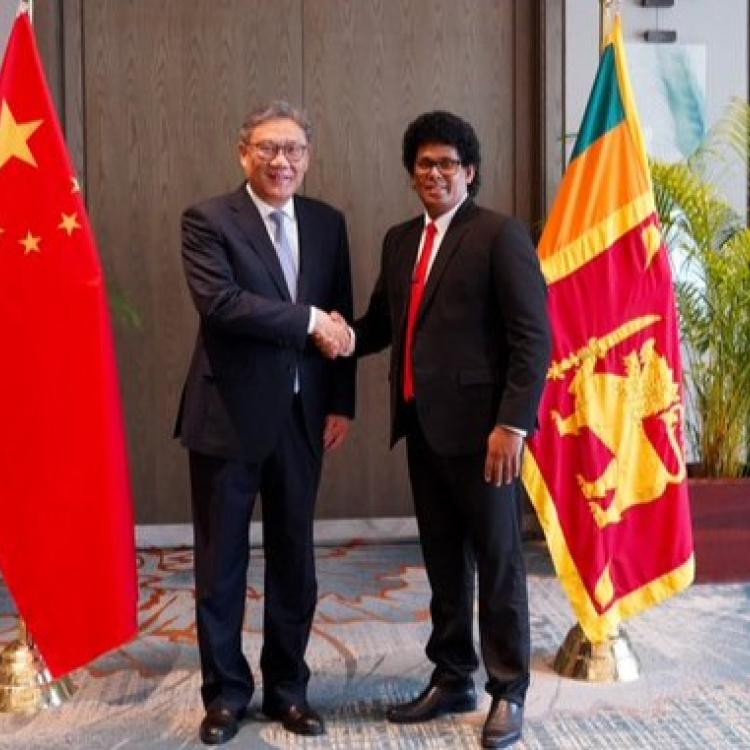
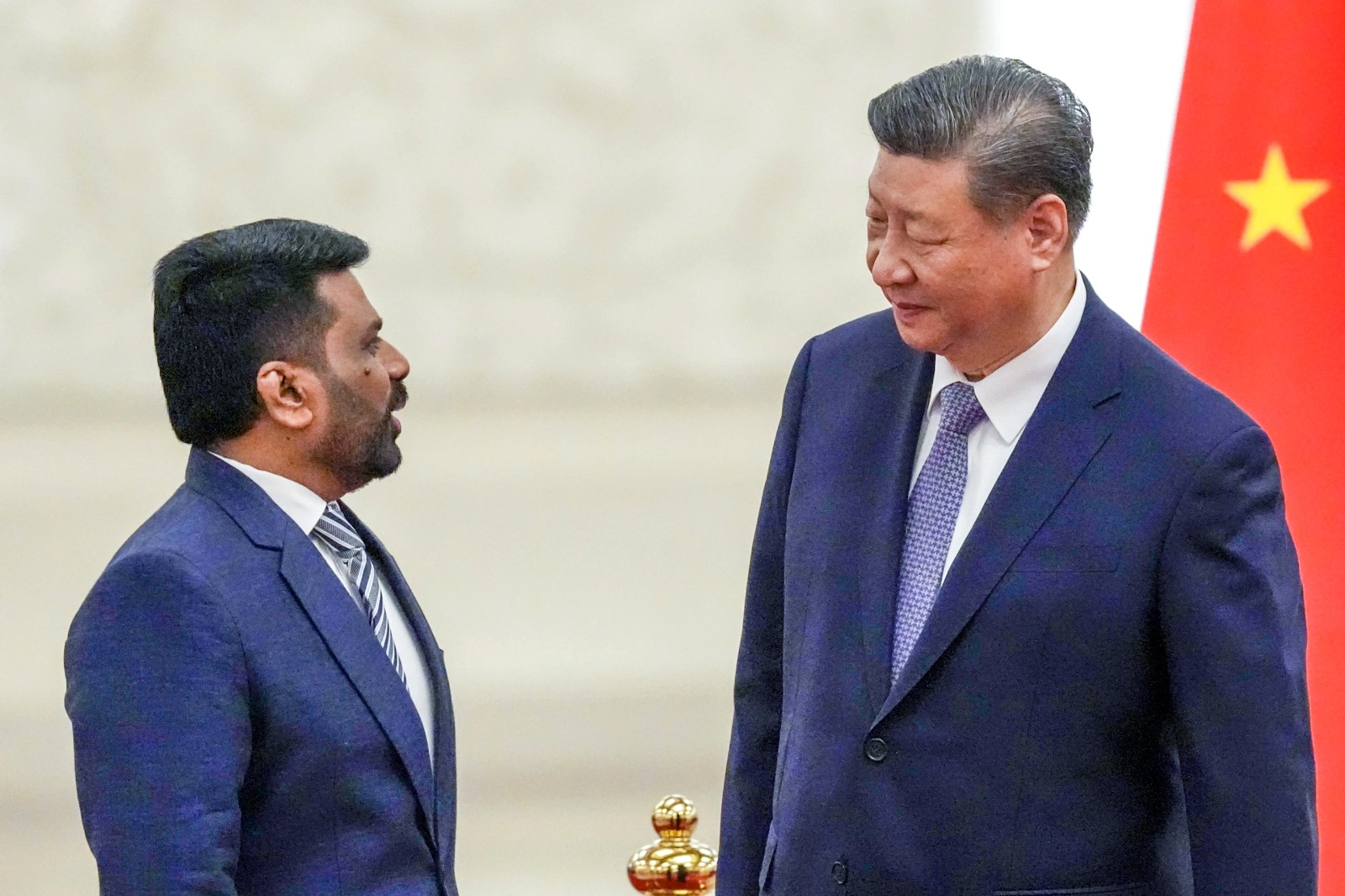
Sri Lanka's Anura Kumara Dissanayake with China's Xi Jinping in Beijing earlier this year.
Sri Lanka is set to borrow the equivalent of US$500 million in Chinese yuan from the Export-Import Bank of China (EXIM) to resume work on the long-delayed Central Expressway (CEP 1).
Sri Lankan president Anura Kumara Dissanayake secured Cabinet approval this week to take on the new loan and to commit an additional US$438 million from Sri Lankan state coffers to complete the first section of the project. The 37.1 km stretch between Kadawatha and Mirigama has languished at just 36% completion since construction began in September 2020.
The deal, however, comes with strings attached. Since Sri Lanka has no income in yuan, repayment will require Colombo to convert scarce US dollar reserves into renminbi, placing further strain on the country’s fragile foreign reserves. The shift in loan currency from dollars to yuan was demanded by China EXIM as a precondition for releasing funds.
The Central Expressway project was first agreed in 2019 under a preferential buyer’s credit arrangement between Colombo and EXIM Bank, valued at nearly US$1 billion. But of the original facility, only US$51.5 million was disbursed before the loan was suspended amidst Sri Lanka’s deepening economic crisis.
After last year’s external debt restructuring, EXIM slashed its commitment, agreeing to provide just US$500 million in yuan, less than half of the outstanding sum. The Sri Lankan government has now pledged to cover the shortfall with public funds, while also settling US$200 million in outstanding claims and interest to the Metallurgical Corporation of China Ltd (MCC), the state-owned contractor.
Despite frustration at the project’s stagnation, the government has disregarded calls by five of Sri Lanka’s largest domestic construction companies to cancel the direct award to MCC and instead hold competitive tenders. Local firms argued such a move would reduce costs and ensure swifter completion. Instead, Colombo has chosen to persist with the Chinese contractor.
The decision once again underscores how Sri Lanka’s debt-laden infrastructure deals with Beijing, ranging from white elephant projects like Hambantota Port to stalled highways, have left the island dependent on Chinese financing.