
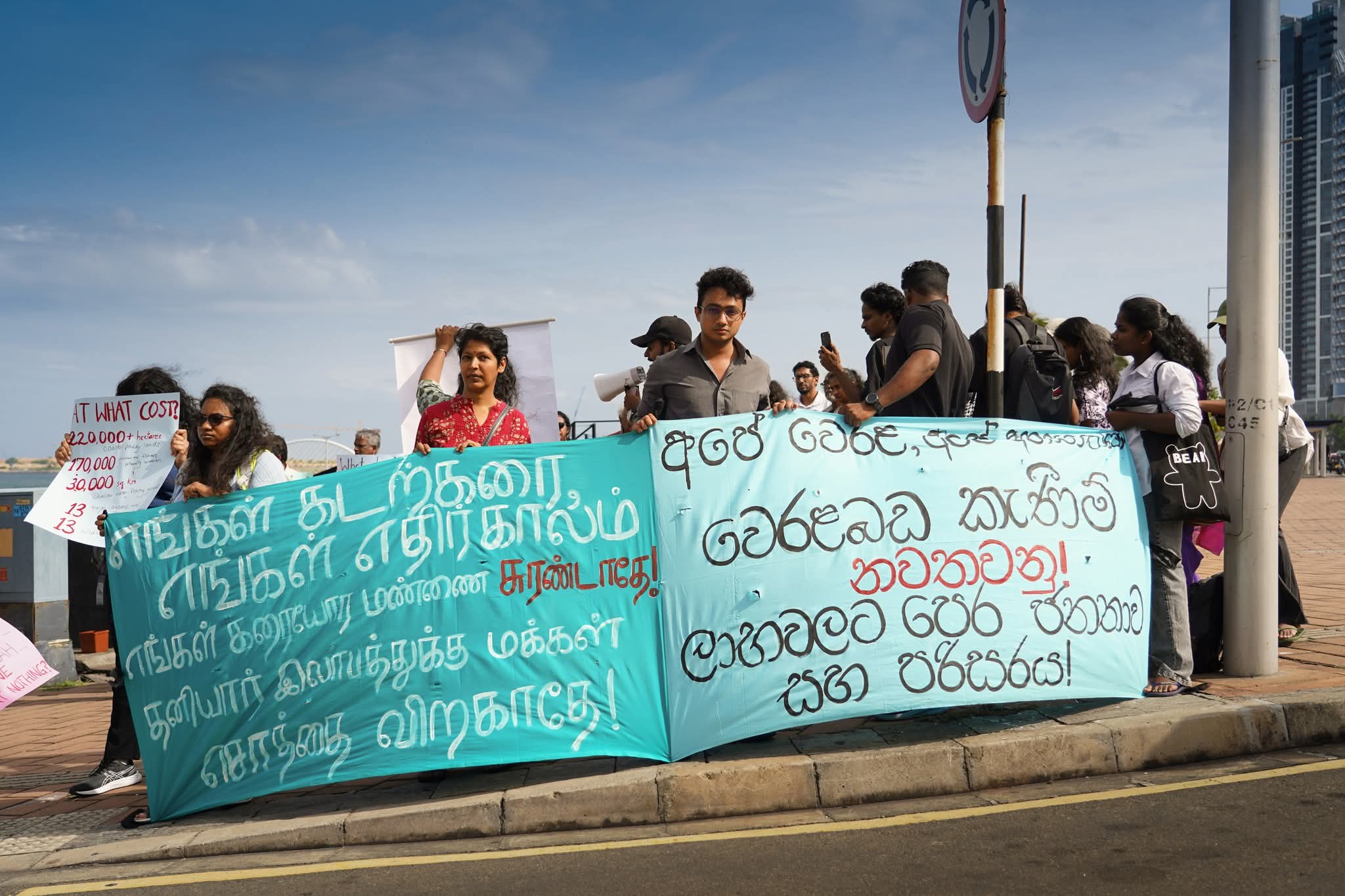
Environmentalists and civil society activists protested at Galle Face in Colombo on 17 June against proposed heavy mineral sand mining along the eastern coastline from Oluvil to Pothuvil, warning that the project threatens the land, fisheries and livelihoods of Tamil and Muslim communities across the Eastern Province.
According to the People's Alliance for Right to Land (PARL), exploration licences have already been issued to private companies in the coastal areas despite the absence of an approved national mineral policy or legal framework governing such extraction. Protesters argued that granting licences before any regulatory framework is in place risks entrenching industrial mining interests before adequate safeguards can be established.
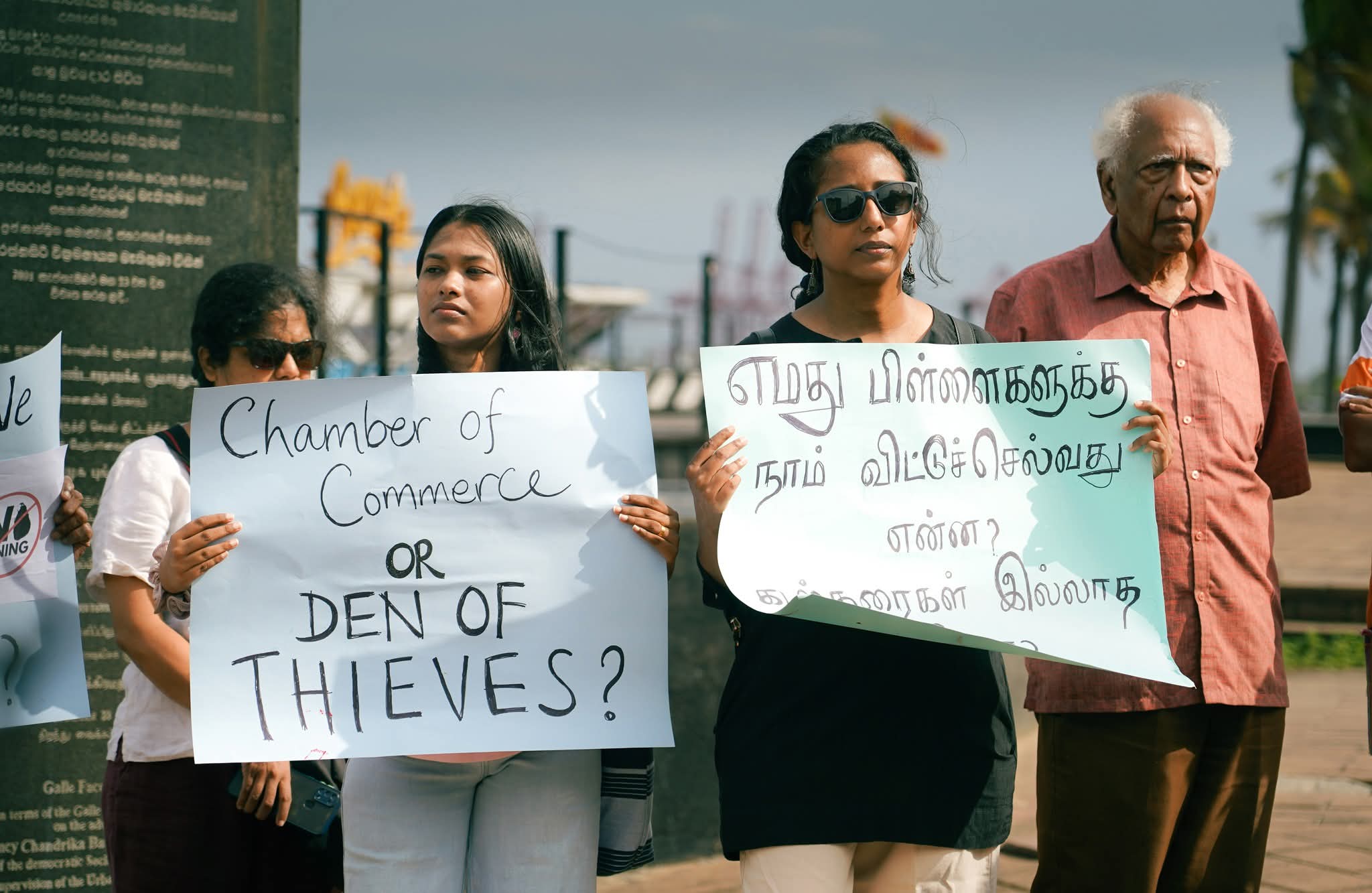
While proponents have cited potential foreign exchange earnings, campaigners countered that the anticipated revenues would be modest when set against Sri Lanka's established sources of income, and would be far outweighed by the environmental and social costs.
The proposed mining zones overlap with approximately 220,000 hectares of coastal agricultural land, shallow-water fishing grounds supporting more than 170,000 people, 13 major lagoons and estuaries, 13 wildlife sanctuaries, and tourism areas in the Eastern Province, according to the groups opposing the projects.
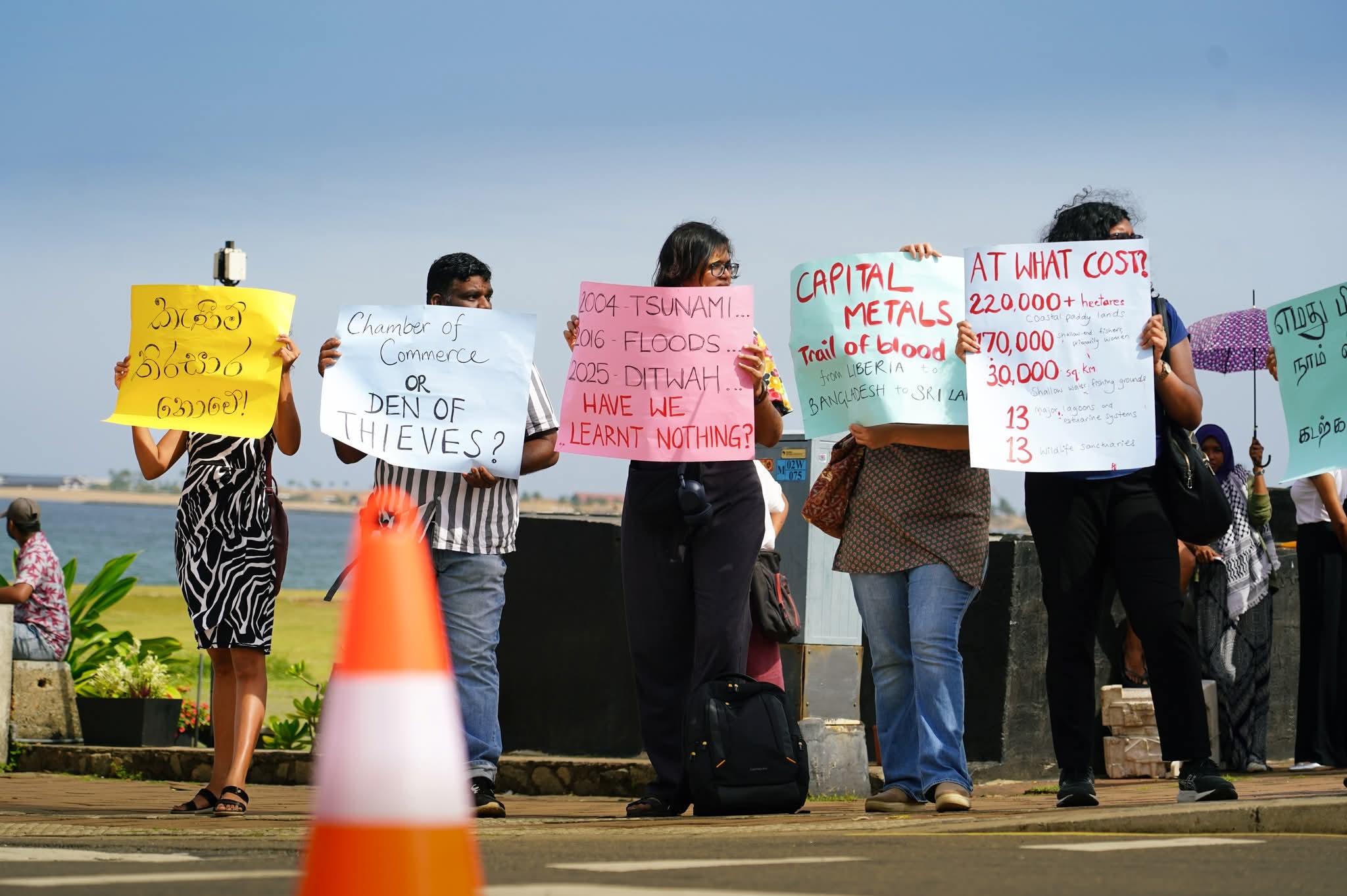
Environmentalists and affected communities have warned of coastal erosion, the disruption of lagoon and estuarine ecosystems, damage to fisheries, saltwater intrusion into agricultural land, biodiversity loss, and the destruction of coastal livelihoods.
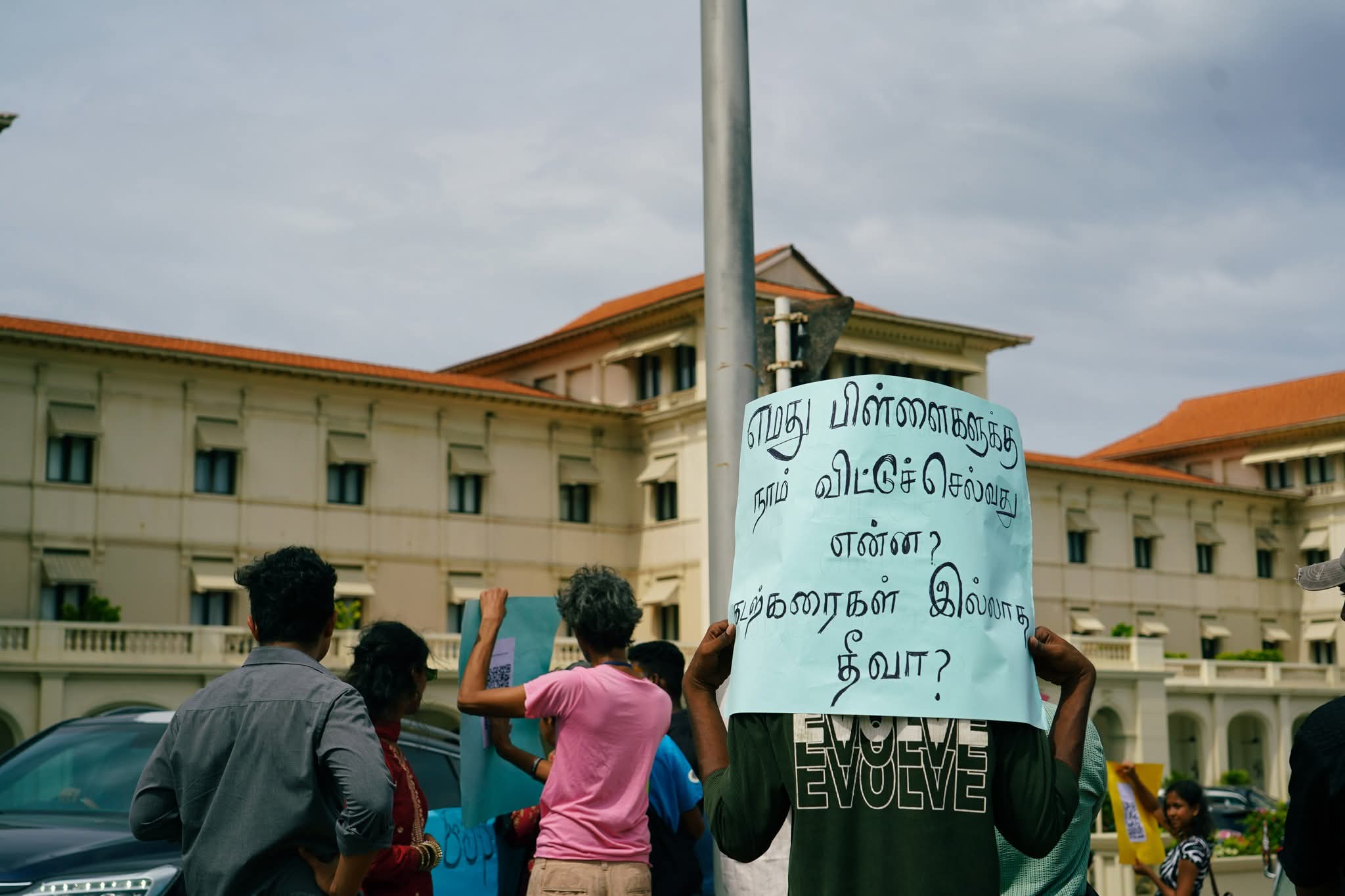
They noted that the island's coastal ecosystems served as a natural buffer during the 2004 tsunami, underlining their importance in protecting coastal communities, a significance expected to grow as the effects of climate change intensify.
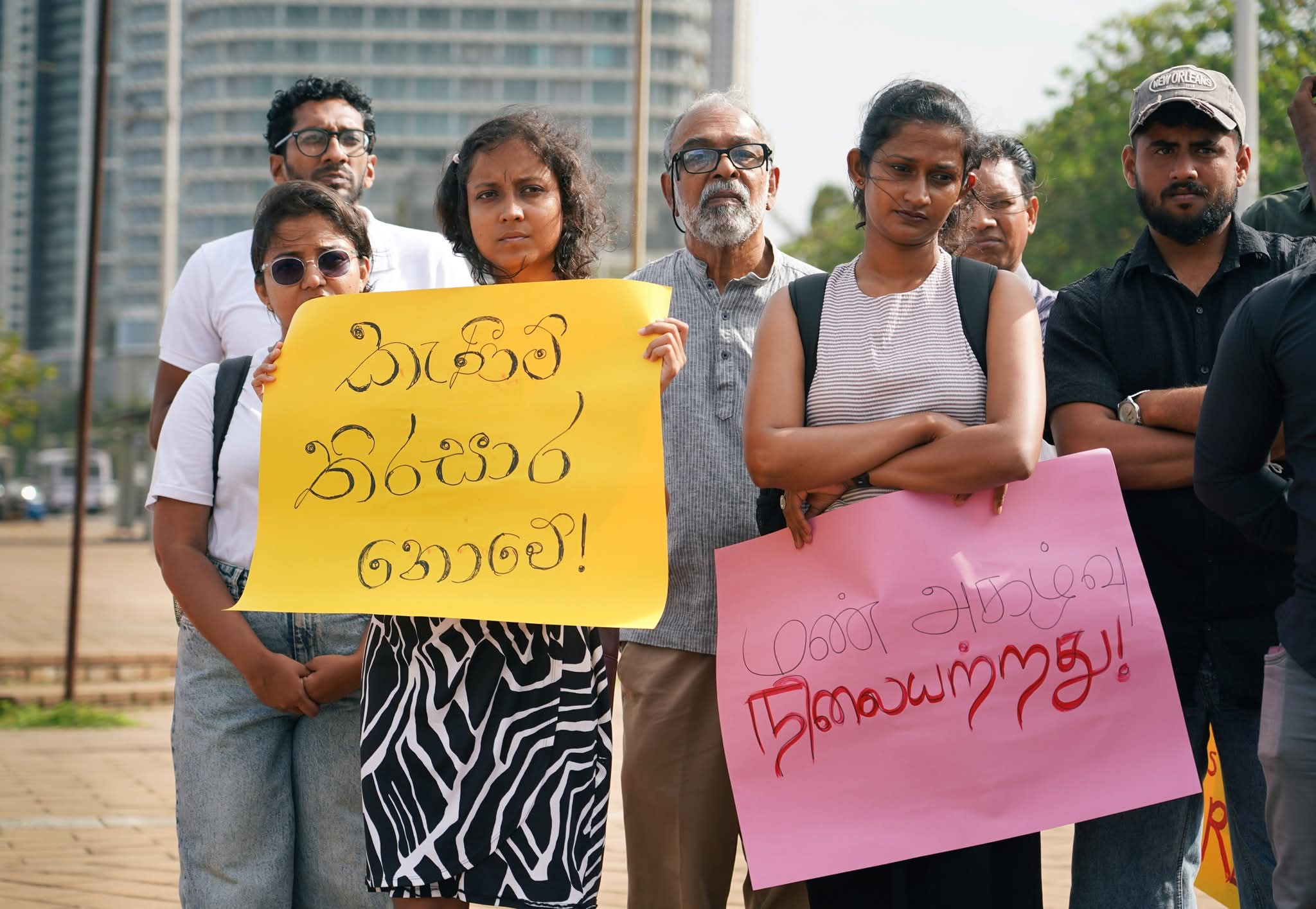
The activist and lawyer Swasthika Arulingam urged the public to oppose the projects, warning of their impact on coastal communities and ecosystems.
"Mining will destroy our coast. Mining will destroy the livelihoods of fishers and farmers and those who feed this country. Mining will erase turtles and dolphins, fish and plants which share our shores and waters."
"Mining will not bring us revenue, mining will only enrich the pockets of a few," she said, calling on the public to "speak up before it's too late".
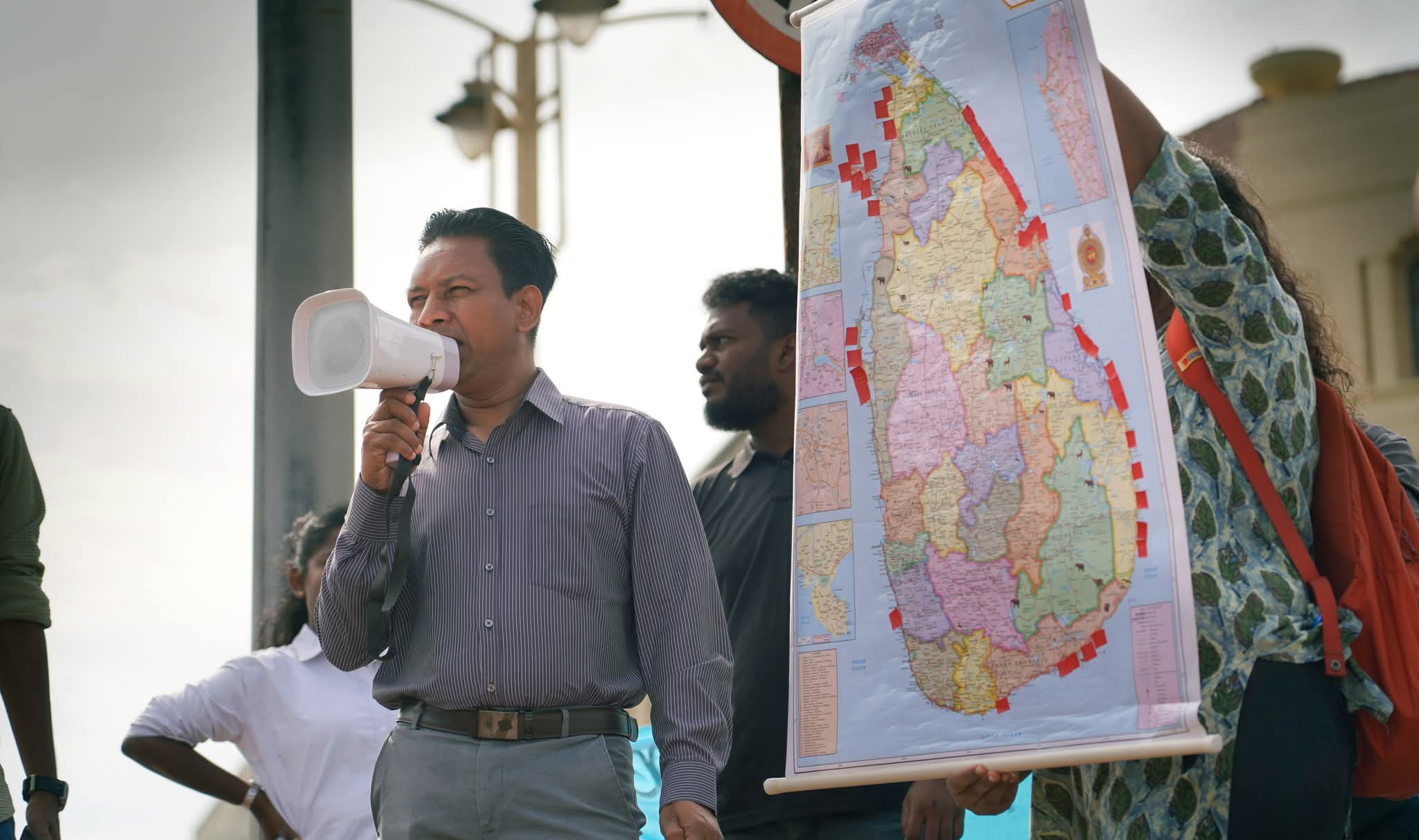
The Colombo journalist Shabeer Mohamed, writing on social media, invoked Sri Lanka's landmark Eppawala Supreme Court ruling, in which the court held that the State is not the owner of the country's natural resources but a custodian holding them in trust for present and future generations. Neither governments nor corporations, he argued, had the right to sacrifice long-term ecological security for short-term "corporate greed", adding that Sri Lanka was "not for sale".
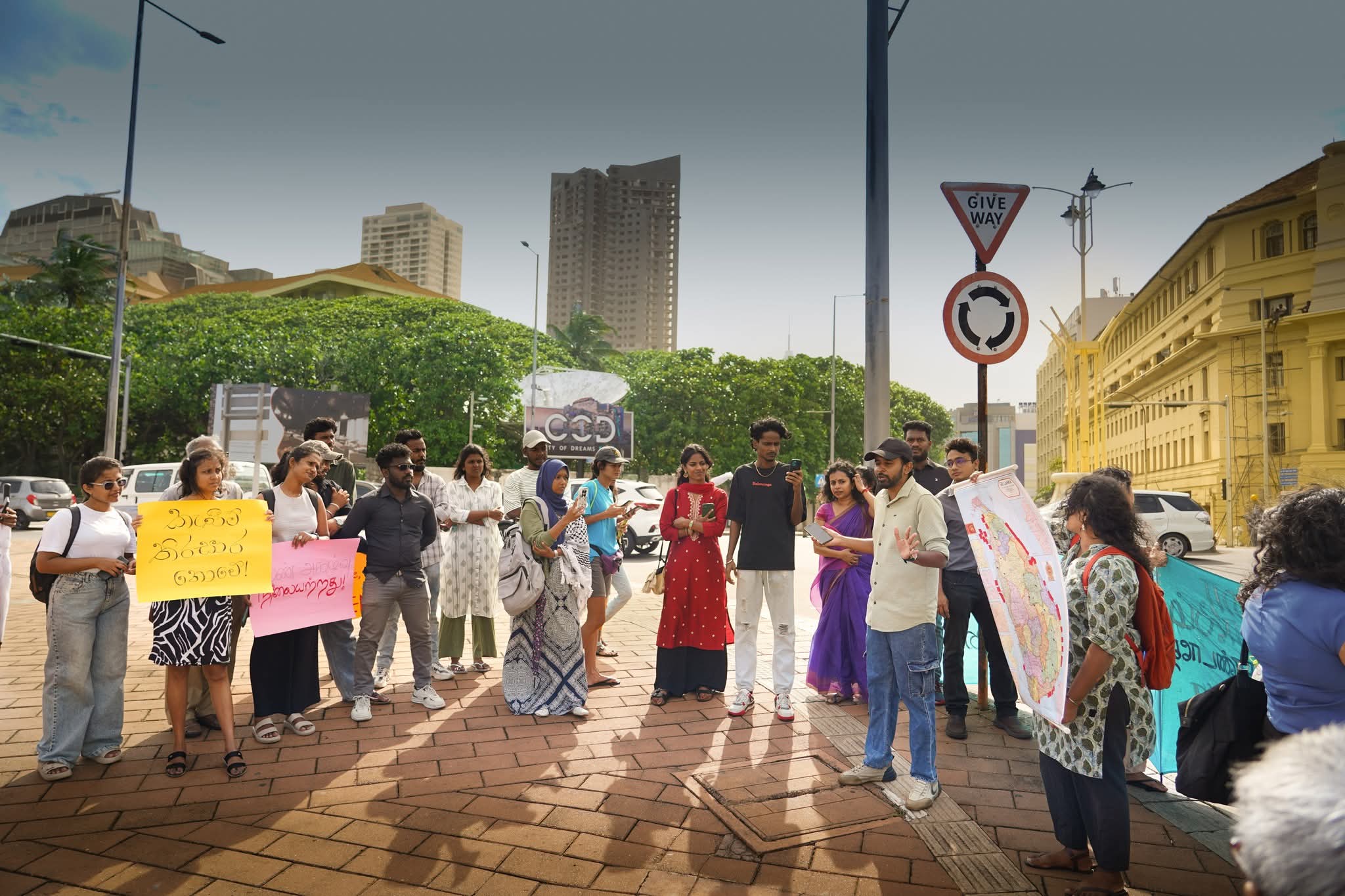
The eastern project is one of several heavy mineral sand ventures targeting the coast of the Tamil homeland.
In Mannar, Tamils have mounted sustained resistance to a project advanced by foreign mining firms, while officials attempting to occupy coastal land for extraction elsewhere in the North-East have been turned back by residents fearing for their land and livelihoods.
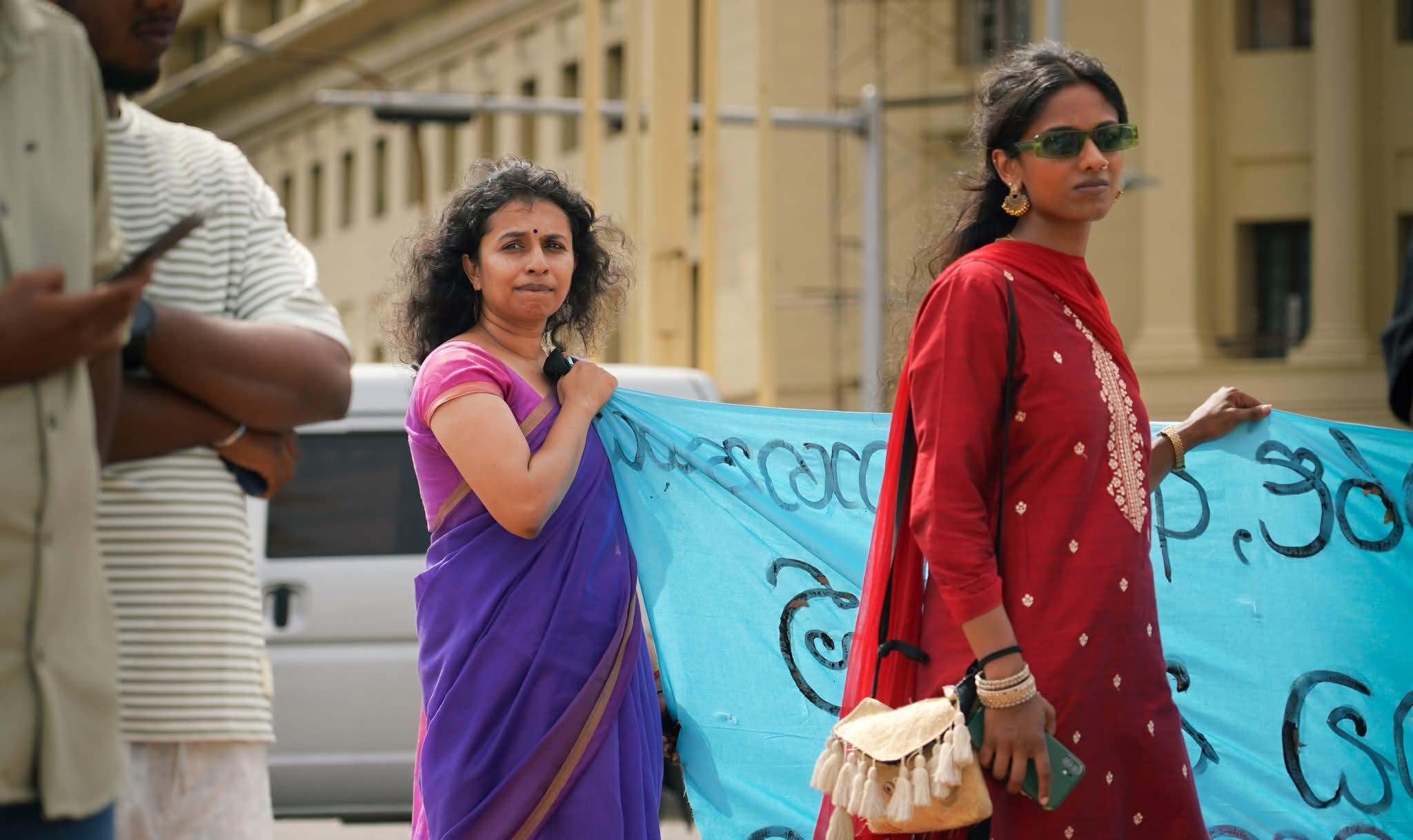
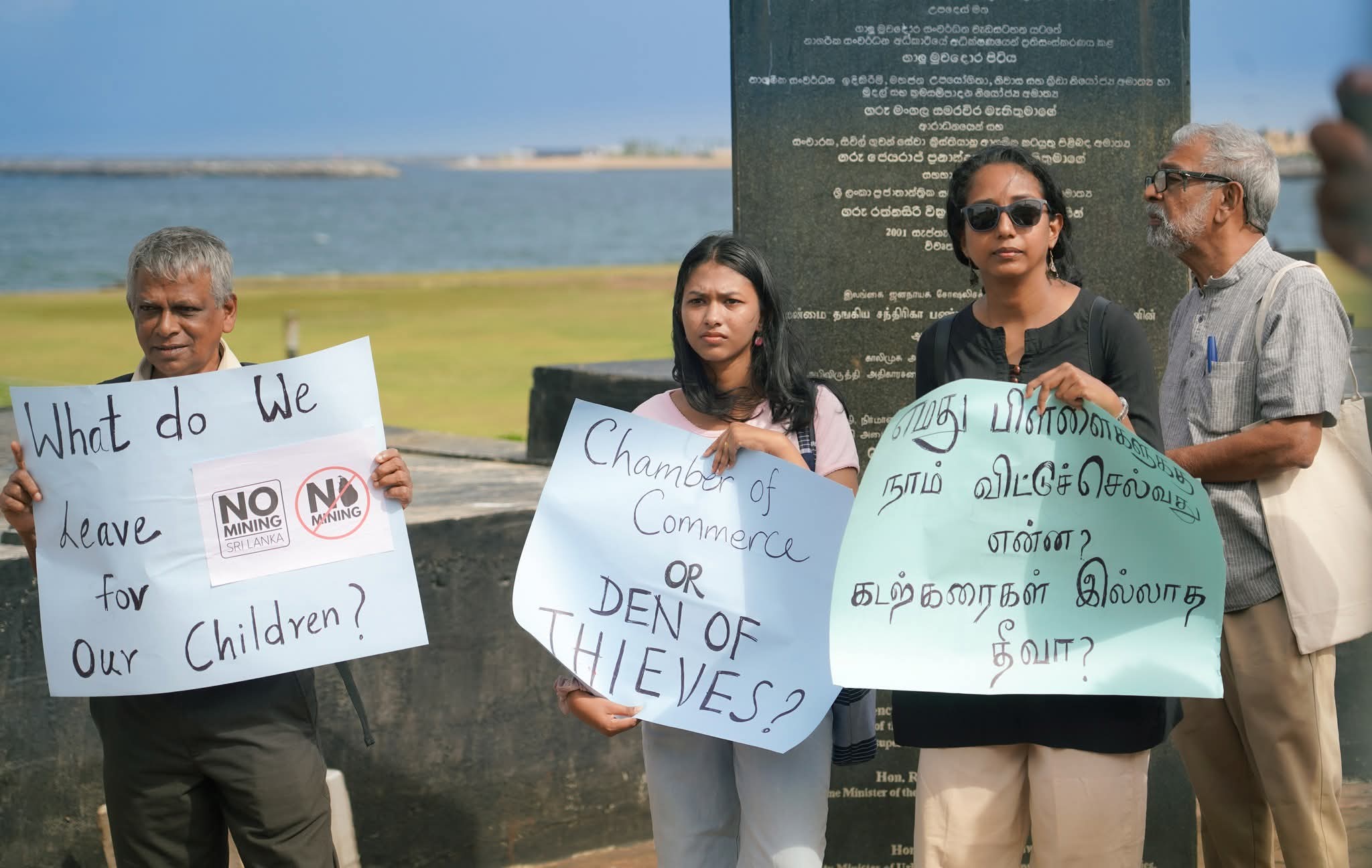
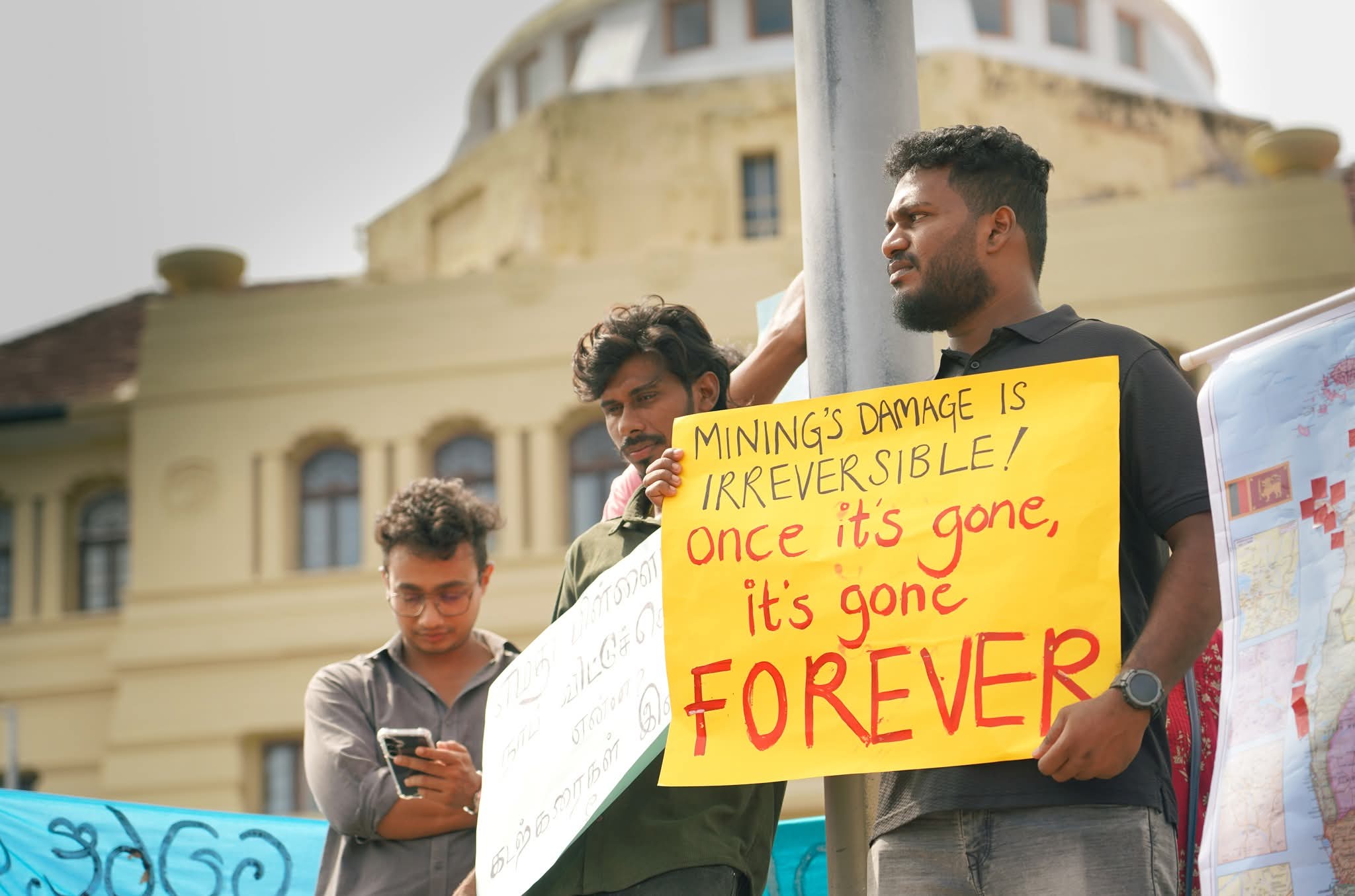
Photos: People's Alliance for Right to Land (PARL)