
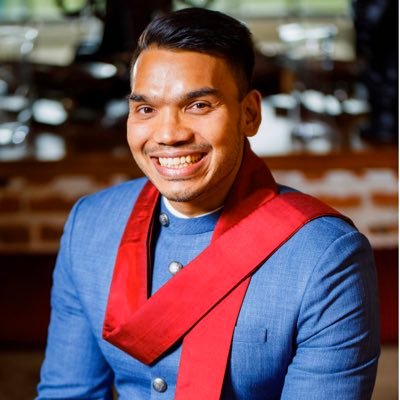
Fresh scrutiny has emerged over Namal Rajapaksa’s entry into Sri Lanka Law College, after an investigation by The Examiner raised serious questions about whether he met the basic requirements for admission.
The report, authored by Nirmala Kannangara, draws on documents from both the United Kingdom and Sri Lanka, suggesting that Rajapaksa was not academically eligible to enter Law College in 2009, and that his admission violated established procedures.
The allegations come as Rajapaksa, now a senior figure in the Sri Lanka Podujana Peramuna (SLPP), publicly dismissed all claims as “completely false” and vowed to respond to what he called political “slanders and insults” at an SLPP rally this week.
A degree that did not meet the minimum standard
At the centre of the controversy is the degree Rajapaksa claimed to hold from City University, London. Admission to Law College without sitting for the highly competitive entrance examination requires a recognised law degree that would qualify the student for entry into the legal profession in that same country.
However, in 2009, City University’s degree programme was not yet recognised by Law College. An RTI response confirms that City University was only recognised from 15 October 2009, nearly three weeks after Rajapaksa’s application was submitted and approved on 25 September, the same day it was filed.
Law College sources quoted in the report said that same-day approval was “not possible,” explaining that authentication of a foreign qualification typically takes weeks.
Missing degree certificate
RTI responses reveal that Law College never received Rajapaksa’s degree certificate, only his transcript. Instead, the file contains a 2009 letter from City University informing him that he had “satisfied the Assessment Board” and was awarded a Bachelor of Laws in Law, Class Three.
Submitting both a transcript and degree certificate is mandatory for foreign-qualified applicants. Rajapaksa’s file contained neither a degree certificate nor evidence of exemption from the entrance examination.
An unusual degree certificate elsewhere
While Law College did not receive a degree certificate, Rajapaksa later submitted one to the University of Sri Jayewardenepura when applying for a master’s programme.
The certificate, obtained through RTI, is signed by “Malcolm Gillies, Vice Chancellor,” and states that the degree was awarded “with Honours in Law Class Three.” But Gillies had resigned as Vice Chancellor two months before the certificate was dated.
Contacted about the document, Gillies stated: “I am not aware of any certificates issued after I left the university that carry my signature.”
City University also confirmed that the acting Vice Chancellor at the time was Professor Julius Weinberg, not Gillies.
The degree certificate also differs from the transcript submitted to Law College, which contains no reference to “honours”.
Questions over eligibility and performance
City University records show that Rajapaksa struggled academically, barely passing several modules. Yet at Law College he went on to earn top marks, including a subject prize.
In 2010, fellow student Thushara Jayaratne alleged that Rajapaksa was allowed to sit his exams in private. A Law College inquiry was conducted but its findings were never made public.
Rajapaksa insists the allegations are politically motivated.
“This government submitted a B-report to the court within weeks of taking office and obtained approval to investigate my degree. Investigations have been ongoing for several months, yet no report has been presented to the court,” he said. He added that “false claims continue to spread online” and that “all these slanders and insults will be answered at the rally.”
Rajapaksa also accused the NPP of repeatedly weaponising the issue for political gain, saying: “This allegation has been surfacing every now and then for the past ten years. It shows the NPP’s failure just as the allegations of the Uganda monies.”
Concerns over Rajapaksa’s admission first surfaced more than a decade ago, and the new investigation reignites long-standing questions about political influence and the integrity of Sri Lanka’s legal education system.