
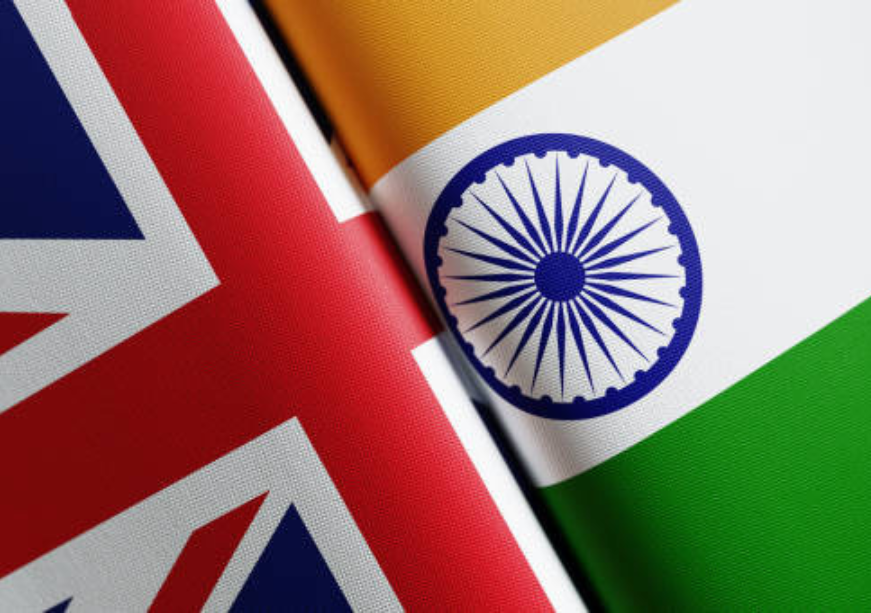
On the 6th of May 2025, India and the United Kingdom agreed on a Free Trade Agreement (FTA) which took up to 3 years of negotiations, with it coming into effect in January 2026. This FTA was hailed by the UK government as the “biggest and most economically significant” trade agreement the UK has signed since leaving the European Union in 2020. In an era of increasing protectionism, this FTA signals a major shift in trade relations between two of the world’s largest democracies and economic powers.
However, this has raised serious concerns for Sri Lanka, a country still recovering from the aftermath of a crippling economic crisis. The addition of US tariffs, which were among the highest at 44% on all goods imported from Sri Lanka, added another layer of difficulty to their recovery and constrained the export economy. Now, with their next-door neighbour, India, securing preferential access to UK markets, Sri Lanka faces serious concerns about being economically sidelined.
The FTA essentially reduces the trade barriers between the UK and India. This includes a reduction in tariffs on 90% of tariff lines, 85% of which will become tariff-free within a decade. This poses a serious threat, as the UK is Sri Lanka’s second-highest export destination, with an estimated $923.73 million worth of goods exported in 2024.This FTA will have serious adverse impacts on Sri Lanka’s exports of goods and services. Beyond trade in goods, the agreement could also have knock-on effects on foreign direct investment (FDI) and domestic investment – key components of economic growth.
With over 100 UK-affiliated companies operating in Sri Lanka, including major global firms such as HSBC, Standard Chartered, the London Stock Exchange Group, Marks & Spencer and Tesco, the UK remains among the top 10 sources of FDI in Sri Lanka, making any decline in UK investment a direct blow to the country’s fragile economic recovery. Additionally, with the UK now expanding its economic footprint in India, global companies may reassess their strategic presence in Sri Lanka, potentially diverting future investments to India or elsewhere.
This could also raise concerns for domestic investors who may think twice about the future of Sri Lanka’s economy as investments are relocated elsewhere. Compounding this threat is India’s strategic positioning relative to Sri Lanka. With the development of a major deep-water port in Kerala, Sri Lanka’s regional trade is likely to be rerouted and take economic activity away to India.
Sri Lanka’s inability to respond to these challenges is rooted, in part, in domestic political dysfunction. Years of economic mismanagement, corruption, and a refusal to resolve long-standing ethnic tensions - particularly the marginalisation of Tamils - have left the country ill-equipped to pivot in this shifting regional landscape.
The India–UK FTA is yet another stark reminder (one of many) that Sri Lanka can no longer afford complacency. Without urgent reforms in policy, economic strategy, and inclusive governance, the country risks becoming increasingly irrelevant in a rapidly evolving global trade landscape. As regional and global powers redraw trade routes and realign investment flows, Sri Lanka faces a decisive moment: embrace reform and integration or continue down a path of marginalisation. This time, the threat is not war but economic isolation.